Friday, June 13, 2014

Then and Now

For this month’s post, I decided to participate in a fun blog hop hosted by The Armchair Squid, Suze, Nicki Elson and Nancy Mock called Then and Now, where we’re supposed to watch a movie we loved when we were younger and see what we think of it now. Little did I know that the exercise would prove to be a lot more challenging than I expected. Why? You ask. What could be so hard about watching a movie and talking about it?

Well, first of all, there was the issue of choosing the film. My first impulse was to select a movie from one of my favorite directors, John Hughes, but as you can see here, I’m pretty much obsessed with the man, so how could I rewatch his films with fresh eyes when I never outgrew them? I went through a list of non-Hughes films and there were a few that I recalled fondly that I hadn’t seen in ages, but I was confronted with another problem: FEAR.

As I mention in this post last year, I have become a lot more critical of films and books since I started to write. As my expectations have grown, it’s increasingly difficult to find stories where I can lose myself and not think about what the director or writer were trying to do. My fear when watching a once-beloved film was that I would realize that it was not as wonderful as I remembered, and that nostalgia wouldn't be enough to forgive all the film’s flaws.

I pondered for a few days about movies that I used to like but wouldn’t be overly devastated if I discovered all their imperfections and I finally picked one that:

1) I was desperate to watch when it came out, but had to wait a few years due to my age;
2) was incredibly popular during my childhood years; and,
3) I hadn’t seen in a VERY long time.

So without further ado, I bring you...


Flashdance, for those who haven’t seen it, is the story of an 18-year-old girl who is a welder by day and dancer by night. She lives in a warehouse-turned-apartment with her massive dog and dreams of becoming a ballerina. The problem is she’s a self-taught dancer who doesn’t have the education nor the references to enter the prestigious dance school of her dreams. Her best friends also have goals of their own: one longs to be a professional ice skater while another one is a short-order cook who wants to become a stand-up comedian. As Alex witnesses her friends’ dreams collapse, she must find the strength to go along with hers, even it means swallowing her pride and having to face rejection.

My first reaction when I watched the film again was excitement over the soundtrack. My friends and I used to sing these songs to the top of our lungs (even though we didn’t know what exactly we were saying) and we used to play the tape over and over again during our first dance parties. I am convinced that a big part of Flashdance’s appeal was the music.

The second thing I noticed was how young Jennifer Beals was (I'd thought the character was in her twenties, but she was only eighteen). I also questioned details I'd never considered before: Where is Alex’s family? How did she become so independent at such a young age? How did she meet her mentor, Hanna, the lady who encourages her to apply to dance school? And how and why did her elder friend die? Last but not least, how did she learn to weld (and what on earth was she building)?

 
Another interesting observation is that this time around, her love interest Nick (Michael Nouri) didn’t seem as ancient as I remembered. When I first watched the film in my early teens, I was extremely disappointed with the actor selection (my apologies, Mr. Nouri) mainly because he was SO MUCH OLDER than the protagonist, but now I realize he HAD to be older in order to be her boss and help with her audition.

The other detail that blew my mind was how many sexual comments between Alex and Nick I had missed when I first saw the film (and how I may have been too young when I watched it!). I didn’t even think it was weird that she removes her bra in front of him!  (She probably wants to be more comfortable, I thought.)
 

Plot wise, it’s not the most complex or unpredictable story, but it follows a familiar underdog/Cinderella journey that pleases most audiences. It also offers a few positive messages. One, the 80s became a turning point for women’s fitness. In Flashdance, not only does Alex ride her bike everywhere, but she also works out at her home-gym (an impressive routine which I tried to mimic once but somehow was not as graceful as she was) and lifts weights with her friends. Two, Alex is a good role model. Despite her youth, she has a clear sense of right and wrong (something her best friend doesn’t always have). She initially declines Nick’s invitations because she “doesn’t date the boss,” she’s self-sufficient, doesn’t allow men to disrespect her and saves her best friend from ending up in a strip club for the rest of her life. In addition, she has sophisticated tastes like going to the ballet with her elder friend and eating lobster (in a very provocative manner!) But the best thing is that the film sends an encouraging message about following our dreams no matter how far-fetched and difficult they may seem.

In the end, I’m happy to report that I still found this film enjoyable.

 
What do you think of it?

Sunday, June 8, 2014

Dear Adult Readers of YA Fiction: Shame on You!


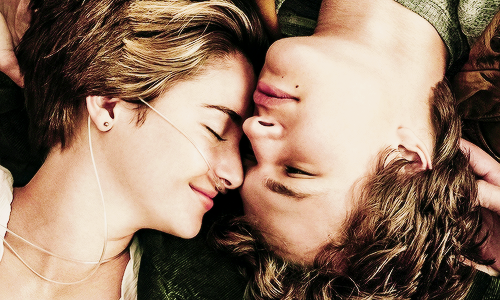
Friday, box-office records were shattered as John Green fans flocked to the theaters for the premier of The Fault in Our Stars, the film adaptation of his mega-bestselling YA novel. If you haven't read the book yet and intend to, though, please make sure you are 17 or under. If not, you are an embarrassment to yourself and other adults everywhere. An embarrassment.

At least, that's the pronouncement by Ruth Graham, a writer who caused a bit of a stir with this article published in Slate magazine this week. In it, Graham wags the naughty stick at adult readers who play in the kiddie pool of YA fiction. As she bluntly puts it, "Adults should feel embarrassed about reading literature written for children." Marching straight out of Corinthians 13:11, she exhorts us to put away our childish ways and resign ourselves to our grim fates: nothing but a diet of literary broccoli sprouts for you, old readers! Fun times are over.


Some of our readers here might be surprised to find me less than sympathetic to Graham's attitude, since I've often professed my belief that reading challenging material stretches a person and reading junky books does not. I am not one who thinks reading, all by itself, is edifying. I would rather my kids sit down in front of quality television than curl up with Twilight. But I also think pleasure for pleasure's sake is a fine thing. In Graham's world, to the contrary, if you are getting pleasure from a YA book you're doing it wrong. "The very ways that YA is pleasurable are at odds with the way that adult fiction is pleasurable," she writes. One imagines Graham's "pleasurable adult fiction" existing in a lofty airless room, white and sterile, at the top of an ivory tower—with YA books relegated to a basement full of crayons and stuffed animals.

It is a measure of how parochial Graham's reading habits are that she has bifurcated the choice between these two extremes, and that she doesn't even think of other genres competing for the adult reader's attention. "If [adults] are substituting maudlin teen dramas for the complexity of great adult literature, then they are missing something," she writes. This is just silly: one imagines some serious woman with a sleek, silver bun and tiny spectacles wandering into a dusty bookshop in search of War and Peace and skipping out with aviator shades, a mohawk, and a copy of Why We Broke Up. Readers generally know what they intend to read. If they're keen on complex adult literature, they're unlikely to accidentally find themselves reading Harry Potter.


Not only is Graham worried about the bad effects on adults who read YA fiction, she is worried that teenagers will never graduate to the serious stuff. "I remember, when I was a young adult, being desperate to earn my way into the adult stacks," she writes. "I wouldn’t have wanted to live in a world where all the adults were camped out in mine ... But the YA and 'new adult' boom may mean fewer teens aspire to grown-up reading, because the grown-ups they know are reading their books." What? How does that even follow? First of all, I don't know why she was desperate (and apparently unable) to read adult books when she was young. The rest of us managed. I started reading Stephen King when I was about 13, and most of my friends were reading VC Andrews' Flowers in the Attic even before that. As for "real adult literature," that was hardly kept on a high shelf out of our reach. It was thrust upon us well before we could appreciate it—it was called "English class." Finally, Graham's entire premise is flawed: Just because an adult reads John Green does not mean a teenager will never go on to read Cormac McCarthy.


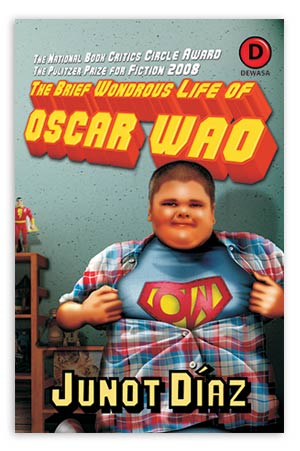
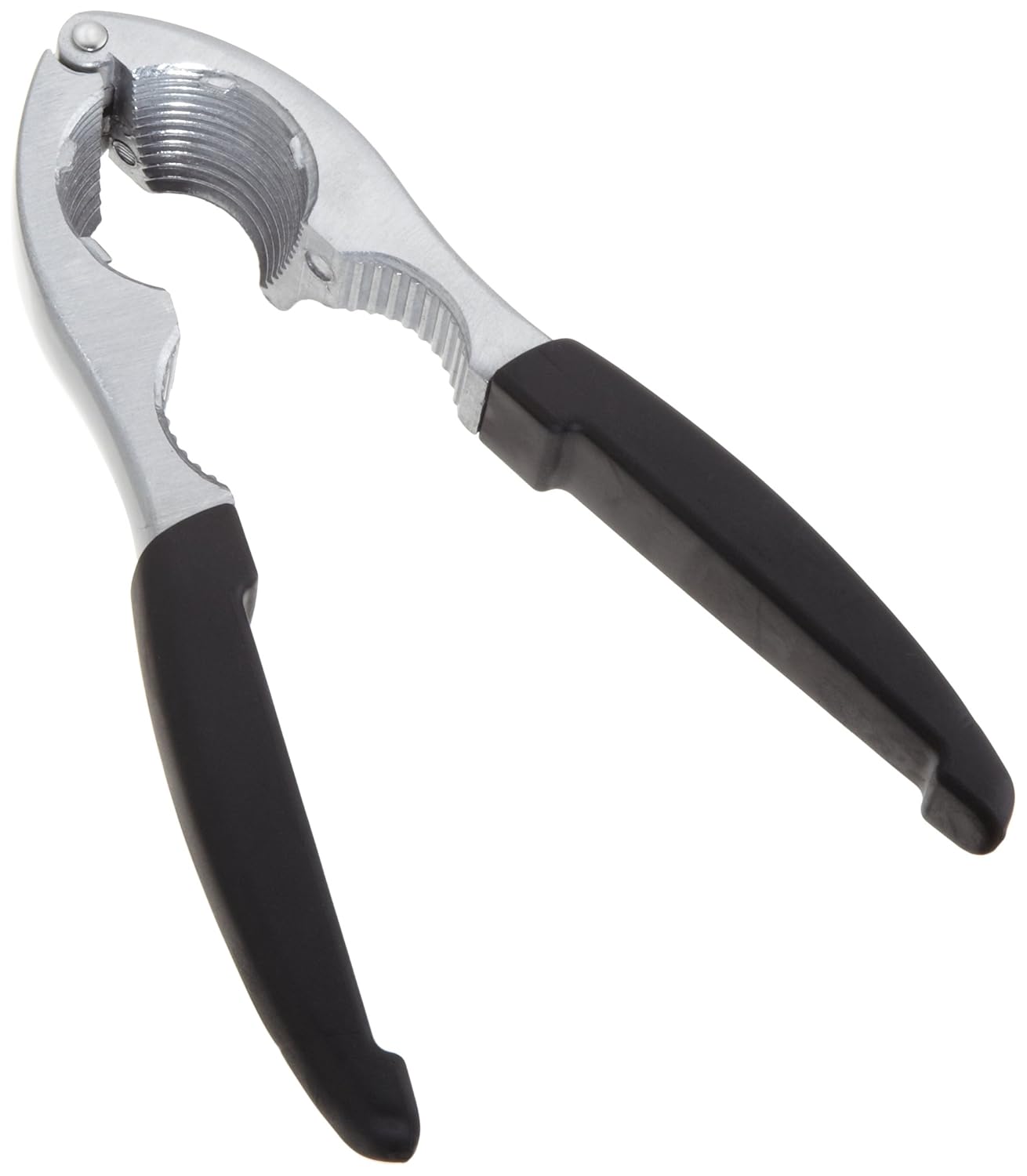
Cormac McCarthy, you say? That's not what Graham's talking about; that's not literature. Well, McCarthy won a Pulitzer for The Road, a novel as creepy as any Stephen King and as likely to be appreciate by a teen audience. Which underlines yet another problem with Graham's piece: the division between genres is often arbitrary. Salinger, with his angsty adolescent protagonists, would likely be marketed as YA today. And anyone who has read Junot Diaz (another Pulitzer winner) will have a hard time distinguishing his sex-crazed, profanity-spewing young protagonists from those produced by a YA writer. I've read dozens of award-winning adult literary books in the past few years that have caused me, here and there, to cringe. No so for Graham, apparently, who claims, "I think of John Updike and Alice Munro and other authors whose work has only become richer to me as I have grown older, and which never makes me roll my eyes." Really? Updike? The man who was notorious for writing terrible sex scenes? One example: "He loved it when she would clamp his face between her thighs like a nutcracker and come." Like a nutcracker. Not even a tiny eye roll for that one, Ms. Graham?


So I have a few guesses to make about Graham: she hasn't read Updike recently, she doesn't read much of what she's judging, and she doesn't have teenage kids. That final point is important, because most adults I know who read YA do so because their kids are reading it. It's conventional wisdom that teenagers want to be left alone, don't want adults listening to their music or reading their books, and Graham echoes this. But is it true? The teenagers I know, including my own kids and those of my friends, enjoy having cultural touchpoints in common with adults. Both my kids not only read many of the same books I do, but actively look to me for book suggestions. My oldest child, 16, reads YA but in the past year has also read The Poisonwood Bible, The Life of Pi, Oryx & Crake, Purple Hibiscus, The Kite Runner, and Never Let Me Go—voluntarily. Some teachers at her school formed an extracurricular book club, just for fun, and plenty of teens signed up. They read only literary fiction. Right now she is reading another John Green novel, but she's also reading this book by Joshua Greene.

If my kids didn't want me "camped out" in their book world, they probably wouldn't be recommending their own books to me, would they? And yet if they discover a book they love, they not only encourage me to read it, they sometimes pester me to. That's how I ended up reading The Fault in Our Stars, in fact: I was harassed into it—and glad to be. My daughter and I had a great time discussing it afterward, and now we're bugging little brother to read it. Although we might simply go to see it in the theaters...if Ruth Graham and the YA police will let me in.


Friday, May 30, 2014

Cephalopod Coffeehouse: Rebecca

I got bogged down with some difficult books this month, which slowed my reading considerably. I reviewed my actual favorite book on my personal blog, so I'm kind of covering the leftovers here. BUT! That's not to say I didn't like any of them. In fact, my second-favorite novel of the month was Daphne du Maurier's Rebecca, and I liked it quite a lot.

But first, real quick, what slowed me down: I waded through Long Man, a new novel that's receiving rave reviews but which just never quite grabbed me. Possibly I needed the audiobook companion ... more and more, I find it difficult to get into books unless I have a couple solid hours with a good audiobook version. On the flipside, I listened to an audiobook lecture titled Philosophy of Mind that was not exactly boring, but was technical and difficult. I thought I was reasonably good at philosophy, in a layperson way, but no. I found a lot of the content so abstract and almost mathematical as to be nearly impenetrable. And because it was only aural, I kept losing my concentration. Lesson learned: have an audio and visual copy of most anything before jumping in. (Yay for libraries.)

On to Rebecca. Although I got a degree in English literature, I'd never read du Maurier before. Last year Rebecca kept coming up in book review after book review. It seemed every new novel was an homage in some way to this 20th-century classic. So, because a book about a haunting kept haunting me, I figured I ought to give it a whirl.

My first surprise was that it was a 20th-century novel. I was thinking... ghosts and English estates and brooding lords-of-the-manor, gotta be 1820 or so. That would be because the novel draws heavily on the Bronte sisters. However, it's actually fairly modern, more Great Gatsby than Wuthering Heights. Rebecca was published in 1938, the same year this photo was taken:


That is my grandmother. Isn't she lovely? She was 21 at the time, approximately the same age as the nameless narrator who tells the story of Rebecca. The narrator is a stand-in for du Maurier herself, who wrote the novel as an exploration of her own jealousy—her husband had a previous paramour that du Maurier suspected he was still a little in love with. (My grandmother, as far as I know, never had this issue.) Rebecca is not really a ghost story, I discovered—or at least not the story of an actual ghost. There is nothing supernatural here, in spite of the gothic setting and tone. The titular Rebecca does indeed haunt the narrator, but she does it by simply having existed and lived a huge life that the narrator, her opposite, constantly bangs into. Where the narrator is small, self-effacing, plain, uptight, moral, and a bit weedy, Rebecca was tall, extravagant, beautiful, luscious, and wicked.

Of course, the real center of the story is the truly evil Mrs. Danvers. The housekeeper steals every scene she is in. I couldn't help thinking of Frau Blücher from Young Frankenstein whenever she was described ... which made me giggle a little, which in turn took some of the creeping horror away from those scenes. That didn't stop me from gasping at one of the truly over-the-top scenes in the middle of the book, which was as delicious as it was theatrical. (For those who've read it: the bit where the narrator and Danvers are looking out the window over the paving stones.)

Stay close to zee candles. Zee stairway can be ... treacherous
Once I got into this book, I was turning pages pretty feverishly. But it took a while. The narrator is a wimp, and wimpiness doesn't sit too well with modern readers, myself included. I had to keep reminding myself that novels aren't (always) prescriptive, and protagonists are not and shouldn't always be expected to be heroes. Protagonists should be allowed the full range of human experience, and cowardly, sniveling people have stories to tell too. We may not like being inside such a person's head, but if the story is plausible and well-written, with interesting characters, it's worth sitting with a problematic protagonist. It was for me.

Want to read other Cephalopod Coffeehouse reviews, and/or participate in future ones? Visit our host, the Armchair Squid.