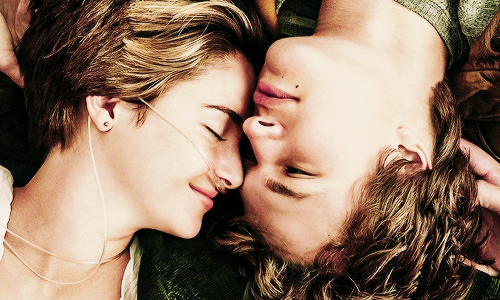
Friday, box-office records were shattered as John Green fans flocked to the theaters for the premier of The Fault in Our Stars, the film adaptation of his mega-bestselling YA novel. If you haven't read the book yet and intend to, though, please make sure you are 17 or under. If not, you are an embarrassment to yourself and other adults everywhere. An embarrassment.
At least, that's the pronouncement by Ruth Graham, a writer who caused a bit of a stir with this article published in Slate magazine this week. In it, Graham wags the naughty stick at adult readers who play in the kiddie pool of YA fiction. As she bluntly puts it, "Adults should feel embarrassed about reading literature written for children." Marching straight out of Corinthians 13:11, she exhorts us to put away our childish ways and resign ourselves to our grim fates: nothing but a diet of literary broccoli sprouts for you, old readers! Fun times are over.

Some of our readers here might be surprised to find me less than sympathetic to Graham's attitude, since I've often professed my belief that reading challenging material stretches a person and reading junky books does not. I am not one who thinks reading, all by itself, is edifying. I would rather my kids sit down in front of quality television than curl up with Twilight. But I also think pleasure for pleasure's sake is a fine thing. In Graham's world, to the contrary, if you are getting pleasure from a YA book you're doing it wrong. "The very ways that YA is pleasurable are at odds with the way that adult fiction is pleasurable," she writes. One imagines Graham's "pleasurable adult fiction" existing in a lofty airless room, white and sterile, at the top of an ivory tower—with YA books relegated to a basement full of crayons and stuffed animals.

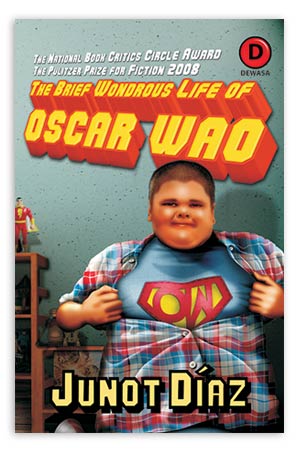
Cormac McCarthy, you say? That's not what Graham's talking about; that's not literature. Well, McCarthy won a Pulitzer for The Road, a novel as creepy as any Stephen King and as likely to be appreciate by a teen audience. Which underlines yet another problem with Graham's piece: the division between genres is often arbitrary. Salinger, with his angsty adolescent protagonists, would likely be marketed as YA today. And anyone who has read Junot Diaz (another Pulitzer winner) will have a hard time distinguishing his sex-crazed, profanity-spewing young protagonists from those produced by a YA writer. I've read dozens of award-winning adult literary books in the past few years that have caused me, here and there, to cringe. No so for Graham, apparently, who claims, "I think of John Updike and Alice Munro and other authors whose work has only become richer to me as I have grown older, and which never makes me roll my eyes." Really? Updike? The man who was notorious for writing terrible sex scenes? One example: "He loved it when she would clamp his face between her thighs like a nutcracker and come." Like a nutcracker. Not even a tiny eye roll for that one, Ms. Graham?
So I have a few guesses to make about Graham: she hasn't read Updike recently, she doesn't read much of what she's judging, and she doesn't have teenage kids. That final point is important, because most adults I know who read YA do so because their kids are reading it. It's conventional wisdom that teenagers want to be left alone, don't want adults listening to their music or reading their books, and Graham echoes this. But is it true? The teenagers I know, including my own kids and those of my friends, enjoy having cultural touchpoints in common with adults. Both my kids not only read many of the same books I do, but actively look to me for book suggestions. My oldest child, 16, reads YA but in the past year has also read The Poisonwood Bible, The Life of Pi, Oryx & Crake, Purple Hibiscus, The Kite Runner, and Never Let Me Go—voluntarily. Some teachers at her school formed an extracurricular book club, just for fun, and plenty of teens signed up. They read only literary fiction. Right now she is reading another John Green novel, but she's also reading this book by Joshua Greene.
If my kids didn't want me "camped out" in their book world, they probably wouldn't be recommending their own books to me, would they? And yet if they discover a book they love, they not only encourage me to read it, they sometimes pester me to. That's how I ended up reading The Fault in Our Stars, in fact: I was harassed into it—and glad to be. My daughter and I had a great time discussing it afterward, and now we're bugging little brother to read it. Although we might simply go to see it in the theaters...if Ruth Graham and the YA police will let me in.