Showing posts with label Literary Novels. Show all posts

Sunday, June 8, 2014

Dear Adult Readers of YA Fiction: Shame on You!


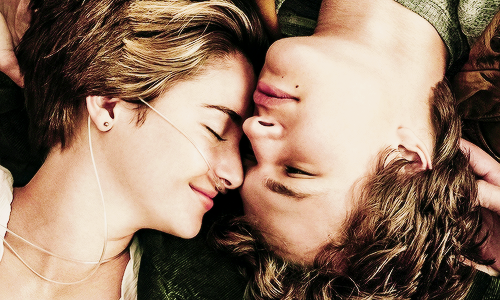
Friday, box-office records were shattered as John Green fans flocked to the theaters for the premier of The Fault in Our Stars, the film adaptation of his mega-bestselling YA novel. If you haven't read the book yet and intend to, though, please make sure you are 17 or under. If not, you are an embarrassment to yourself and other adults everywhere. An embarrassment.

At least, that's the pronouncement by Ruth Graham, a writer who caused a bit of a stir with this article published in Slate magazine this week. In it, Graham wags the naughty stick at adult readers who play in the kiddie pool of YA fiction. As she bluntly puts it, "Adults should feel embarrassed about reading literature written for children." Marching straight out of Corinthians 13:11, she exhorts us to put away our childish ways and resign ourselves to our grim fates: nothing but a diet of literary broccoli sprouts for you, old readers! Fun times are over.


Some of our readers here might be surprised to find me less than sympathetic to Graham's attitude, since I've often professed my belief that reading challenging material stretches a person and reading junky books does not. I am not one who thinks reading, all by itself, is edifying. I would rather my kids sit down in front of quality television than curl up with Twilight. But I also think pleasure for pleasure's sake is a fine thing. In Graham's world, to the contrary, if you are getting pleasure from a YA book you're doing it wrong. "The very ways that YA is pleasurable are at odds with the way that adult fiction is pleasurable," she writes. One imagines Graham's "pleasurable adult fiction" existing in a lofty airless room, white and sterile, at the top of an ivory tower—with YA books relegated to a basement full of crayons and stuffed animals.

It is a measure of how parochial Graham's reading habits are that she has bifurcated the choice between these two extremes, and that she doesn't even think of other genres competing for the adult reader's attention. "If [adults] are substituting maudlin teen dramas for the complexity of great adult literature, then they are missing something," she writes. This is just silly: one imagines some serious woman with a sleek, silver bun and tiny spectacles wandering into a dusty bookshop in search of War and Peace and skipping out with aviator shades, a mohawk, and a copy of Why We Broke Up. Readers generally know what they intend to read. If they're keen on complex adult literature, they're unlikely to accidentally find themselves reading Harry Potter.


Not only is Graham worried about the bad effects on adults who read YA fiction, she is worried that teenagers will never graduate to the serious stuff. "I remember, when I was a young adult, being desperate to earn my way into the adult stacks," she writes. "I wouldn’t have wanted to live in a world where all the adults were camped out in mine ... But the YA and 'new adult' boom may mean fewer teens aspire to grown-up reading, because the grown-ups they know are reading their books." What? How does that even follow? First of all, I don't know why she was desperate (and apparently unable) to read adult books when she was young. The rest of us managed. I started reading Stephen King when I was about 13, and most of my friends were reading VC Andrews' Flowers in the Attic even before that. As for "real adult literature," that was hardly kept on a high shelf out of our reach. It was thrust upon us well before we could appreciate it—it was called "English class." Finally, Graham's entire premise is flawed: Just because an adult reads John Green does not mean a teenager will never go on to read Cormac McCarthy.


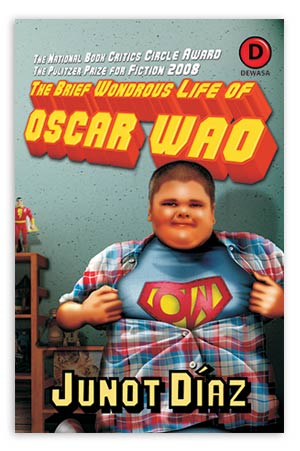
Cormac McCarthy, you say? That's not what Graham's talking about; that's not literature. Well, McCarthy won a Pulitzer for The Road, a novel as creepy as any Stephen King and as likely to be appreciate by a teen audience. Which underlines yet another problem with Graham's piece: the division between genres is often arbitrary. Salinger, with his angsty adolescent protagonists, would likely be marketed as YA today. And anyone who has read Junot Diaz (another Pulitzer winner) will have a hard time distinguishing his sex-crazed, profanity-spewing young protagonists from those produced by a YA writer. I've read dozens of award-winning adult literary books in the past few years that have caused me, here and there, to cringe. No so for Graham, apparently, who claims, "I think of John Updike and Alice Munro and other authors whose work has only become richer to me as I have grown older, and which never makes me roll my eyes." Really? Updike? The man who was notorious for writing terrible sex scenes? One example: "He loved it when she would clamp his face between her thighs like a nutcracker and come." Like a nutcracker. Not even a tiny eye roll for that one, Ms. Graham?


So I have a few guesses to make about Graham: she hasn't read Updike recently, she doesn't read much of what she's judging, and she doesn't have teenage kids. That final point is important, because most adults I know who read YA do so because their kids are reading it. It's conventional wisdom that teenagers want to be left alone, don't want adults listening to their music or reading their books, and Graham echoes this. But is it true? The teenagers I know, including my own kids and those of my friends, enjoy having cultural touchpoints in common with adults. Both my kids not only read many of the same books I do, but actively look to me for book suggestions. My oldest child, 16, reads YA but in the past year has also read The Poisonwood Bible, The Life of Pi, Oryx & Crake, Purple Hibiscus, The Kite Runner, and Never Let Me Go—voluntarily. Some teachers at her school formed an extracurricular book club, just for fun, and plenty of teens signed up. They read only literary fiction. Right now she is reading another John Green novel, but she's also reading this book by Joshua Greene.

If my kids didn't want me "camped out" in their book world, they probably wouldn't be recommending their own books to me, would they? And yet if they discover a book they love, they not only encourage me to read it, they sometimes pester me to. That's how I ended up reading The Fault in Our Stars, in fact: I was harassed into it—and glad to be. My daughter and I had a great time discussing it afterward, and now we're bugging little brother to read it. Although we might simply go to see it in the theaters...if Ruth Graham and the YA police will let me in.


Thursday, January 30, 2014

The Cephalopod Coffeehouse: The Infatuations


Ever since I started writing in English, I’ve been reading mostly American and British authors. Not only as a tool to become more proficient in the language, but also to understand what’s selling in English-speaking markets and how their stories are told. Once in a while, though, I’ll dig into world literature and look at what’s selling outside the US, mostly in Latin America and Spain.

This month I ran across a Spanish author called Javier Marías, who is apparently making waves across the Atlantic. From what I understand, there’s even Nobel Prize talk. His latest work, The Infatuations (in Spanish, Los Enamoramientos) is a literary novel (but honestly, what Spanish/Latin American author doesn’t write literary?) with elements of crime, obsession and love—or more specifically, elements of “falling in love,” which is not the same thing, according to the author. As Alfaguara (the Spanish publisher of this novel) indicates on its website, this is "a book about the state of being in love, which seems to justify everything."


The plot is simple: María Dolz is a book editor who’s been watching a couple at a café every morning for years (whom she affectionately calls “The Perfect Couple”) until one day, they stop coming. By chance, she learns that the Perfect Husband (Miguel) had been stabbed to death. When María sees the Perfect Wife again at the café, she approaches her for the first time and offers her condolences. The now-widow invites her to her home for a chat and opens her heart to María (known to them as “The Prudent Young Woman”). At the widow’s house, María meets a family friend (Javier) and from the prudent, distant observer she once was, María becomes entangled in the lives of these strangers until their fate lies in her hands.

Oddly, in this novel—which may seem so intriguing and juicy—the plot is not the most important thing. As the author himself tells us through one of his characters (in reference to another novel):

“What happened is the least of it. It’s a novel, and once you’ve finished a novel, what happened in it is of little importance and soon forgotten. What matter are the possibilities and ideas that the novel’s imaginary plot communicates to us and infuses us with, a plot that we recall far more vividly than real events and to which we pay far more attention.”

The author’s philosophy comes through in his work since, for example, we know very little about his protagonist. We come to know how María thinks and feels, but little to nothing about her past, her family or even her age. We’re stuck in this one anecdote of her life, this brief season where we learn the bare minimum about her (where she works and some of the people she associates with) in order to understand her choices and actions. This is a novel where the human condition (our fear of death, our unfulfilled desires, the things we do for love, the process of grieving after losing someone) becomes the focus of the story.

I found the novel to be both refreshing and frustrating. While the prose is engaging and identifiable (as I mentioned earlier, the author analyzes in great deal feelings and experiences most of us have had) he repeats his discourse in a way that the plot becomes sometimes static. I did enjoy his reflections and repeated motifs (he uses the same examples to illustrate his views on injustice and grief) but at the same time, I wanted the action to move along, I wanted to see the characters interact in different ways—as opposed to being told what they did and simply witnessing their philosophical conversations in almost every scene, which leads me to my other objection: the characters sounded (mostly) the same in their views of life (sort of cynical) and they all engage in super long monologues.

Despite my grievances, the novel is also refreshing and here’s why: the story doesn’t follow “the hero’s journey” or any predictable pattern (even though the reader is definitely intrigued to know what will happen and what did in fact happen to Miguel). It’s more of a “slice of life” type of story with no perceivable change in the protagonist or any of the other characters (aside from the end of a natural grieving process). I loved this because I am so tired of books and films that follow a formula as though it was a manual of instructions to install a dishwasher. It seems contradictory, doesn’t it? The same things that made it refreshing (the differences from the traditional storytelling model) also presented a source of frustration for me. In the end, though, the novel touches on much deeper issues than who killed Miguel and why or what will happen with the protagonist’s love life. It talks about how our perspective and memory may affect the truth (or what we perceive as such), it talks about how humans adjust to the loss of a loved one to the point where if that person were to come back, he or she may no longer have a place in our lives, and it talks about justice and impunity. In summary, it’s one of those novels that will leave you pondering for days and perhaps make you examine your own philosophies and fears.

Spanish edition of The Infatuations. Which cover do you like better?
Have you read this novel? If so, what did you think? Do you agree with the author in his assessment that ideas are more important than events in fiction? 

Check out these Cephalopod Coffeehouse reviews!

1.The Armchair Squid2.What's up, MOCK?!
3.Words Incorporated4.Scouring Monk
5.Huntress6.A Creative Exercise
7.Libby Heily8.Trisha @ WORD STUFF
9.Wishbone Soup Cures Everything10.mainewords
11.Julie Flanders12.Hungry Enough To Eat Six
13.Yolanda Renee14.M.J. Fifield
15.StrangePegs -- Turn Coat16.The Writing Sisterhood
17.Ed and Reub18.StrangePegs -- Vader's Offspring