Showing posts with label Controversies. Show all posts

Sunday, July 22, 2012

Moral Relativism in Fiction*

Russian edition of Anna Karenina 
(1873-1877)
Would Anna Karenina have killed herself in the 21st Century?

Moral values change with time. They also vary according to religion, culture, geography and political inclination. Your inability to relate to a plot, or to the ending of a novel, may be linked to your own views and beliefs. So before you throw that book against the wall, consider the context of the novel and its author. Romantic relationships are not treated the same way by writers of different eras and cultures, and the fate of “forbidden” loves are dependent on the social conventions of their place and time.

I could never understand why Edith Wharton had chosen to keep Newland and Ellen apart at the end of The Age of Innocence. Hadn’t they suffered enough? (I even complained about it here). This past week, I finally understood her reasons. And I owe it all to Ronald Tobias’ 20 Master Plots and How to Build Them. (Thanks Stephanie for recommending it!)

Set in 1870’s New York, Newland Archer is engaged to May Welland. When May’s cousin, Ellen Olenska, abandons her husband in Europe and moves to New York with the intention of divorcing him, May’s family is outraged. They recruit Newland to convince Ellen to go back to her husband and forget all about the divorce. Newland, however, becomes fascinated with Ellen and the two of them fall in love. But Newland is a man of honor and marries May nonetheless. Time doesn’t subdue his feelings for Ellen and he is determined to leave May for Ellen. That is, until May announces she’s pregnant. Ellen returns to Europe and Newland stays with May until she dies (twenty-six years later!) Already an old man, Newland and his son visit Paris, where Ellen now lives. Newland’s son insists they visit her, but Newland refuses to go to her apartment and walks away.

According to Tobias, forbidden loves never end up happily and the lovers must “pay their overdue bill to society” (most of the time with death). “Society, it seems, never loses.” (Tobias, pg.224)  Since divorce was condemned during Wharton’s lifetime, she couldn’t have given her protagonists a happy ending even though both were free to be together.

For a modern viewer, the notion that divorce would have been punished with unhappiness seems unconceivable (at least in the Western world). For us, the power of love should trample appearances and societal norms. “Love conquers all” has become the mantra of most works of fiction. Perhaps if a contemporary author had written The Age of Innocence, Newland and Ellen would have been together in the end.

The Unfaithful Wife

Historically, women have been punished harshly for being unfaithful. Literature has set an example with stern consequences for this transgression. Madame Bovary and Anna Karenina are the most common cases of study. In both instances, their punishment was death.

But there were other, more subtle, penalties for women who betrayed their marital vows in fiction. In Somerset Maugham’s novel The Painted Veil (1925), Kitty marries Doctor Walter Fane out of convenience. Walter is devoted to Kitty, but she is bored with him and has an affair with the charming Charles Townsend. When Walter finds out about the affair, he takes his wife to a cholera-infested village in China to punish her. With illness and death around her, Kitty goes through a transformation and realizes how altruistic her husband is. But she never falls in love with him. Walter dies and Kitty returns to Hong Kong, where once again she falls under Townsend’s charms. This encounter disgusts her (she had been welcomed by Townsend’s wife into their home). Kitty returns to England and devotes her life to her son and father. But she never knows real love and has lost her dignity and self-respect.

In the 2006 film version, starring Naomi Watts and Edward Norton, the director gives Kitty a second chance. During her time in the Chinese village, Kitty not only matures and helps the sick, but she also falls in love with Walter, who eventually forgives her. (He never does in the original novel.) Kitty and Walter have a few days of bliss and love, but like in the book, Walter succumbs to the disease. A redeemed Kitty returns to London where, years later, she runs into Townsend. She is courteous but indifferent, and when her son asks who that man is, she answers “no one important.” In this version, Kitty also loses Walter, but she gained his love, his forgiveness and her dignity.

In The Painted Veil,  Dr. Walter Fane has no pity for his unfaithful wife.

In Revolutionary Road by Richard Yates (1961), both spouses are unfaithful. But infidelity is not the central issue in this novel. The biggest problem for the couple is that April wants an abortion and Frank doesn’t. In the end, April dies after getting an abortion “home kit” and doing it herself. The reader is left to wonder if Yates was making a comment about illegal abortion or April’s death was a punishment for her actions.   

More recent unfaithful wives in fiction are Connie in Unfaithful (2002) and Sheila in Elin Hilderbrand’s A Summer Affair (2008).

In the film Unfaithful, Connie (Diane Lane) has lost her passion for her husband and engages in an affair with a French bookseller she finds irresistible. When her husband, Edward (Richard Gere) discovers the betrayal, he accidentally kills Connie’s lover. In this case, it is not the wife who pays, but the husband and the lover because in the end, it is apparent that Edward is going to turn himself in to the police.

In A Summer Affair, another wife with an illicit relationship (Sheila) gets a pass. Not only is the lover portrayed in a favorable light (he is a generous millionaire who appreciates Sheila’s artistic talent more than her husband) but also, Sheila’s husband never finds out about the affair. Sheila regrets her indiscretion and goes back to her normal life.

These two modern versions of the contemporary cheating wife are diametrically opposite to the past anti-heroines who paid dearly for their betrayals.

Forbidden Loves

Nowadays, the subject of cousin marriage has become controversial in the United States (and this aversion seems to be expanding to other countries as well). But for centuries, inbreeding was a common practice in society (and in some cultures, it still is).

In the 80’s Colombian soap opera, Gallito Ramirez, the protagonist is a low-class boxer who falls in love with his spoiled and rich first cousin, La Niña Mencha, not knowing that they’re family. When the truth of Ramirez’s origins comes to light, the biggest obstacle for their marriage is still their social status, not their blood ties. If this story had been written by a contemporary American writer, would the couple have split at the end? In Colombia, the fact that they were cousins was not an obstacle for them to stay together.

Colombians have never been afraid of controversies. In 1988, they released Caballo Viejo (literally “Old Horse,” but the title comes from a popular Venezuelan song). The story explores not one, but two taboos. The protagonist, Epifanio del Cristo Martínez, is an old (and not very attractive) man who falls in love with Nora Márquez, a young, beautiful woman who happens to be his niece. The twist is that Nora, despite having the attention of better looking and younger men, also falls in love with her uncle.

With humor and a touch of magic realism, their relationship flourishes, but like most May-December romances in the last 30+ years, their love is doomed and one of the characters (usually the older one) perishes.

Uncle and niece fall in love in the Colombian telenovela, Caballo Viejo (1988)

What a contrast with the fiction of earlier centuries or even the first half of the twentieth century where  romances between younger women and older men were ideal. Just take a look at Little Women (1868), Daddy Long Legs (1912) or Pygmalion (1913).

Priests and nuns in love

Another taboo is that of Catholic priests who fall in love. Perhaps the most iconic case is Father Ralph de Bricassart in The Thorn Birds (1977). Not only was Ralph and Meggie’s love doomed from the start, but also Meggie ‘paid’ for her forbidden love by losing those she loved the most: her two most beloved brothers, her father, and worst yet, the son Ralph fathered. As if things couldn’t get any worse, the love of her life, Ralph, also dies.

But Colleen McCullough was kind to her priest in love. She built a very human and conflicted character. He loved Meggie and was kind and (somewhat) generous, but he was also ambitious and loved the power the cassock gave him.

A more negative (and more recent) portrayal of a priest in love was rendered in the 2002 Mexican film El Crimen del Padre Amaro, a film so controversial they almost banned it in Mexico. The young priest Amaro is initially a positive character who only wants to do the right thing in his new parish. He meets the beautiful Amelia, a catechism teacher who confesses she’s having fantasies about him. Amaro cannot fight the temptation and gives in to his desires, resulting in Amelia’s pregnancy and subsequent abortion. In the end, it is Amelia who pays for Amaro’s mistakes with death. Amaro becomes as corrupt as the rest of the clergy in town.


Whereas priests in love never have happy endings in fiction, nuns are a different story.

Sister Maria in The Sound of Music (1965) is not only encouraged by the Mother Superior to leave the order and marry Captain von Trapp, but the nuns even attend her wedding ceremony.

The same happens in the Mexican production Mundo de Juguete (1974-1977) where the nun Rosario falls in love with the father of one of her students and marries him.

Why do you think this double-standard exists in fiction?

From all these examples we can conclude two things:
  1. The consequences of a behavior considered immoral or reprehensible vary from one culture/country/era to another.
  2. The perception of what constitutes a forbidden relationship also depends on the variables mentioned above.
As authors we have a lot of power. Not only are we the puppeteers of our fictitious worlds, we’re also judges and representatives of the viewpoints of our era. Isn’t that something.

Here comes the big question for writers (especially of historical fiction): Do we honor the cultural and social reality of the times we’re portraying or do we become anachronistic in order to appeal to a modern audience? Do you think it’s possible for an author to remain impartial about a moral issue? Can you think of novels or films you couldn’t relate to because of your incongruent views?

*This article contains spoilers for the following novels/films: The Age of Innocence, The Painted Veil, Anna Karenina, Madame Bovary, Revolutionary Road, Unfaithful, A Secret Affair, The Thorn Birds, El Crimen del Padre Amaro, The Sound of Music and the telenovelas: Mundo de Juguete, Gallito Ramirez and Caballo Viejo.

Monday, March 19, 2012

The Novel 2.0


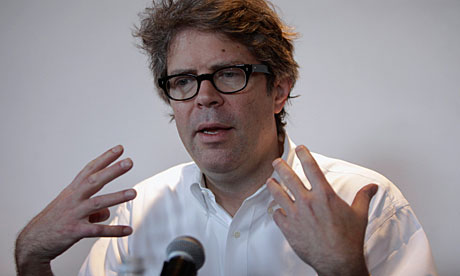
Jonathan Franzen is afraid: should you be, too?
“When I read a book, I'm handling a specific object in a specific time and place. The fact that when I take the book off the shelf it still says the same thing – that's reassuring." This is author Jonathan Franzen, speaking on the evils of the ebook earlier this year. Like many über-literary types, Franzen is not a technophile. He would like the publishing industry to stay the way it is, which is to say, aggressively static. "Someone worked really hard to make the language just right, just the way they wanted it. They were so sure of it that they printed it in ink, on paper. A screen always feels like we could delete that, change that, move it around. So for a literature-crazed person like me, it's just not permanent enough ... Everything else in your life is fluid, but here is this text that doesn't change ... Will there still be readers fifty years from now who feel that way? Who have that hunger for something permanent and unalterable?” Franzen's fear of change extends to a dislike of people who disagree with him: if you, dear reader, are a consumer of ebooks, you are not a "serious reader." Not according to Franzen, who might just possibly still be reading books in cuneiform chiseled onto clay tablets.

I hate to break it to Franzen and his fellow Luddites, but the ebook is not going away. As papyrus was superseded by parchment, and the quill was superseded by the printing press, the Kindle will almost certainly be superseded, eventually, by some new bit of technology. The point is that in spite of Franzen’s obvious desire to freeze the world in place, things do change. Gutenberg's technology didn’t bring the end of civilization (in fact, it might have helped it along), and I think it’s fairly safe to assume that neither will the inexorable march of the ebook herald the apocalypse.

Old harbinger of doom
New harbinger of doom

First, it’s worth pointing out that the static-book concept is something of an illusion. Books can change from their original; we call those changes “editions.” Orson Scott Card, for example, had the chance to change some things about his bestselling novel Ender’s Game, originally published in 1985, but with an “author’s definitive edition” released in 1991. Other books have been changed against their author’s wills: Huckleberry Finn suffered a more ignominious rewriting when the n-word was recently expurgated by well-meaning but clueless censors. D.H. Lawrence and other authors ahead of their times have had their words changed: the fact that their books were printed in ink, on paper, did not make them immutable. Actually, D.H. Lawrence benefited from the passage of time: unlike Twain, his original words were released in later editions, as reader sensibilities liberalized.

Not "permanent and unalterable"
So, Mr. Franzen, even before the ebook, novels were not always "permanent and unalterable." But they are about to become quite a bit more dynamic, and as writers we have to prepare ourselves for this change.

In 2007, ebooks accounted for one-half of 1 percent of the trade book market, according to an annual survey conducted by the Association of American Publishers. Just a few months later, the Kindle was introduced, followed by the Nook in 2009. Ebooks went from a trickle to a tsunami at that point: their sales and markets have doubled every year since then. In 2011, ebook sales were up 117 percent, representing nearly 20 percent of all book-publishing revenues. 

It’s not simply that books are moving from paper to digital format, though. The book itself is changing, as indicated by Franzen’s fretting over “permanence.” Authors can now get immediate feedback on their work from readers, before the book has even been officially published. Authors may begin releasing their books bit by bit, with readers giving feedback nearly in real-time on plot development and character. This means the book becomes something like a collaboration between writer and reader.


Dominque Raccah, CEO and publisher of Sourcebooks, calls this the “agile publishing” model. “You really are publishing into a community already," Raccah says in this NPR interview. "So what you are going to be doing is developing that book in front of that community, having the community interact with the author to develop the book [and] provide feedback."
The writer and her readers, collaborating

I find this concept rather mind-boggling: exciting, a little bit scary, and full of possibility. We may even need to rename the book itself, replacing it with a "word that will describe the digital, transmutable, readable, platform-agnostic, weightless, immersive, elastic creation, hitherto known as a book."


I’m not an especially adept technophile — I always feel I’m limping along after trends, trying to keep up, and missing a variety of revolutionary boats. But I am not afraid of the future, for the most part, and I think some of the changes in the publishing world could go our way, as writers. If e-publishing is a tsunami, we writers have a choice to run screaming from it, or to grab our surfboards and ride this sucker.


What do you see as the pitfalls and possibilities of this frontier in publishing?

Monday, August 8, 2011

Too Dark for Teens?

How dark is too dark for Young Adult fiction? When I began writing a YA novel a few years ago, I struggled with this question. I wasn’t sure how to handle my protagonist’s burgeoning sexuality, or how graphic the fight scenes in the book should be. I’m not the only one worrying about this: parents and teachers are chewing their nails too. When we have teens reading stories about racism, rape, murder, drug abuse, suicide, and genocide, have we gone too far? Do we want our young people reading about an isolated group of children who turn savage and fight to the death? What happened to the days when the most daring book a teen might read was “Are You There God, It’s Me Margaret?”

A few weeks ago, this national conversation — which has been going on at least since the middle of last century — got a bit more heated when the Wall Street Journal published a piece by Meghan Cox Gurdon excoriating the horrible, awful, no-good, very-bad state of YA lit. Gurdon writes, “How dark is contemporary fiction for teens? Darker than when you were a child, my dear: So dark that kidnapping and pederasty and incest and brutal beatings are now just part of the run of things in novels directed, broadly speaking, at children from the ages of 12 to 18.”

Before I get into my take on this debate, it bears repeating that “Young Adult” is a broad genre, and that a 12-year-old is quite a different reader than an 18-year-old. The last few Harry Potter books may be too dark for the former; The Hunger Games trilogy ditto. But most high-school seniors will consider those books kid stuff. They’ve been assigned books like “Heart of Darkness,” (it's right in the title!) and “To Kill A Mockingbird.” They’ve been reading about holocausts, racism, and rape. Parents, kids, and authors all have to recognize that in spite of the one-size-fits-all title, YA encompasses an enormous range. Just because a book is not appropriate for a 12-year-old doesn’t mean it shouldn’t be written.

Back to teenagers browsing through books about rape, genocide, drugs, and children fighting to the death. Am I referring to “The Hunger Games?” Or to Sherman Alexie’s gritty novel, “The Absolutely True Diary of a Part Time Indian,” about life on the rez? (Both of these books are on Gurdon’s “too dark” list.) No. I’m recounting books assigned to most high school students over the past fifty years or so: “The Catcher in the Rye,” “The Diary of Anne Frank,” “The Outsiders,” “Go Ask Alice,” “Lord of the Flies,” “Oedipus Rex,” and most of Shakespeare.


“Pathologies that went undescribed in print 40 years ago, that were still only sparingly outlined a generation ago, are now spelled out in stomach-clenching detail,” writes Gurdon. Really? Take Hamlet: you’ve got suicide, incest, parricide, and everyone dies in the end. In “Lord of the Flies,” two sweet boys are brutally murdered by other children, and the vivid description of a pig slaughter will put you off your tea for days. In “A Clockwork Orange,” a 15-year-old and his friends go off on a murder-and-rape spree. These are all classics, all read by teens forty years ago (or more).

Another WSJ article takes up Gurdon’s cause: “Until recently, the young-adult fiction section at your local bookstore was a sea of nubile midriffs set against pink and turquoise backgrounds,” writes Katie Roiphe. “Today’s landscape features haunted girls staring out from dark or washed-out covers. Current young-adult best sellers include one suicide, one deadly car wreck, one life-threatening case of anorexia and one dystopian universe in which children fight to the death. Somewhere along the line our teenagers have become connoisseurs of disaster.”

Roiphe must have forgotten Deborah Hautzig’s “Second Star to the Right,” published in 1981, about a 14-year-old’s near-fatal bout with anorexia. (Amazon lists it for “ages 12 to 15.”) We’ve already covered suicide and children fighting to the death with Shakespeare and Golding. These themes are not new, and young people’s exposure to them is not new. In fact, required reading for high school is inevitably going to include books with grim, dark, difficult themes.

The current kerfuffle over the state of YA is, I suspect, the result of Good Old Dayism: these people are remembering a past that never existed. Gurdon might have read Judy Blume when she was a teenager, but I was done with those books by the time I was 11. As teenagers, my friends and I read Pet Sematary and Clan of the Cave Bear. We read VC Andrews and HP Lovecraft. As teens still do today, we actively sought out dark books, books about people with problems bigger than ours, books about sexuality we hadn’t experienced. It was a way to experience things without actually having to live through them, a way to learn lessons without having to get hurt. While Gurdon seems convinced that reading about bad things will convince kids to go out and do bad things, I suspect it more often goes the other way — especially if the story explores the negative consequences of poor choices.

As a writer who has dabbled in YA, and as the parent of a teenager, I’m constantly aware of story content and context. They’re both important, but when it comes to writing and reading YA stories, context trumps content. A violent scene, or an early sexual experience, is completely different to read about when couched in different ways. Sex can be presented as meaningless or as part of a loving, consensual relationship. Violence can be gratuitous or illustrative. It’s all in the presentation. The point is not whether things are too dark, the point is whether the story reflects my value system — as the parent, and as a writer.


Monday, March 7, 2011

Age and blood-ties: Do readers impose their taboos on the industry?


Oscar Wilde did not believe in "dangerous" books


The publishing industry claims there are no forbidden themes in fiction, agreeing with Oscar Wilde´s quip that there is no such thing as bad books, only badly-written ones. But we, readers, know very well what topics disturb us. What happens when the public refuses to read novels dealing with controversial topics? Won´t the industry budge to its clientele´s tastes? What are the once safe subjects that now upset modern sensibilities?

I begin by saying that my comments are on the American scene, since the United States is still the leader in book-publishing in the world. Other publishing industries have their own idiosyncrasies and prohibited subjects, but to all of us who write in English, it´s the American industry that matters.

I am fifty-one years old, and like most people my age, I am painfully aware of the distinction between Twentieth Century’s and contemporary cultures. Our way of thinking has evolved tremendously and that applies to literary tastes as well. A Third Millennium reader might be shocked and offended by the way classical works of literature dealt with love in times when spousal rape, underage sex, and sibling marriage used to be the norm.


As modern critics applaud the erasure of racist epithets in Huckleberry Finn, so they show antipathy towards certain subject matters in current fiction. Exploring user´s comments on Amazon and other sites, I have come to recognize what issues are considered “icky” and elicit the most “how gross!" and ”eeews!” from readers. Among those controversial scenarios are cousin-marriage and May-December affairs, even when they take place in historical settings.


From Jane Austen to Louisa May Alcott, “kissing cousins” were frequent romantic elements in Victorian novels. Over a hundred years, and several medical and social misconceptions later, marriage among cousins disgusts American audiences. Unless it is shown as illegal, incestuous and negative, such a relationship in modern literature is unthinkable. Not surprising since the only Western country that bans those unions is the United States (and it´s unlawful just in thirty states).

Cousin-marriage a la Austen


The British YA novel How I Live Now, has been widely criticized on the Internet for depicting a love affair between a fourteen-year old and her first cousin. Users and critics agree that books should carry warnings signs to alert readers about unsavory content. Not even children’s literature is safe from such displeasure. I heard that copies of the well-loved Babar series now have been censored so there is no mention that Celeste, the elephant’s wife, is also his first cousin. Are they doing the same with Beatrix Potter’s Peter Rabbit? Because if I don’t ill recall, Peter married his first cousin, Topsy.


The same distaste applies nowadays to that old romantic staple: May-December love affairs. Even if it happened in days of yore, the idea of an underage wife makes readers flinch. It’s no use telling people that until World War I, men married old and women married in their teens. Just remember Scarlett’s fear of becoming a spinster like 20-year old India Wilkes. But perhaps, Gone with the Wind is, by present standards, a dangerous novel.

May-December romance in GWTW

I was nine-years old when I came across my first copy of Gone with the Wind. It took me two days to finish it and less than fifty pages to turn it into my favorite novel of all time. It might come as a surprise that Melanie marrying her first cousin or Scarlett marrying the much older Rhett Butler did not shock me. I am embarrassed to say, I was not even offended by Rhett raping the heroine. I guess, many felt that way because in 1987, conducting a poll among my high-schools students, I found that GWTW was still a YA bestseller. I wonder if that would hold true today. Do teen readers, and adults, still fall in love with GWTW, or are they uncomfortable with it´s racism and sexism, not to mention the odd matrimonial customs of the Old South?


Gigi and her much older paramour

With that in mind, I can understand why modern sensibility cringes at films like Gigi, based on Colette´s novel, which has a fourteen-year old reforming and marrying a bored womanizer. How do people feel about Jo March marrying old, but loving, Professor Baher? And how many complaints have I read about Twilight because 100-year old Edward is a tiny bit older than teenaged Bella? The fact that Bella is an “Old Soul”, who would much rather cook and read Jane Austen than do drugs at the nearest disco, should be taken into consideration.

Bella messing around with an "older man"


As I wrote once, Fantasy and Science Fiction offer great refuges for taboo-breaking. George R.R. Martin became a bestselling author after creating a world, in his saga Song of Ice and Fire, where incest is not a crime, thirteen-year-old brides are acceptable. The hottest craze for vampire romances lets May-December thrive as long as, quoting a reader, “the hundred-year old vampire looks good!”


Must add, so this doesn´t sound like an attack on people´s preferences, that certain novels do disturb me , even if set in fabled worlds or historical settings. Today, many of us are uncomfortable with early bodice-rippers that dealt with “rape fantasy” romances (i.e. heroine raped by hero). Visiting a romance forum, I sympathized with comments repudiating Rosemary Rogers and Kathleen Woodwise’s works for including that scenario, but then I was appalled when the same readers embraced Diana Gabaldon’s Outlander that has the villain raping the hero. Talk about a double standard!


To anyone that asks, I wholeheartedly recommend Jacqueline Carey´s Kushiel series. It offers elegant prose, plenty of intrigue and adventure stories, and Carey has created a wonderful parallel world that mirrors the European Middle-Ages. Having said that, I confess that after reading the first book in the series, I gave up on it. I found it excessive , not to mention sickening, to read about a society that made sex the number-one priority, where girls were trained to become sacred prostitutes , and where the heroine’s greatest gift was to experience pleasure through pain.


I realized that only the “Historical Fantasy” label permitted the Kushiel series to become part of mainstream literature. I don’t believe it would have worked if masochist Phedre had been the protagonist of a contemporary romance or a historical novel, because reader tolerance does not encompass historical settings. And one of the best examples is The Kindly Ones, Jonathan Littel’s award-winning novel.


American- born Littell chose to write this novel in French, he had it published by the prestigious Gallimard publishing house, and eventually went on to get Le Prix Goncourt, the French equivalent to the Pulitzer Prize. The Kindly Ones is an exploration of the Holocaust written from the point of view of an SS officer, a highly educated, but deeply-disturbed human being.


Although vastly praised, The Kindly Ones has come under fire by several critics that begrudge its historical inaccuracies, the handling of the Holocaust, and last but not the least, the almost pornographic juxtaposition of sex and violence. Add to the fact that the protagonist is homosexual and has this obsession with somodizing his sister, and you´ve said it all.

There´s even a story that Littell, having been rejected initially by many American publishing houses, eventually rewrote his novel in French. What fuels the possibilities of this rumor being true is that The Kindly Ones’ translation, bought by HarperCollins, did very poorly in the American market. Which shows the industry knows its readers and their likes and dislikes.

Now it´s your turn to tell us what subjects you find repellent? What novels have made you cringe? And should the industry stay away from controversial themes?

Monday, February 14, 2011

The Great Prologue Debate

There are two schools of thought circulating in the writing world concerning prologues. Why, you may ask? Because for some reason, someone out there thought a heated debate should arise about whether this element is worthwhile when it comes to an author's novel. That reasoning is entirely up to you, the writer.

To start out, I ventured into the deep, dark world of 'Prologue vs. No Prologue' and I took a look around the Internet world to see what people are saying concerning the use of a prologue.

Wikipedia gives a good description of a prologue:
A prologue . . . is an opening to a story that establishes the setting and gives background details, often some earlier story that ties into the main one, and other miscellaneous information. The Greek prologos included the modern meaning of prologue, but was of wider significance, embracing any kind of preface, like the Latin praefatio. In a book, the prologue is a part of the front matter which is in the voice of one of the book's characters rather than in that of the author.
Okay. Nice and to the point.

On Yahoo! Answers I found the following advice:
  • If it's over three pages, then people won't bother reading it.
  • It's okay if it's short -- anywhere from one paragraph to five pages.
  • Prologues aren't necessary; they should be included as backstory in the first chapter.
  • There's no point if it's too short.
  • Have a little "exposition" moment in the story instead.
  • Have a flashback instead.
As you can see, the information and advice is rather varied, so let's try somewhere else.

According to StoryFix.com, a prologue can be like "playing with guns," meaning you have to be very careful about how you approach yours. If you start it off all wrong, then you'll end up sending your readers down the wrong path.

And one last site. According to Writing Forums, here's some answers pertaining to prologues:

  • It is a prologue if it is distinct from the rest of the story.
  • It either has different characters, is set in a different time, or both.
  • You can name your prologue.
  • A book is best explained without some massive backstory at the very beginning.
  • A prologue is a crutch, especially for first time authors.
  • "Experts" say prologues detract from the story.
  • Do what is best for your book.
What to do?
Are you confused, yet? Probably, but that's okay. Personally, I'd go with that final answer. Do what is best for your book. Sure, a prologue can be a tricky element to work with, but when you use it correctly, the whole object is for it to enhance the storyline in some way, shape or form.

If you want to add a prologue to your novel, here's a few things to keep in mind: 1) It should take place during a period far removed from the time your full novel is taking place. For instance, perhaps an important scene takes place in your MC's childhood that will spark a chain of events later on in your MC's life. 2) Write it in a different voice than what the reader will find in the majority of your novel, i.e. first person POV if the rest of your novel is in third person, a character whose voice never appears anywhere else in the novel, or an omniscient POV. 3) Agents will not crucify you and send you off to the writing trenches just because you've written a prologue at the beginning of your novel. The whole 'agents-hate-prologues' myth has received more attention than it deserves. If you've written a clean manuscript with a good plot and story, then an agent isn't going to care too much about that prologue by the time he/she gets to the end of your story. They might actually appreciate your work more for adding it.

I did find some good pointers by Marg McAlister on Foremost Press.com:

Before you make a final decision about whether to write a prologue for you book, do this.
Spend some time at the library (or at your bookshelves at home, if they are extensive). Pluck books from the shelves, looking for prologues. Read through at least a dozen. More if you can. The time will be well spent.
Which prologues worked well? Which pulled you into the story? Which cleverly outlined the backstory, getting it out of the way before the story started?
Which dragged? Which didn't need to be there at all? Which were weighed down by the load of the information they had to carry, and bored you? How could they be fixed?
Analysis of published work is an excellent way of deciding what works and what doesn't.

Whatever you decide, if you do choose to use a prologue, use that prologue wisely!

Perhaps you've found yourself struggling with the great prologue debate. Do you avoid the use of prologues at all costs, or do you have a fondness for them, so much so, that one always winds up at the beginning of your current WIP?

Mary Mary

Join me next month for my interview with writer/translator Tiina Nunnally!

Stop by The Random Book Review and see what book I'm discussing this week!

♥ ♥ ♥ ♥

Happy Valentine's Day!


Go have yourself some chocolate!


Monday, January 17, 2011

The Controversial World of Slang

Huh??
Being a historical writer certainly comes with its challenges. I'd say one of the more interesting and, often times, more fascinating aspects is the use of slang. If you're a more contemporary writer, or one of those who delves into Fantasy, Science-Fiction or other-worldy genres then you might not feel the need for believable slang in your writing. But for me, it's essential.

When I wrote my first novel, which takes place during the mid-1800s, the first major roadblock I ran into was that my dialogue was just not convincing enough. "Why would a slave speak like an everyday, ordinary human being?" one critiquer asked. And you know what? That particular critique was spot on. I had written flat characters onto the page, simply because I had ignored the speech patterns of each individual character. And I had avoided the lingo of the time period.

Among the three time periods I've tackled (1850s, 1920s, and 1940s) I'd say the one that takes place in the 1850s was the hardest for which to research the slang. Why, you may ask? Because it's not as easy to trace slang when no one today was alive during that time period (let alone really speak it since most of it is viewed as derogatory). Yes, it gets passed down and we find certain references in other literary works, but writing styles during the 1800s were quite unlike the writing styles we find today. Those writers may not have followed the slew of rules that bog down the more modern tippy typers, but a majority of literature one reads in a World Lit class, American Lit class, European Lit class, etc. was written by highly educated individuals (or incredibly detailed individuals). Now, I'm not saying that writers today aren't a wonderfully educated bunch, but the difference lies in the fact that colloquial speech is much more acceptable this day and age. But that also depends on the words one chooses to use.

When contemplating the use of slang in your manuscript there are a few things to keep in mind:

  • First, take a look at your genre. Some genres (like sci-fi and fantasy) don't necessarily require the use of slang. In actuality, it might even age your writing. If you're using today's slang, then five, ten, twenty years from now, readers are going to see that what you wrote has become outdated (just take a look at some of those sci-fi movies from the eighties). There are a few exceptions, like with Steampunk, where history is mixed in, therefore the use of slang would actually add to your story.
  • Secondly, don't overuse it. Slang is good in small portions. If you decide to go back and infuse your manuscript with this element, make sure you aren't writing large portions of dialogue or prose that get bogged down with slang. This just makes your writing ridiculous. Just like with any other element you decide to use (flashbacks, multiple POVs, the "to be"verb, etc.) keep it to a minimum. You don't want to draw unwelcomed attention to your writing -- you want that writing to sing, uninterrupted.
  • Thirdly, don't confuse your reader. Finding a treasure trove of words from say, the 1920s, doesn't mean your audience is going to understand what you choose to use. Make sure your target audience is going to grasp the meaning of your chosen slang. With historical, readers expect a different vocabulary, but again, don't use the most obscure terms you can find. And put it into a context that can lead the reader to its meaning. For instance, when I referred to my protagonist as a partier I used the term "liberally spifflicated." It's an old term referring to one being drunk, and one of my critiquers instantly picked up on it and actually enjoyed the use of it. 
  • Lastly -- and keep this in mind -- know you're not writing to be "Politically Correct." If this mindset sets in, then know that you're not really writing -- you're putting things on a page that a PC-populous would want from you. As writers, we need to respect the lingo of our chosen time period, no matter how offensive it would be viewed today. There was a reason for its birth -- don't squash that reason with your seat-shifting need to avoid it. If you're not comfortable with writing certain words, then perhaps you should change aspects of your story around in order to avoid them.
This final point brings me to a debate about which I recently read. As a writer, my hope is that through the years my work will be passed on from generation to generation. I'm sure Mark Twain had that in mind as well. There was an interesting article published on Entertainment Weekly's website concerning The Adventures of Huckleberry Finn debate. Basically, what the article states is that a new version of this wonderful novel will be published with the "n" word and the word Injun removed and replaced with the less offensive terms slave and Indian. There is the argument that this is a form of censorship. I believe Mark Twain had a purpose for writing the story as he did. Does that mean that years later a PC public should come along and change it just because we now view these words as offensive? You can read the article and responses and decide for yourself.

The Indian War Memorial monument
(2006) courtesy of Wikipedia
Another example I'd like to point out involves The Indian War Memorial monument at the center of the Santa Fe plaza. I bring this up because this is the first I've seen like it. Just so you know, I'm not condoning the use of derogatory or hateful language of any kind, especially this day and age. I'm simply stating that there is a reason why writers choose the language they place in their work.

If you've ever been to the monument, seen the inscriptions, and then read the plaque in front of it, then you've seen that some of the original inscriptions have been chipped away. It once read "Savage Indians", of which only "Indians" remains. It's been a while since I last visited the monument, but I also believe a couple other offensive terms have been removed (correct me if I'm wrong). Even so, should a monument, with an inscription that once reflected the charged, strife-filled atmosphere of Santa Fe, have its historical meaning removed in order to placate those who don't want a reminder of history staring them in the face? History is just that -- history. If we remove the words that created our world, simply because today we find them offensive, then how will we ever fully understand the past? As a historical writer that's exactly what I need to know in order to craft my story properly and bring a bit of what was once known to the world we live in today. Otherwise, we may just end up repeating that past so many others want to believe doesn't exist.

How about for you? Do you think The Adventures of Huckleberry Finn debate is a form of censorship? Or do you view it as minor corrections to a work children will read in their classrooms? Should we erase offensive slang of the past so as not to bring up the children of today in a world that still bears the scars those terms created? Can you think of other instances where either literary works or public inscriptions have been changed?

Just food for thought that I believe is worth munching on!

♥ Mary Mary

Thanks, for this lovely award, goes out to the The Blogger Formerly Known As and also over at Jennifer Lane Books. Stop by and show them some love! Perhaps I will pass it on at a later date, but I'm just unable to at the moment.


Stop by and see what I've got going on over at The Random Book Review!