Showing posts with label The Hunger Games. Show all posts

Sunday, December 8, 2013

Killing Them Kindly

Okay, I have a confession to make. (A new year is quickly approaching, so I can make an early resolution if I want to, right?)

I tend to laugh during movie death scenes.

There, I said it. (My resolution will be to try and stop laughing during death scenes.)

Last week, I joined some friends in viewing a film that was kind of 'meh' for me, but what really got me was the storyline. It was neatly tied in a bow and everyone lived happily ever after. Oh, except for the one guy who got shot by the drug cartel and died a slow, chatty death. And I couldn't help but laugh.

After watching the film, a friend who'd been sniffling behind me during the death scene called me out on my inappropriate behavior during such a poignant scene. Oh, for shame! He had leftover tears in his eyes, but a smile on his face when he asked, so I knew he wasn't really angry at me. But, I did have a moment of "Oh, I'm a horrible person!" And I hadn't realized I'd laughed. I guess it's become second nature when it comes to certain scenes I watch (by "certain" I mean unbelievable scenes that make the story seem cheesy).

So, why did I laugh?

Well, it goes back to that chatty character shot through with a bullet. He just wouldn't stop talking and die already. Maybe that sounds callous, but in reality, chatty deaths are not the way to take your character out of the story. It prolongs the scene as your character stands on his/her soapbox one last time, when you're almost sure he/she would be dead by now. It boils down to suspension of disbelief for the viewer or reader.

Then the question may be -- "What is the best way to kill off a character?"

Well, that depends on your genre. Even in the murder mystery realm there's a difference of opinion as to how to knock someone off right. A hardboiled crime novel will have no qualms of shooting things up as a character walks down the street. No one bats an eye when the body count rises. And the more expendable characters, the better. But, then you get into your cozy mysteries and the blood and gore is left off the page. Characters tend to "happen upon" the murder victim, and from there clues are meticulously sought out while the body is quietly removed from the scene. Literary tends to go either way. There could be a very public, gory display of death, or it could be a story centered around a mother slowly dying of cancer throughout the length of the novel. It all depends on genre and what the audience is expecting.

But, here are five things you don't want. These will leave your readers rolling their eyes:

  • Chatty Cathy Deaths -- As I mentioned above, nobody enjoys a chatty corpse. These are death scenes where it's obvious the victim is on death's door, but for whatever reason the author has decided that a long, lengthy soliloquy is needed. Unless you're Shakespeare, a drawn out, more than "merely a flesh wound" death is unnecessary. Don't let the character keep pulling his own string!
  • The Incredibly Overworked Death -- In these deaths, characters are fatally wounded, but they flail and carry on. They just won't die. A 1973 Turkish film, Kareteci Kiz, was voted in 2012 to have the worst death scene ever. (You're intrigued now, aren't you?) I didn't add the clip, but you're more than welcome to hop on over to YouTube and check it out. You'll see a useless bystander, some tragically horrible karate and knife action, about five random shots fired, lots of badly placed fake blood, and death in slow-mo. Sounds believable, right? You'll get a good laugh!

Look at all that fake blood!
And I thought the bullet wound was
 somewhere else!
  • The "No, He's Not Really Dead! It Was Just a Dream!" -- One great television show comes to mind when I think of this one:  Newhart. This show pulls off what could be seen as a death that didn't really happen (I was never really sure if Dick was supposed to have died in that final scene). After Dick is struck on the head by a golfball and the scene fades to black, we see that Newhart was nothing more than a dream during The Bob Newhart Show. Sound trippy? It kind of is if you've ever watched it. Although Newhart pulled this off beautifully, deaths that end up becoming dream sequences just don't work anymore. They've become clichéd and are seen as an easy out for the writers. Nobody likes to bid adieu to a favorite show, so why not make it seem like it was all a dream? Just ask the folks over at Roseanne. They tried to pull off something similar, only they didn't fare as well in their final episode.

One of the best season finales ever,
only, I wouldn't try this in your
own writing.
  • Fatal Cliffhangers That Fall Flat -- Arguably one of the best "will he or won't he die" cliffhangers ever comes from Dallas (the 1980s version, not the more recent one). During one hot, feverish summer in 1980, fans of the show barely slept because one question nagged their thoughts:  "Who shot J.R.?" Although J.R.'s life hanging in the balance at the end of Season 2 is one for the record books, chances are many of you can't even name his revealed shooter. As spectacular as the shooting may have been, it's best if a main character goes out at the hands of someone important, someone who holds a lot of meaning in that character's life. It took the show two months to reveal who-done-it, and it turned out to be a jealous mistress shooting him in a fit of anger. Hmm...With so many other characters out for J.R.'s blood was this the best move? That one is up for debate! Oh, and the shooter's name was Kristin Shepard.

Fascinating show, but I'm not so
sure about the shooter's reveal.
What do you think?
  • Killing the Most Beloved of All Characters -- This final point pertains more to who you take out and not how you take them out. We've all read a book or two where a beloved character gets killed off in the end. Mainly, these are stand alone novels, ones where the stakes are high and you know there is potential for death for the MC. But what happens with a series? For instance, in Catching Fire, the second book in The Hunger Games trilogy, I was pleasantly (but also horribly) surprised when Cinna, Katniss's much-loved stylist, gets killed right before she's scheduled to enter the arena. I was pleasantly surprised because Collins pulled that one off very well. (Sad, because, you know, it's Cinna.) But, let's say you take your readers through the entire trilogy and then BAM! You take out the MC? Not many series do this, but those that do tend to get angry reactions. Why? Because of the investment the reader has made. They are connected to this particular character and they want to see the best for them in the end...not death. How would you have felt if Katniss had met a random death at the end of Mockingjay? My point exactly.

Rewrite this ending:
Katniss dies.
So, there are a few pointers for you as you muddle through the decisions you must make when it comes to thinning the herd of characters in your book. At the very least, try to let your characters go out with a little dignity. Keep in mind that anything cheesy will induce eye rolling and possibly make your reader or viewer laugh!

Are there any death scenes from either books or films that just send you rolling on the floor? Are there any other pointers that come to mind for you? Share with us!

Sunday, April 28, 2013

A Real Dystopia

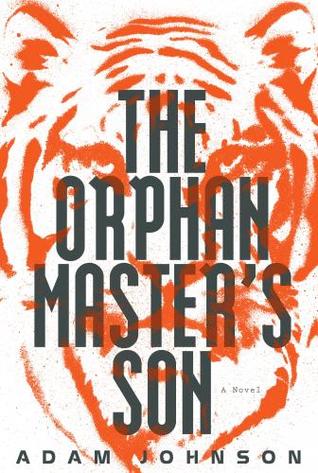
I'm currently reading the scariest dystopian story I've ever read (and I've read a lot): The Orphan Master's Son, by Adam Johnson. It won this year's Pulitzer Prize, and it was about North Korea, so I thought I'd give it a go. I knew nothing about North Korea.

Korean children during the Great Famine

The book is fiction, but the story is true enough: that's what makes it so frightening. The novel follows Jun Do (think: John Doe), meant to be a North Korean everyman. We follow his journey from Dickensian orphanage, to surviving the Great Famine in the 1990s (in which millions perished), to his time as a Korean-English interpreter — he ends up at a surreal Texas barbecue with a senator — to, finally, a stint as Kim Jong Il's right-hand man. And since this is one of the worst dictatorships in the world, be assured that with each identity Jun Do assumes, he suffers in new and horrible ways. I had to skim the bit where the tattoo on his chest is sliced off with a boxcutter. (It does happen offscreen; it's still cringeworthy.)

As improbable as this plot sounds, in a land as completely upside down as North Korea, it seems plausible that all this could happen to one man. And Johnson researched the heck out of that strange country, including traveling to Pyongyang, the capital. (I'd like to know how he pulled that trick off without ending up in a gulag.) The details are made up, but the story is not an invention.

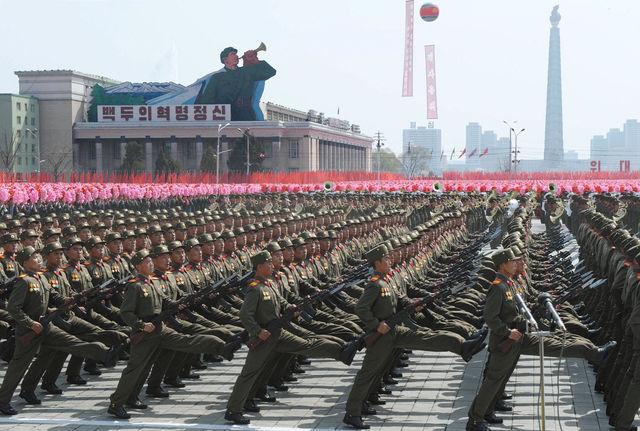
Lockstep love for the Dear Leader


Well, what is a "dystopia," anyway? Why do we always think of it as fiction? We think about books like the Hunger Games and Fahrenheit 451 as cautionary tales, as warnings that we in western democracies better keep an eye on our scurrilous leaders, else we'll have a President Snow forcing our children to fight each other to the death. But there are societies right now that are just as bad — worse — than these imaginary dictatorships. I'd rather live in the world of 1984 than in Johnson's North Korea. Both have their Big Brother, but you don't have rampant starvation and frozen gulag hellholes in 1984.  

"Dystopia" literally means "bad place." In fiction, a dystopia is usually a utopia where something's gone wrong. Some leader got it in their noggin that they could create a perfect society where everyone would be happy — if only everyone would obey. Usually the government in charge of this "perfection" has become incredibly repressive: you have to control every aspect of a place if you want your ideology to be pure and true for every citizen. Otherwise your plan becomes sullied by other people's ideas.

I've been drawn to dystopian fiction for a long time, and had the pleasure of reading Orwell's 1984 again this year. The Orphan Master's Son owes a lot to that book, which might be considered the first dystopian novel. Orwell was thinking about the Soviet Union, so it's not a surprise that the North Korea of Johnson's novel would so strongly mirror Orwell's fictional world: what is it about communism that lends itself so readily to dystopia?

It's not like capitalism is without its flaws. I also read The Grapes of Wrath this year, and I just finished Behind the Beautiful Forevers by Katherine Boo, a nonfiction book which documents life in a slum in India — as the author says, much of the slum's structure is a result of global market capitalism. But the grimmest pictures painted by capitalism's critics just can't match the world depicted in The Orphan Master's Son. Whatever our society's flaws — and we have so many — we are not like that. Thank goodness we are not like that.


Your turn: have you read a fiction book that has affected (or even changed) your views of economic or political systems? What was it, and how did it shape you?


Sunday, February 12, 2012

Picking and Choosing Character Traits

Raise your hand if you've ever read a novel, then went to see the movie and the first thing out of your mouth was, "She shouldn't be playing that role! That's not at all how I envisioned the character to look! Whoever cast this thing didn't know what the heck they were doing!" (Or more flagrant wording if you are so inclined.)

Yes, my hand is raised.

Jennifer Lawrence
in
The Hunger Games
When it comes to movies, nothing seems to annoy us more than when a beloved novel gets made into a film and gets miscast. But why? Well, a lot of it has to do with how we've interpreted the characters on the page, and believe it or not, most of us interpret those characters much differently than how another reader might. I've heard more than my share of grumblings over Jennifer Lawrence playing Katniss in the upcoming The Hunger Games film. She's to old, not the right build, not a strong enough actor to believably play the part, etc. Take a look at the movie poster, and I'll let you be the judge. I'd have to say my personal favorite to this day is Jennifer Lopez in Out of Sight, a sizzling story about a bank robber (George Clooney) and a US Marshal (Lopez) on a case to catch him in the act. The book was nothing more than a throwaway heist novel written by Elmore Leonard that I read a couple years before the film was made. In the novel, the US Marshal is a willowy blonde, nothing like how Lopez's character looks in the film. I'm sure you have a specific film character that to this day just bugs the heck out of you.

No matter how the film world ends up interpreting the characters we write in novels, we still need to take care in how we portray them. After all, it is the characters a reader falls in love with (just take a look at the Twilight series, because I don't believe it's the writing that's winning over fans). As writers, how does one go about crafting a striking character that will stand out to the reader and make the story come alive? Here are a few pointers:

  • Avoid clichés -- Don't make every cop crooked, every blonde busty, every school teacher gentle and sweet, or every lead male flawless in appearance and backstory. I once reviewed a novel (The Art of Murder by Don West) and the whole thing made me cringe. To this day, I think it's one of the most character clichéd books I've ever read. You want your characters to be unique. Give them qualities that will stand out to the reader, like a fascinating backstory or quirky characteristics. I recently heard a statistic about hitchhikers. Hitchhikers who wear ties are more likely to get picked up off the side of the road than those who don't. Well, then give your hitchhiker a tie!
  • Don't just focus on physical appearance -- Although we fall in love with a character at first sight (or first read) we always want to know what makes that character tick. What kind of story follows this character around? Is it a tale of woe? As the story unfolds, the reader wants to peel back the layers of what's hiding underneath. Make sure to give them that opportunity! Take the hitchhiker for example -- Why is he out hitching a ride in the first place? Why does he wear a fancy tie, and yet he carries a backpack on his back as a displaced homeless man would? Bring the reader to that point where they just have to know!
  • But don't be vague about physical appearance -- When characters tend to be poorly fleshed out in appearance, the reader tends to feel a sense of disconnect. Although I've never read it, I remember reading reviews about Toni Morrison's 2008 novel A Mercy, a novel that seems to have flat characters, mainly because she doesn't physically flesh them out very well. And a lot of times, this is why we get disappointed at the box office. The director just had a different vision of a vague character.
  • Give your main character a flaw -- Nobody relates to a perfectly written character, mainly because in the real world we all have flaws. As readers, we want to empathize with the main character. After all, we're invested in him/her for the next 300+ pages. This has a lot to do with those layers I spoke about earlier. The flaw could also be physical, like a bad memory or scars with a story the reader is definitely going to want to know. Back to my hitchhiker -- What if he has a mysterious tattoo on his hand that peaks the reader's interest? That marked-up piece of skin could be a clue to this man's past. What if it depicts something especially violent? Now the reader is going to wonder if the person who picked him up is having second thoughts about that misleading tie.
  • Need a lift?
  • Look for people in the real world who best reflect your main characters -- It doesn't hurt to envision a certain actor as that mysterious hitchhiker with tie and tattoo and thumb out for a ride. Who comes to mind? Maybe keep a picture of that individual on hand so you have a reference back to how he looks. It can make the writing process less confusing.
Those are just a few ways when it comes to crafting your characters, but what if you're still struggling to figure out if what you're creating is going to work? Since we tend to pick and choose character traits from people we know in our lives, then here's an exercise for you to try.

When it comes to the people in your life, who is:

  • The sexiest
  • The smartest
  • The most educated
  • The most emotional
  • The best well-dressed
  • The slyest
  • The dumbest
  • The most creative
  • The happiest
  • The saddest
  • The quirkiest
  • The most ruthless
  • etc.
The list could go on and on, but chances are, we know of someone who could fit into any one of those given categories. Don't be afraid to glean from the crop you have growing right in front of you. Your characters' pieces will fit together properly if you just know where to look. And hey, you might be able to figure out what the hitchhiker is really up to!

Do you struggle with creating believable characters? Do you have any tips you'd like to share when it comes to putting together a main character?