Showing posts with label Characterization. Show all posts

Sunday, September 8, 2013

The Beauty of a Good Documentary


When I was in high school, um...once upon a time, my senior class was forced to sit through Ken Burns' take on the Civil War during our history class. I say forced, because I think a majority of the students sat through that documentary with a glassy stare, hardly any of them processing anything from the many episodes we sat through.

Except for one student!

And, yes, that was me. Every day I waited in anticipation for our teacher to fire up that VHS tape in order to watch that day's installment of the nine episode documentary. When I voiced how much I loved watching The Civil War, my friends stared at me as if I was a deranged monkey with two heads. None of them understood why I didn't use the hour to get in a good nap.

Thinking back now, I can name two things that highly influenced my love of history and eventually instilling in me the need to write historical fiction. One was Ken Burns' documentary and the other was John Jakes with his North and South series. Needless to say, I fell in love with the Civil War and every battle that was fought, every soldier that went off to the front, and every wife, mother, father, child who waited to read that day's deaths in the newspaper to see if his/her loved one was one of the many who perished. I believe a good documentary can do that to a writer, especially a writer of historical fiction. With documentaries aplenty I'm never at a loss for material. And I'll tell you straight up that Ken Burns is probably my favorite to watch, whether it be learning about The National Parks: America's Best Idea or learning a thing or two from Prohibition (which is one of my favorite eras and topics).


But, of course, I do indulge in other types of documentaries. I'm a sucker for a good National Geographic or History Channel presentation. Most recently I watched Serving Life, an OWN presentation about inmates serving life sentences in a Louisiana penitentiary. It deals with the hospice care of men who basically die in prison from old age and terminal illnesses since they have no chance of ever being paroled. Even though these men are hardened criminals, it's heartwrenching to watch the final stages of their lives and the volunteer inmates who take care of them. Then there's Wild Horse Wild Ride, a documentary about captured wild mustangs that are then given to 100 individuals who have 100 days to break and train the horses, which then compete and are put up for auction to good homes. Amazing how some of the individuals know how to work with wild mustangs! This documentary brings out that compassionate level of connection humans can have with animals. I even find material in older pseudo-documentaries, like On the Bowery, an early time in this genre of filmmaking when the idea of filming real life was just forming. In this film, post-WWII veterans find solace in cheap rent and even cheaper drinks, but not much of a future. Through watching this documentary, I learned the rudimentary science of making Squeeze, a very toxic drink made from Sterno, something I was able to use in one of my novels. (But, shhh, don't tell anyone because then the secret will be out!)

Since I tend to be more of a visual learner, I strongly believe there are many things a writer can learn by watching a good documentary:
  • A sense of time:  I know for me that when I sit through the stories that create a time period I begin to feel a connection. Since time machines don't exist, our best way to explore the past is through the eyes of those who have either been there and experienced such horrendous events as the D-Day invasion or the disappearance of the Lindbergh baby, or we listen to those who have taken extensive time to study the lives of historical figures like John Muir and Abraham Lincoln. When we are able to connect with the past and marvel at how Edison was so patient when it came to producing the lightbulb or how sickening places like Auschwitz were allowed in the first place, then we begin to tap into that human well of feelings inside all of us. And viewing the world through a different time period can strangely put things into perspective as to how we got to where we are today.
    John Muir (1838-1914)
    One of the earliest advocates
    of the national park idea.
  • A sense of place:  While I watched The National Parks: America's Best Idea, I couldn't help but think how badly I wanted to visit some of those places like Yosemite and Mesa Verde if only to walk in the footsteps and beauty that others have already experienced. I wanted to take that raft trip down the Colorado and look up at the cathedral walls of the Grand Canyon. The same goes for the BBC's Auschwitz: The Nazis and 'The Final Solution' documentary. Walking with the cameraman through the gates of such an infamous concentration camp is both eerie and chilling, especially when you learn how things really worked in this camp of unimaginable horrors. Everything from the disease-infested barracks to the ovens to the actual photos showing the long lines -- one going to the barracks, the other directly to the gas chambers  -- brings to life the terror in this part of history.

Entrance to Auschwitz
Notice it's by train only, meaning once
a prisoner arrived, he/she never left.

  • A sense of characters:  Not so long ago I finished up Ken Burns' documentary The War, which details World War II through the eyes of men and women from four different towns in America. There were many times I found I just wanted to have a good cry. Most of The War is told through survivors and veterans' memories of what they faced. Every survivor is fascinating to listen to, but two stories that follow the course of most of The War really struck me:  that of a color blinded pilot named Quentin Aanenson form Luverne, Minnesota and that of Glenn Frazier of Mobile, Alabama, who endured the Bataan Death March and subsequent years in prisoner of war camps. Every tale told is filled with a wealth of understanding and character building for any writer. But that's what makes documentaries of any sort so fascinating and helpful -- there's so much to glean by just listening to history and seeing it through the eyes of those who've experienced it.

Katharine Phillips with her younger brother Sidney,
who enlisted in the Marines at the age of 17 in 1941.

In all, as a writer of historical fiction, I highly encourage watching a few good documentaries. If you're struggling to mold a character, if you can't quite seem to imagine the setting you're wanting to use, or if you fail to make a connection with the time period, then, by all means, grab a good documentary on the subject!


Do you enjoy documentaries? Are there any that you would recommend?


Sunday, April 29, 2012

I Love to Hate You: The Irresistible Antihero

One of the biggest challenges for writers is to create appealing protagonists (my Beta Readers know how hard I’ve tried with mine!) According to the experts, if readers don’t identify with our characters, they’ll stop reading. But attaining character identification is not so simple, especially if we look at how the dictionary defines this word:


identification
noun
  1. a process by which one ascribes to oneself the qualities or characteristics of another person.
  2. perception of another as an extension of oneself.

Psychologists tell us that “we like best those who are like us,” but if we take into account that everyone has different tastes and personalities, the task seems monumental. Yet, there is an almost universal agreement that most of us are drawn to positive/optimistic characters like Lucy Ricardo or Forrest Gump. Sounds simple enough, except that not every character can be like them. Time and time again, we’re told that nobody likes perfect characters because they’re not true to life, that our protagonists should have flaws and that they should learn/change/grow along the way in an emotionally satisfying way. With all that in mind, how do we balance flaws and appeal? Logic tells us that the more flawed the character, the bigger his/her arc will be. And if we have a big character arc, we just may touch our audience. But if nobody likes him/her, how do we make the reader continue reading?

Fascinating antiheroes in literature and film are proof that this can be done. In search of answers, I came across a simple concept to solve this dilemma: unsympathetic characters must COMPENSATE their flaws with a compelling trait. This quality should be gripping enough to keep the reader's interest, despite his/her feelings for the mean main character.

Ideally, negative protagonists should have one or more of these five traits:

1. HUMOR

There is something irresistible about a person who can make us laugh. When we first meet Melvin Udall (Jack Nicholson) in As Good as it Gets, we immediately dislike him, yet we can’t help but laugh at his quirky habits and some of his snarky comments. We are hooked by this unusual and utterly unlikeable character (perhaps because we’re curious to know what crazy thing he’ll say/do next.)

At the beginning of When Harry Met Sally, Harry (Billy Crystal) is full of himself and obnoxious, but some his comments are so outrageous they’re funny. By the middle of the film, he has matured and his insights on men/women relationships start to make sense.

For ten years, Sally could not stand Harry. 
In Overboard, Joanna (Goldie Hawn) is a millionaire snob who hires a carpenter called Dean (Kurt Russell) to build a closet on her yacht. When the task is complete, she refuses to pay him as the closet was not done to her full satisfaction. That evening, after she falls overboard and suffers from amnesia, Dean claims her as his wife hoping to get his money back by having her take care of his kids and house. Joanna must adjust to a humble, rural lifestyle and do things she’s never done before. As expected, she encounters a number of funny situations that, eventually, win the audience’s (and Dean’s) favor.

Joanna experiments in the kitchen for the first time.

2.  POWER

What do Scarlett O’Hara, Michael Corleone, the Vicomte de Valmont have in common? They all have power. Scarlett is so beautiful and charming no man can resist her. She also has the power to overcome the hardships that come her way during the war.

Scarlett knows exactly how to get what she wants.
Valmont (Dangerous Liaisons) can conquer any woman he sets his eyes on. For his love, they’re willing to ruin their reputations and their marriages. 

The irresistible and cruel Vicomte de Valmont
Michael Corleone (The Godfather) starts off as a sympathetic character, an articulate family man and returning war hero who wants nothing to do with the mafia, but eventually becomes as ruthless and powerful as his father, Vito. Power, or the ability to achieve what us mere mortals can’t, can fascinate and hook the audience in spite of the protagonist’s flaws.

3.  SYMPATHY

Clint Eastwood is a brilliant director. When we first meet the bitter, rude and racist protagonist of Gran Torino (Walt Kowalski), he’s standing by his wife’s coffin during her funerary service and his badly dressed, ill-behaved, self-centered grandchildren are giggling and checking their cell phones. In addition to these offenses, his two sons are whispering a joke at his expense. We are immediately sympathetic to this character even though we can see from his expression that he’s not a warm and likable man.

Walt Kowalski surrounded by his uncaring family

The protagonist of Girl with a Dragon Tattoo, Lisbeth Salander, is not the most charming heroine: she’s an antisocial computer hacker who never smiles or has a kind word for anybody. However, we see early on that she’s had a rough life. Not only does she live a lonely existence in a cold, humble apartment, but also, the only person she seems to love (her guardian) has a stroke and she’s left in the hands of a disgusting man who abuses her.

When something bad happens to a character or those he loves, we feel sympathy for him (if the author handles the situation well). In addition to sympathy over Walt Kowalski’s crappy family and his impending loneliness, he has positive traits to compensate for the venom that spills from his mouth every time he speaks: he’s hard-working, brave, loyal, straightforward and kind to his dog.

4.  JEOPARDY

Both Lisbeth Salander and Walt Kowalski have another thing in common. Even though they’re tough and confident, they’re vulnerable. Salander is a small, thin woman, with a guardian twice her size who has no conscience. Kowalski is a sick old man who, despite all his weapons and war experience, lives alone in a neighborhood ran by gangs. The two of them are never safe and we cringe every time they take a bold action (which is often).

The Girl with a Dragon Tattoo is always in danger.

As a woman in the South after the Civil War, Scarlett O’Hara is often in danger, too. Her vulnerability makes our bad feelings for her soften at times (though she keeps making us angry throughout the entire novel!)

5. MORAL CODE

If we can see early on that an unsympathetic character is, at the core, a good person, we’re more likely to tolerate his/her bad behavior. We may even start rooting for him/her. Salander does a lot of illegal things, but she has a sense of justice that we can sympathize with. She punishes evil and cruel men. We may not agree with her methods, but we instinctively know that she wouldn’t harm an innocent.

Kowalski has no regards for other people’s feelings and is quick to insult them, but he recognizes that his young neighbor has a good heart and appreciates/respects his virtues. He’s willing to commit the ultimate sacrifice in order to give this kid a chance in the world. Despite his many flaws, Kowalski has a clear sense of right and wrong.

Although Melvin Udall is consistently spiteful to his neighbor (Simon), he gives him shelter when the latter has nowhere to live. In addition, he takes good care of Simon’s dog despite his initial irritation toward the animal. This shows us he has a good heart.

The misanthropist, obsessive-compulsive Melvin
proves he has feelings when he helps Simon.

 BALANCING THE GOOD AND THE BAD

In his book Writing the Breakout Novel, agent Donald Maass points out that the most common mistake he finds in submissions is that the protagonist is unsympathetic. In an attempt to create flawed and interesting main characters, writers make them too dark and that can be “wearisome,” he says. Although he agrees that perfect individuals are not engaging and transformation can be very powerful in a story, redemption only comes at the end of a novel and readers may not stick around for that long. The key to make readers care, he says, is to balance negativity with sympathetic qualities and give dark characters “moments of humanity.” Maass offers the following tip: if a character is aware that he’s self-destructive, wrong or in trouble and makes an effort to change, the reader will remain engaged. The example he gives is Conrad Jarrett in Ordinary People.

Conrad is a depressed teenager who’s just returned home from a psychiatric hospital after a suicide attempt following his brother’s death. Even though his thoughts are dark and depressive most of the time, Conrad makes an attempt to get better and take it “one day at a time.” The reader starts rooting for him.

“Readers need reasons to hope. To write the breakout novel, it is necessary to provide readers those reasons not just at the end but all the way through.” (Maass, Donald. Writing the Breakout Novel. Pg. 117)

How have you handled your own dark characters? Can you think of other imperfect protagonists in literature and what has hooked you to them?


Erasure - I Love to Hate You

Powered by mp3skull.com

Sunday, December 4, 2011

Go ahead, Kill your Darlings! On the Subject of Torturing Characters.


Most novice writers have heard the advice: “Make your characters suffer!” Aside from nudging us to give in to our most sadistic impulses, the advice seems a bit exaggerated. Should we, twisting the meaning of Stephen King’s injunction, “Kill our darlings?” What rationale deems it necessary?

We all understand the need to sometimes bump off a main character. What would be the point of The Great Gatsby, Romeo and Juliet and Don Quixote if their protagonists had lived to ripe old ages? Don Quixote would have ended in the madhouse, Gatsby in jail and Montagues and Capulets would go on feuding in the streets of Verona, until Doomsday. Death in novels always has an objective, to teach the reader (as well as other characters in the book) a moral lesson. Whether is Anna Karenina jumping in front of a train, or Sydney Carton climbing to the guillotine, there is a moral behind their death: It is a far better thing to die than to go on sinning or leading a dull meaningless life.

                                                  Gatsby´s murder

In Little Women, Beth March’s last days are a study in fortitude, but her death is also a rite of passage for Jo. After her sister´s demise, Jo grows more sedate, less impatient, and much more aware of virtues and values. Thus she becomes the right companion for worthy professor Baher. But Beth, Dickens’s Little Nell and Uncle Tom are boring characters. They are icons of suffering, archetypical victims. We don’t really cry over their woes. Because they endure their pain with almost inhuman resilience and resignation, we cannot identify with them. And that is the first good reason not to subject your character to Chinese torture.

We want our favorite characters to get a break, to get angry at life’s injustice, to fight back not to be beaten down and turned into martyrs. It´s why Jo March will always be more memorable than Beth. It´s why we love when Eliza hops over ice blocks to escape from slave catchers. She is the most outstanding character in Uncle Tom’s Cabin, much more than the poor old slave whose name appears on the title.
Eliza's courageous flight
                                                    
I particularly resent killing characters just to make another character suffer. Don Quixote gives a lovely speech and dies in his bed, but it is poor Sancho whom I mourn. His master has gone to fool’s heaven, but he remains on earth bereft of all the promises the Knight offered him, he has no island to rule, no riches to share with his family, no illusions. That is truly heartbreaking.  I wonder if Cervantes realized how unfair he was to Sancho.


Don Quixotes death
                 
Was Hemingway aware of his unfairness to his characters in For Whom the Bells Toll? This classic Spanish Civil War tale describes the efforts of Robert Jordan, an American Professor fighting for the Loyalists, to blow up a bridge. The action takes place in a couple of days. Robert knows and we know that he´ll die. Therefore, we like him, but we don´t grow too attached to him

                                                 Robert and Maria

However, during this time, Robert meets a young girl named Maria. She has undergone every possible horror. She´s been uprooted from her home, her parents had been shot and she has been raped by the Fascists. Robert and Maria become lovers, he dies, and ... I am furious! What´s the point of making Maria suffer again and again? If at least she had been killed fighting alongside her lover, but to experience a bit of happiness and then greater loss? That is sheer cruelty.

Homer ends The Iliad with Hector’s death. Surely not an eye is dry after hearing of heroic Hector vanquished by Achilles who adds insult to injury by defiling his enemy´s corpse. That is sad, but sadder still is the fate of those left behind. And it took several centuries before Euripides dared to describe, in his plays Andromache and The Trojan Women, what Homer didn’t bear to do in his time: the fall of Troy, the murder of Hector´s parents, and the sorrows of his wife. Besides losing her man, Andromache has to see her only child tortured to death, while she is raped and forced to become a conqueror’s concubine.

                                                     Hector and Andromache
Bottom line, forget Hector (even if played by scrumptious Eric Bana), the one that really deserves our pity is Andromache. So I understand why Homer doesn’t tell us her terrible ordeal, or why Wolfgang Petersen gave her a happy ending in his film version of The Iliad. Isn’t that evidence enough that hurting loveable characters has a limit? Why advise it then?  There are those who claim that mistreating characters adds conflict and suspense to the plot, and suffering make characters evolve and grow. It reminds me of Victorian teachers who beat their students to make them strong.

I am the first to recognize Tolstoy’s genius but I don´t understand why he creates such a marvelous dashing character like Prince Andrei Bolkonsky in War and Peace, just to make him unhappy, and finally kill him. To me, War and Peace ends with Bolkonsky´s death. I don´t care about dense Pierre or fickle Natasha. I can’t share their happiness since it is based in Andrei´s departure. The author must have realized his blunder because he ends his novel, not in Pierre and Natasha´s domestic bliss, but in Bolkonsky´s son vowing to grow up to be worthy of his father.

                                                     Natasha and Andrei

I love William Styron’s Sophie´s Choice, and I love Sophie despite her victimization at the hands of her creator. Throughout that thick volume we see Sophie suffer everyday. Not only does she bear the scars of her Auschwitz past, not only does she carry a guilty secret, but she goes through a daily ordeal living with a pathologically jealous lover (and schizophrenic to boot).


Eventually, Stingo (the narrator) pulls her away from abusive Nathan, and offers her redemption, but Sophie, after revealing her horrible secret, chooses death. All the torments she has endured, including her part in the death of her children, have not made her stronger or better suited for life. Strange but her suicide is a relief, I am happy her pain is finally over. Is that what we get from torturing characters to the point of no return? We want to mercy kill them!

Excuse me if  for a moment I wander into self-reference. As a child, I loved visiting with my mother´s side of the family, a bunch of enigmatic but extremely generous people.  Once, I must have been around nine years old, one of the uncles offered to take me to see the latest Disney’s flick. Full of self importance, I informed him that I was “too old” for cartoons. Now I only enjoyed “movies so moving that made me cry.” He looked at me as if was demented. “Why? The whole point of going to the pictures is to have fun,” he said ”not to suffer.” I didn’t realize it back then, but all these mysterious relatives, who spoke in odd languages among themselves and had funny numbers on their arms, had seen enough suffering to last them a lifetime. Now they wanted their entertainment to be “fun.”

As serious readers we shun superficiality, we demand realism, we wish for conflict, we need to see our characters struggling against odds, but we also long for balance. We want our beloved characters to prevail, to be rewarded for everything they have gone through. We want a glimmer of hope! That´s “fun." 

Don´t you agree? Were you ever upset or disappointed by a novel or film where characters went through too much unnecessary angst or had an undeserved unhappy ending? As a writer how do you maintain equilibrium between chastising and rewarding your characters?

Sunday, October 9, 2011

Characters to Die For: Why Do We Love Them?


Melanie and Mammy, my favorite GWTW characters


Despite the constant requests for action-filled scenes and plot-oriented novels, there are still those who are drawn to fiction because of the creatures that inhabit it. Well-loved books are linked to solid and loveable characters that capture an audience’s imagination. What is the appeal behind those fictional individuals? That is a question I pose to all of us character-oriented readers. While waiting for your answers, I’ll try to provide some reasons that lead me (and hopefully others) to get hooked on characters.

After much thought, I arrived to the conclusion that I will read a novel over and over again, to the point that it merits a place in my lengthy list of favorite works of literature, for two reasons: atmosphere and characters to die for. Usually the bond developed between readers and those characters stem from four emotions: identification, empathy, admiration and fascination.

Identification: The reader relates to the character, they share common traits, mores or tastes. They may share similar backgrounds, cultures, faith, and ideologies. Sometimes a character could be confronting a problem, dilemma, or situation similar to what the reader is undergoing. They may even be in the same line of work.  I remember enjoying Anne of Windy Poplars much more than Anne of Green Gables, because when I read the Lucy Maud Montgomery’s novels, I was teaching at an all girls’ school.  I could and did relate to Anne’s teaching experiences and her problems with her students.


Empathy: The character goes through a situation totally alien to the reader, but the latter understands the character’s motivations and imagines he/she would do the same in that situation. I have never attended a witchcraft school like Hogwarts, yet I know if I had, I would behave just like Hermione Granger in the Harry Potter series.

Admiration: The reader looks up to the character for his/her guts and values.  No matter how hard or painful they are, the reader lives vicariously through the character´s experiences.

Beth March is the least loved of the Little Women, but when I was very ill, a couple of years ago; it was she whom I selected as a model of valor and endurance. I also loved Melanie in Gone with the Wind because she possessed both, physical and spiritual courage unlike Scarlett who was a moral coward.

                                               Beth March's last days
I have always admired characters that are willing to stand up for their beliefs even if it causes them grief. As a I child I adored Ligia in Quo Vadis because she was willing to live in poverty rather than become a dissolute Roman patrician’s concubine, and Ivanhoe’s Rebecca threatening to jump from a window rather than surrendering to Sir Brian’s lust moved me to tears of respect. And even though it breaks my heart, I stand with Julia at the end of Brideshead Revisited when she refuses to divorce, in order to marry her true love, because it goes against her Catholic faith.


Julia's Farewell in Brideshead Revisited

Fascination: This is an old quirk of mine. Since childhood I was in the habit of developing crushes on literary heroes. My mother claims that I was in love with Sinbad, the Sailor before I learned to read!

Though embarrassing to confess, I am sure there is more than a bookworm out there who uses protagonists as reference for ideal lovers. Or maybe a fictional character does remind you of an old flame. Then there are characters that represent our secret object of desire, but are only safe to encounter between the pages of a book. My list of fictional paramours (going back to my childhood reading material)   is huge, from Hector in The Iliad to Ari Be Canaan in Leon Uris’ Exodus, from Petronius in Quo Vadis to Stendhal’s Julien Sorel.

                                                       Eric Bana playing Hector in Troy
Now that I have shown you mine, show me yours. What does a character have to do for you to get hook on him/her?  And what fictional people do you admire, feel close to, or have fallen in love with?

Sunday, August 21, 2011

To Err is Human, To Learn Divine

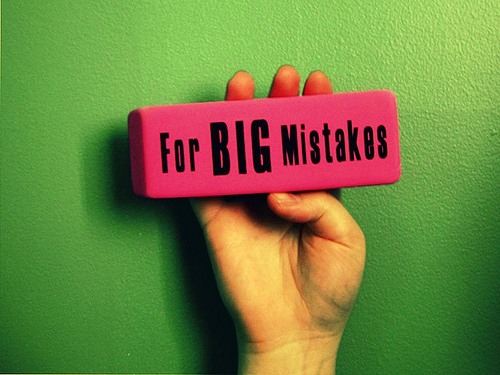
My 8 Biggest Mistakes in Writing

From the time we learn to form complete sentences, we notice and point out other people’s mistakes and flaws (for a sample, visit your nearest playground or listen to a pair of siblings arguing.) But it takes decades for us to acknowledge our own errors—if we ever do. It seems especially difficult to find mistakes in our creative endeavors, particularly in our writing. There is something about this art form that feels very personal. Many times we need someone else to tell us what's wrong with our manuscript. Other times—if we’re objective enough—we’re able to identify the problems ourselves. This is an important step for a writer; if we never acknowledge our mistakes, we are bound to repeat them. Equally important is to be able to learn from them, but this is not always easy. Sometimes we’re too immersed in our work to see clearly, or we’re too impatient to be published to take the time to rewrite—even if a little voice inside our heads keeps telling us the novel is not ready. This is why time and distance are key. If we come back to our novel weeks, months or years later, we’ll be able to read it like outsiders and identify what’s not working. But we won't be able to do this until we have grown in our craft. Thus, practice and reading are essential. Our favorite books, or even the ones we don’t like, can be great learning tools. As with any other skill, like playing the piano, cooking, or roller-skating, the more we do it, the better we’ll get at it.

Going back to the earliest drafts of my first novel, I can now see clearly the mistakes I made. Here are my eight worst mistakes and what I’ve learned from them:

1. Ms. Ghost or the Passive Protagonist

In my attempt to create a vulnerable and likable heroine, I made the mistake of making her too passive. She was agreeable and nice, but boring. (And she was always smiling!) Things just happened to her and she had no other option but to react. Somewhere in the creative process, I crafted secondary characters that “came to life” and became a lot more interesting than my protagonist. Ms. Ghost became a witness to the more active characters and I kept hearing how much my readers loved the other characters (buuh!)

Possible solutions: If another character becomes more engaging to you, consider making her the protagonist. If this is impossible, then find ways to make your main character more active and interesting. Instead of letting the circumstance and/or other characters dictate her actions, make her take the initiative. Give her a backstory (but don’t share the entire thing with the reader, please.) One of the problems I had with my heroine was that she was “born at 19.” I never gave her a past, therefore I didn’t know who she really was; only what was going to happen to her in the future.

2. Ms. Magnet or the Inexplicably-Attractive Character

Not only was my heroine passive, but men were falling for her like flies on a quarter sheet of chocolate cake. (Maybe because of her smile?) She was an irresistible magnet and at least three men in the novel were fighting for her affection. The leading man, for example, practically fell in love with her “at first sight.” Although it’s not unusual for people to be immediately attracted to each other, it’s not enough to build a convincing/touching tale. Neither is it realistic that with so many women in the world, everyone falls in love with the same one.

Possible solutions: Dissolve her fan club and focus on the relationships that are relevant to the plot. More importantly, give the hero and heroine things in common: likes, dislikes, backgrounds, ideals, goals, etc. You know, things that make couples in real life fall in love.

3. The "We are the World" Syndrome

If you ask me how many characters and subplots I had in my first draft, I couldn’t tell you. There were just too many to remember! My innocent goal was to tell the story of a town, not just a family, a la Peyton Place/Macondo. The problem with this is that it’s extremely difficult for a novice writer to keep track of all the developing storylines and character arcs, and be able to time them just right with the main plot. Not only that, but the manuscript becomes as thick as an encyclopedia, and you find yourself cutting down on scenes that contribute to the main plot or the characterization of important characters. (I should mention, too, that I was jumping from head to head at whim!)

Possible solutions: Press “delete."

4. The Anything-Goes Novel

In my conversations with other writers, we all agree that there is an innocence and bliss to that first draft that never comes back. When you first start, you feel unrestrained, powerful, enthusiastic with your creations and developments. A free spirit. You are overflowing with ideas and you must fit them all in your magnum opus. You are the “owner of your world.” But then you bump into that first door (aka: reality) be it through an editor, agent, teacher or critique partner and you realize you’re not as free as you thought. Your world has to have a direction, they tell you. You can’t have errant scenes just because they’re fun to write if they don’t lead anywhere. You can’t ramble about until you find a solution to the protagonist’s dilemma and your manuscript reaches 153,000 words. (True story.)

Possible solutions: Plan your novel before you start writing it. By planning, I don’t mean “think about it.” I mean write an outline or a summary of scenes. If you cringe just reading the word “outline," then at least figure out how you’ll get from opening dilemma to climactic scene to resolution. I know this is not a popular answer. Many writers feel their creativity will be shut down if they use any kind of structure or guideline. But in my own experience, complete freedom can be more paralyzing than setting limits for yourself. (If you can go any direction, how do you know which one is the best one to take?)

5. “Do what I tell you, Dammit!”

So you have an idea of how your plot should go. You figure out every twist and turn until you reach a satisfactory conclusion. Then you create your characters. But for some reason, they’re not doing what you want them to do. Or if they are, IT’S NOT MAKING SENSE. You’ve fallen into the trap of forcing your characters to follow the plot. They’re little puppets acting in ways that seem unnatural to who they are or to real life reactions.

Possible solutions: Be honest with yourself. How would you really act under the circumstances you’ve orchestrated in your novel? Don’t try to make your character act a certain way just because you want to use a particular setting, line of dialogue, or because you want to include that funny scene you love. It’s more important to craft believable characters and situations that your readers will buy. (A noteworthy comment: if you don’t think something you wrote is funny, neither will your audience.)

6. The Unsolvable Puzzle

When I first started writing it was difficult for me to determine how much information I should give away and how much I should withhold. Since I was writing a mystery, I was very careful not to give away too much. But the problem is I didn’t give enough and some conversations and scenes were so cryptic my readers had a hard time understanding what was going on. (I apologize for the frustration I imparted on my early readers.)

Possible solutions: Make the reader an accomplice of the protagonist’s discoveries. Give away information throughout the novel so that the reader doesn’t have the feeling he skipped three pages and doesn’t want to waste any more mental energy interpreting what your characters are saying/doing. In the end, you may lose your reader to a bottle of Aleve.

7. Telegraph Scenes

In my first draft, scenes were very short and lacked enough setting and inner thought. They were like characters in a school play coming in and out of the stage to recite their lines. My average chapter had ten or more scenes!

Possible solutions: Figure out what purpose each scene is serving and find a way to meet these needs by either joining scenes or rewriting them. Balance the dialogue with inner thought, action, setting, etc.

8. Rushed Ending

Somewhere in the middle of the first draft I read that 150,000 was a high word count (imagine that!) When I came to this realization, I started rushing my novel so that I wouldn’t add too many words to my already Bible-size manuscript (actually I did this with the second draft, too). What a mistake this was! There is nothing more unforgivable than an unsatisfactory ending! Many readers will swear off a writer if they don’t like how he or she wrapped up a book. Some writers also make this mistake because they’re eager to finish their books.

Possible solutions: If you realize late that you have a high word count, don’t sacrifice the quality of your book in order to cut down your words. When you revise the text from the beginning, cut any extraneous scenes/characters/subplots/words.

Your turn to own up to your mistakes. Which ones did you make when you first started to write and what have you learned from them?

Sunday, June 12, 2011

Creating Compelling Characters

“So her dog died and her husband is leaving her and her teenage son is peddling meth and now she’s fallen into a viper- and rat- infested mineshaft in the middle of Waziristan,” my friend said. “But I just don’t care. I don’t feel anything for this character, so I’m not emotionally invested in her outcome.”

We were discussing the most recent book she’d abandoned (I’ve taken liberties with the plot outline). This was usually the problem, she said: too many books about perilous things happening to utterly boring – or downright irritating – characters. I empathized, having recently slogged through a series of novels (from such literary darlings as Colum McCann and Joyce Carol Oates, no less) full of characters I didn’t care about.

Plot is important, but character is, perhaps, more important still. If you can create a few fascinating characters, it almost doesn’t matter what they do. People want to read about them anyway. But oh man, is this hard to pull off. It seems the job for a god: give me some clay and a puff of magic, life-infusing breath. How can I make a fascinating character from scratch? What’s going to convince the reader to care about her troubles?

Maybe it helps to look at actual people who fascinate us: usually they’ve got some combination of admirable qualities and sympathetic flaws. We’re rarely interested in the guy down the street who just goes about his workaday business, being pushed along through life, asleep at the wheel. The drama queen also annoys us: she is reactionary, fluttering her hands and bemoaning her fate. We root instead for dynamic people, larger-than-life people, people who surprise us with their boldness. We like quirky folk, too, so long as their eccentricities don’t cross over to psychoses.

Some authors can get away with creating thoroughly unlikeable characters: Nabokov with Humbert Humbert, for example. I’m reading John Updike for the first time and finding Rabbit Angstrom to be quite despicable. But Nabokov and Updike can get away with this because they’re masters of the craft. Most of us can’t afford to toy with unsympathetic characters, not even if we have a great plot.

When I took a hard look at my protagonist recently, I realized she was mired in self-pity. If I was reading about her, I’d want to smack her and tell her to stop brooding. Nobody wants to read about a moper. I had to make her more dynamic. Yes, she’s gone through some horrible things and is about to go through more, but I want my readers rooting for her, not pitying her. So she’s not always gloomy, I gave her an acerbic wit. Ideally, her observations will make the reader laugh, or nod in agreement. So that she’s not passively accepting her fate, I made her scrappy: I borrowed a situation I was in, and then had my hero do what I wish I’d done: when a teacher fails her unfairly, she takes the test from him, lights it on fire, and drops the flaming paper on his desk. I hope these changes have made her more compelling: certainly she’s more fun to write.

I find inspiration in Claire Fraser, Diana Gabaldon’s fabulous protagonist from her bestselling Outlander series. Claire would be justified in some passive brooding, given what she goes through, but she’s a fighter. Often her attempts at getting herself out of trouble land her in further trouble, but that’s not always the case: sometimes her toughness keeps her alive. Sometimes the man rescues her, but pretty frequently she’s rescuing him: a refreshing change from the distressed damsels of vampire lit. Claire is not a perfect character, her primary flaw being stubbornness, but she’s immensely likable.

What about you? What makes your favorite fictional character(s) so compelling? Do you find yourself putting down novels because the protagonist isn’t sympathetic enough? What about the characters you create? How do you ride the balance between creating flawed characters and likable ones?