Friday, December 27, 2013

Cephalopod Coffeehouse: American Passage: The History of Ellis Island

Immigration in the U.S. is complicated. This is a fact. And, from what I've read in Vincent J. Cannato's non-fiction account of Ellis Island's history, it's always been complicated.

Welcome to December's round of the Cephalopod Coffeehouse! I hope everyone is having a lovely holiday season! If you're not busy socializing with family, watching football, or taking in the season's festivities, then might I interest you in a discussion on U.S. immigration? Sounds fun, doesn't it?

This past month I dove into a non-fiction account of Ellis Island -- American Passage: The History of Ellis Island -- that little island in New York Harbor that initially threw its doors open to foreigners from all over Europe. Your first question might be why I felt the need to delve into such an extensive history on immigration, and I'll clear the confusion up right away. I'm researching a new book I plan on writing come the new year and the majority of it takes place on Ellis Island around the turn of the twentieth century-- a time when hundreds of thousands of immigrants were spilling into the United States. I found it all so very fascinating!

Vincent J. Cannato's book takes the reader on a journey that right away makes one see exactly where the growing pains of immigration began. His book is primarily about straightforward facts when it came to laws and regulations concerning immigrants and how to handle the rising tide. This is what Cannato says about it in his Introduction:
"Americans need a history that does not glorify the place in some kind of gauzy, self-congratulatory nostalgia, nor mindlessly condemn what occurred there as the vicious bigotry of ugly nativists. Instead, this book seeks to understand what happened at Ellis Island and why it happened."
And that's exactly what I was looking for when I cracked this book open. Cannato details the history of Ellis Island from it's early days as Gibbet Island, an execution ground for pirates (I know!), through the tumultuous and insanely busy days at the turn of the century, to its waning days as a detention center for Communist sympathizers in the 1950s. Ellis Island was officially closed as an immigration/detention center in 1954. By then, most buildings on the island had been shuttered and the main building had fallen into disrepair with some of the detainees commenting that the place was "a disgusting place," "a prison," met with "bitter disappointment," and "dirty, dingy, and grey with age."

In its heyday, Ellis Island (but initially Castle Garden before Ellis Island's main building was built) was the main immigration station in the United States, handling and processing some 12 million immigrants from 1892 to 1924. No immigrant could fully say he/she had entered the U.S. until they passed through those final doors and took the ferry into New York City. In many ways, Ellis Island also became a lightening rod for controversy. With the rise of eugenics, many stalwart Americans opposed the idea of letting just anyone into the country, especially the dirty, unwanted foreigners from over seas. On the flipside, immigrant societies and newspapers ripped Ellis Island's administration apart on many occasions, saying that not enough was being done to keep immigrants safe and free from deportation.

"The Stranger at Our Gate"
A popular depiction of immigrants first
published by the magazine Our Day
 in 1896.

With the 1891 Immigration Act the list of "undesirables" not to be admitted rose. It included "idiots, insane persons, paupers or persons likely to become public charges, persons suffering from a loathsome or a dangerous disease, persons who have been convicted of a felony or other infamous crime or misdemeanor involving moral turpitude, polygamists." As horrifying as it may sound to include immigrants in these categories, this is exactly what they did during the majority of early immigration. The idea was to sift the incoming immigrants and this was the best plan the government could come up with.

I think at times we tend to think of immigration pains as in the here and now. The truth is that the U.S.'s immigration predicament started long before now. Theodore Roosevelt had a lot on his plate at one time and, unfortunately, the passing of the immigration buck just went from president to president, hoping that in some way a solution would finally be found. We still grapple with that indecisiveness today.

Cannato does a thorough job with the historical aspects of Ellis Island, and I was happy to find such a well thought-out source. I will say that there were a few times I was put off by the way Cannato produced his facts. It was obvious he was interjecting his opinion at times. For instance, in an interview given by Vera, Countess of Cathcart in 1926, when detained for adultery (yes, that did happen under the moral turpitude clause) after her love interest the Earl of Craven fled to Canada when issued an arrest warrant for the same charge, said the following: "I am not a coward and have not run away, like the Earl of Craven. He has proved himself a coward in many ways." After this, Cannato puts into parentheses: "This was a man who had lost a leg in combat as a young officer during World War I." (Page 262) Um...is Cannato saying that when a man loses a leg in war he is no longer a coward? Or that if the man gives the authorities the slip for an arrest warrant that him losing his leg cancels out his present cowardly actions? I'm not sure, but I came across little tidbits like this from time to time. In all, though, I'd say I enjoyed reading Cannato's dissection of such a complicated piece of American history.

So, there you have it. A little breakdown on the U.S.'s history of immigration through Ellis Island. A few years ago I had the privilege to visit what is now the Ellis Island Immigration Museum. The main building has been overhauled and is fascinating to visit. What I loved most is the Registry Room where once upon a time incoming immigrants were asked a variety of questions before given or denied entry. It's large, nicely reconstructed and quiet. It's good to just sit there and maybe see if you can hear a conversation or two among the voices of the past.

Ellis Island in 1905.

Ellis Island today.
Make sure to check out other reviews in this month's Cephalopod Coffeehouse.

Sunday, December 22, 2013

Ten Best Christmas Stories: My Undefinitive List

This morning I was idly flipping through my freshest New Yorker when I came across the story "A Christmas Miracle," by Rebecca Curtis. It's an odd, funny story about a dysfunctional family trying to make it through the holidays without strangling each other. (In a bit of heavy, undisguised symbolism, the family's cats are being picked off one by one by prowling coyotes.) Reading the story made me think about the whole genre of The Christmas Story, and how funny it is that it exists. I'm not sure there are equivalents for other religious holidays ... you don't see Easter stories proliferate in the same way, or Rosh Hashanah stories, or Eid al Fitr stories. Or heck, maybe you do, and I'm too culturally isolated to know it.

The original Christmas story is the best-known, of course, but also may be the least typical of the genre. The archetypal Christmas story to me is Charles Dickens' "A Christmas Carol," which sets the stage for all the Christmas stories henceforth: you need something about family, something about charity, something about forgiveness and/or redemption. Often you have a character (like Scrooge) who is isolated in some way, a solitude that is most profoundly experienced at the holidays. Christmas both highlights the isolation and then fixes it. In "A Christmas Carol" it's literal spirits (ghosts, specters) who do the mending; in most other Christmas stories, it's a more figurative Christmas spirit that brings the isolated person back into the fold.

My own favorite this-time-of-year stories include fairy tales, short stories, movies, and ballets. Here's my list of 10 Best Christmas Stories:

1. A Christmas Carol: May as well start right here. We watch this movie every Christmas Eve, and it has to be the George C. Scott version, because if Christmas is about nothing else, it's about tradition. My kids used to be so scared of Marley's ghost that they'd press against me and hide under the blankets, and last year may be the first year my son was able to watch that whole scene all the way through. But I'm still not sure he's uncovered his eyes when the Ghost of Christmas Future makes its creepy appearance. I love this movie, love Scott's droll portrayal of Scrooge. I also love the message.

Then let him die, and decrease the surplus population

2. Christmas is a Sad Season for the Poor: A short story by John Cheever (you can read it here), which is both hilarious and touching. Charlie is an elevator operator who feels terrible self-pity Christmas Eve, and manages to hoodwink the entire population of the building where he works into feeling even sorrier for him than he feels for himself. He winds up almost literally buried in charity.

3. The Nutcracker: Tchaikovsky didn't like his own music for this ballet, or the story, but whatever. What does Tchaikovsky know? I can't tell whether I love this ballet because it's just so familiar, or if the story and music actually does have some intrinsic value ... I just know I love it. I've watched the ballet many times (a number of them as the mother of a ladybug or bumblebee).


4. It's a Wonderful Life: Because Jimmy Stewart. I could watch him read a phone book. Like most stories in this genre, one of the central messages is that "stuff" is not what it's all about. It's funny how drawn we are to that anti-consumerist message at this, the most shoppingest time of year.


5. The Loudest Voice: A short story by Grace Paley (which you can read here) about a group of Jewish schoolchildren, recently immigrated, who are given the major parts in their school's Christmas pageant. The protagonist gets the part of Jesus narrating (looking back on the story) because she has the loudest, clearest voice. The narrator is quite pleased to have the job and, as children usually are, does not share the concerns of her mother, who feels the school has been culturally insensitive. After the play the child listens to the families talk.

They debated a little in Yiddish, then fell in a puddle of Russian and Polish. What I understood next was my father, who said, "Still and all, it was certainly a beautiful affair, you have to admit, introducing us to the beliefs of a different culture."
"Well, yes," said Mrs. Kornbluh. "The only thing ... you know Charlie Turner — that cute boy in Celia's class — a couple others? They got very small parts or no part at all. In very bad taste, it seemed to me. After all, it's their religion." 
"Ach," explained my mother, "what could Mr. Hilton do? They got very small voices; after all, why should they holler? The English language they know from the beginning by heart. They're blond like angels. You think it's so important they should get in the play? Christmas ... the whole piece of goods ... they own it."

6. A Charlie Brown Christmas: Christmas is not complete without Vince Guaraldi's score, which is sweet but a little melancholy — like everything else about Peanuts. And how many of us have come home with one of those kind of trees? Pretty much every one we cut ourselves from the local forests looked like this:


7. The Little Match Girl: Hans Christian Andersen was not a cheery man. And this is not a cheery tale. Written around the same time "A Christmas Carol" was written, it has a similar theme: remember those less fortunate, especially at this, the coldest time of year. Actually, don't just think about those less fortunate, do something about it. When I read this to my daughter, who was about five at the time, she got very angry at the end and said, "That is a terrible story!" That was one of those moments I realized fairy tales are not necessarily children's stories.


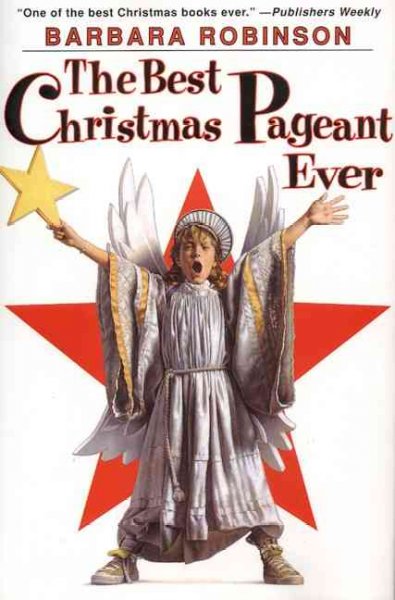
8. The Best Christmas Pageant Ever: A very funny children's book by Barbara Robinson about a group of hellish siblings who almost ruin the annual Christmas pageant. If you have kids in elementary school, this is a great read-aloud for this time of year.


9. Santa Claus is Comin' to Town: My husband and I both grew up with this movie and we can't separate our love for it from our nostalgia for it. It just presses so many wonderful buttons. I love the stop motion, I love the abominable snowman (although he scared the heck out of me as a kid), and I especially love Burgermeister Meisterburger.


10. Love Actually: A movie starring everyone. It should be a mess, with so many characters and so many storylines, but somehow it works. Everyone has a favorite bit: while I do love the vignette pictured below, the character that has stuck with me is Laura Linney's Sarah, who is struggling to deal with her mentally-ill brother. I wish that story would get a movie of its own (especially if it kept Rodrigo Santoro as Karl, because yum), and sometimes I toy with writing a fanfic version of it myself.


What are your favorite Christmas stories? Do you work any of them in to your holiday traditions? If you celebrate a different tradition, does it come with its own stories?

Sunday, December 15, 2013

Before Sunrise, Before Sunset and Before Midnight: A Love Story Told in 18 Years

Warning: this review contains spoilers.

Most romantic stories only take a couple of hours to reach a happy resolution and rarely does the viewer get a chance to revisit the characters a few years later. This is not the case of Celine and Jesse, the protagonists of the nineties cult film Before Sunrise.  At a time where most romantic films follow a predictable formula and many viewers may feel manipulated with plot elements they’ve seen again and again: airport tension (analyzed in detail here), contrivances and misunderstandings, the trilogy of Before Sunrise, Before Sunset and Before Midnight is absolutely refreshing.

What’s different about this trilogy is that each of these films take place in the course of one day. All three movies use dialogue (and the passage of time) to move the story forward, they all have beautiful European scenery and the characters must make a decision by the end of each film. What’s also unique is that each film in this trilogy is produced at a nine year interval. Therefore, the characters have grown (in many cases with the audience) and their lives have entered different stages of life with their subsequent problems. I’ve never seen a trilogy that more realistically portrays life and love as these films have done.

But let’s start from the beginning, in this case: Before Sunrise (1995). Some call this a cult film. Well, I’m here to confess that I’m a member of this cult! I’m convinced that one of the reasons this story had such an impact on me was because I was at the same stage in life as these two main characters. Therefore, it was easy for me to identify with them. I mentioned in a recent post how much I admire simple stories (because it’s the opposite of what I write). Well, it doesn’t get any simpler than Before Sunrise.

Celine and Jesse falling in love in 1995

Celine (Julie Delpy) and Jesse (Ethan Hawke) are two passengers on a train to Paris. Jesse, an American, strikes a conversation with Celine, a French girl who is returning home from a trip to Budapest. The couple become quickly engaged in their talk and obviously attracted to one another. Jesse convinces Celine to get off the train with him in Vienna, where he’s supposed to catch a plane the next day to the US, arguing that in twenty years, when she’s stuck in a dull marriage, she would be wondering what would have happened if she’d picked another guy. Well, Jesse argues, this is her chance to realize that he himself (aka, “another guy”) is not that different from her future husband. Amused, Celine agrees. They spend an entire day and night walking and talking around the streets of Vienna, both knowing that they will have to say goodbye by sunrise, when Jesse has to get on his plane. Now, I know that I had mentioned “airport tension” as a cliché in fiction. However, this is real airport tension as opposed to the sudden (and very overdone) decision of one of the characters in any random romantic comedy to move to another town causing the love interest to realize he/she is about to lose the love of his/her life forever.

In Before Sunrise, the deadline is established from the very beginning and being that the story itself—their conversations and actions—are treated very realistically, we know that it’s unlikely that the film will have a fairy tale ending (though the audience may be hoping for one!)

There is, really, no plot other than how a couple falls in love and what they are going to do about it come the end of the day. But being in my early twenties at the time the film came out, I must have been its perfect target audience. For me, their conversations were absolutely engaging and reflected some of my own thoughts and concerns about relationships and life in general. The film’s ending is open ended and it takes us nine years to know what really happened.

Fast forward to Before Sunset (2004) where we encounter Jesse in Paris. He’s become a successful author and is having a booksigning of his first novel, which was inspired by his fortuitous encounter with Celine in 1995. Well, who lives in Paris? None other than Celine, who has read the book and goes to the bookstore to meet Jesse. The couple resumes where they left of nine years prior. Although they’ve both reached different stages of their lives—he’s married and has a son, and she’s an independent professional—the attraction between them remains the same and not just on a physical level. Much like in 1995, they still have a lot to say as they walk along the streets of Paris, clarifying to the viewer what really happened after the open ending of Before Sunrise. The question here remains the same, will Jesse take his plane back to his wife and kid by sunset? Again, watching the couple’s banter is most entertaining, especially because the issues they now discuss are not the same as when they were twenty-something idealists who thought they could change the world.

Things are not so sunny and cheerful when Celine and Jesse meet again in 2004

This year I had the pleasure of watching the third installment of this love story, Before Midnight (2013). Again, the characters here mimicked my own stage in life with preteen children and marital quarrels. Yet, there was still a little bit of the magic of previous films in the way Celine teases Jesse as they walk along the Greek countryside during a family vacation. But there is a deadline here too—something has set off a possible breakup and a decision is about to be made before midnight. During the day, we’re exposed to the realities of their lives beyond the romanticism of the previous films and their breakup seems like a realistic possibility as the bumps in their marriage are slowly revealed.

Perhaps the most admirable trait of these films is the character consistency. Although it’s obvious that both Celine and Jesse have grown, their personalities remain the same (and so does their banter). I have often been disappointed with sequels or soap operas where the characters become unrecognizable by the end, but I was happy to see that this wasn’t the case here. Another strength of the trilogy is the dialogue. Unlike many romantic comedies where the dialogue is sometimes contrived and serves the plot (ex: artificial fights and misunderstandings) the dialogue here is actually engaging. I find it interesting that both Ethan Hawke (a writer in addition to being an actor) and French actress Julie Delpy co-wrote the second and third films with director Richard Linklater. Well, who would know those characters better than the actors performing them?

Will Jesse and Celine make it?

Now for the films’ down side. I don’t think the sequels would appeal to viewers who haven’t watched the first one. Whereas Before Sunrise can be a stand alone film, I don’t think the other two could do the same. (Correct me if I’m wrong!) It seems to me it would be similar to watching a soap opera or drama series halfway through. The other thing is that these films seem to have a small, niche audience. I’ve often wondered if the first film would have the same appeal to me now as it did when I was in my early twenties.

For those who have watched one or all the trilogy, do you think the audience’s age affects the perception and appreciation of these films? Did you mind their open-endings? Would you like to see Celine and Jesse again in nine years?

Ethan Hawke, Julie Delpy and director Richard Linklater writing Before Sunset.