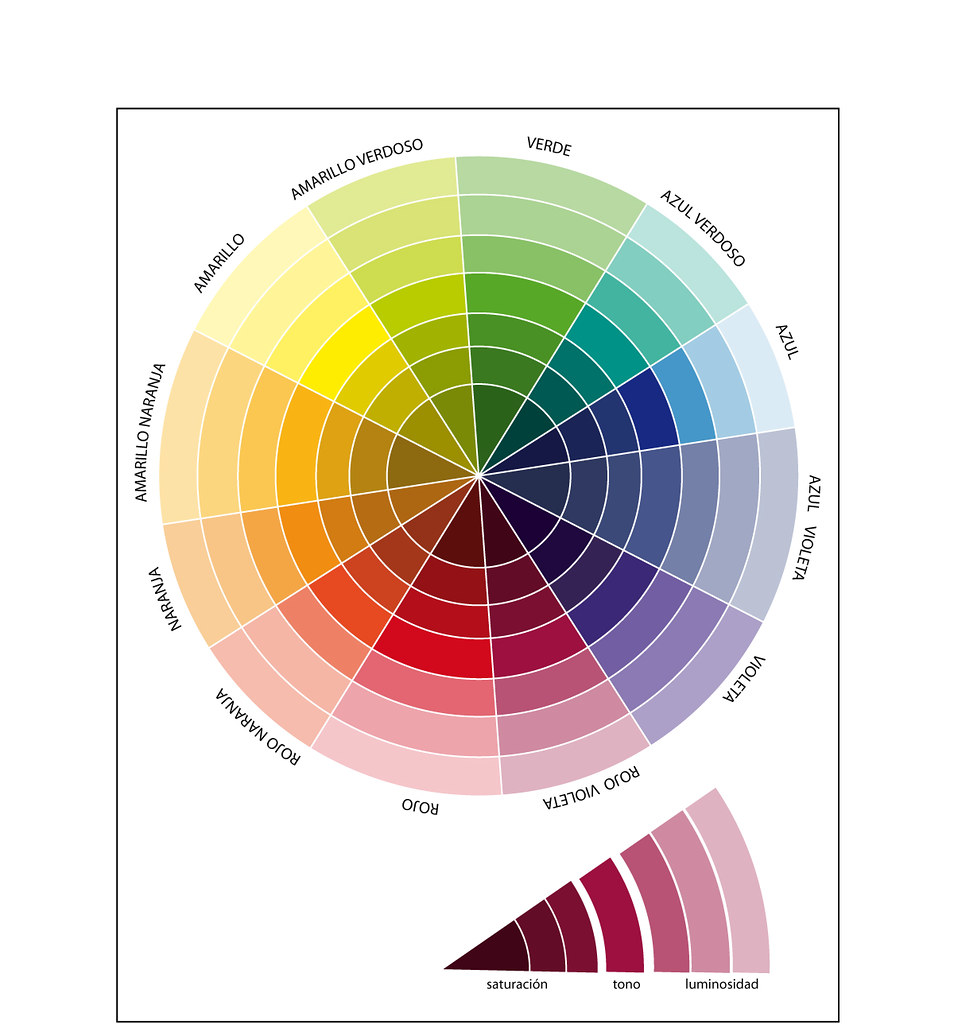
I come from a traditional art formation. From ages fourteen to eighteen, I studied in the afternoons under a renowned painter in my country. We focused on watercolors and pastels, and did collective exhibits at the end of every school year. My earliest mentor was ruthless about color and proportion. Any mistake in our rosa cromática meant we had to repeat the entire project and no matter how much my girlfriend and I begged, we couldn’t advance to color pastels or watercolors (much less the human body) until our still-life charcoal drawings and color combinations were flawless. The word “repita” (repeat) became his trademark.
 |
| An early painting by Cesar Tacco. With the years, he became more impatient and would take painting “field trips,” where he would do a series of quick landscapes in watercolors (without preliminary drawings). “Watercolors are demonic,” he used to say. |
From my maestro I learned that mastering technique is fundamental for every artist. He believed that without drawing or color foundations, a painter could not excel in his craft, even if he would end up becoming an expressionist or abstract artist—the case of my late uncle, Ramiro Jácome, who studied classic art and slowly developed his style, known as “feismo.”
 |
| My uncle once told me that an artist never stops learning. (Photograph by Carsten Behler) |
When I moved to the US to go to college, I entered the School of Fine Arts, but things were quite different here. The focus of most art classes was self-expression—even in the lower level courses. One of my instructors told me that the only way to produce art was if you had something to say. Otherwise, it was an illustration—a profane word that silenced the entire classroom and left the student-in-question red with shame. There was not a lot my eighteen-year-old self had to say about the world other than shyly pointing out to a couple of my peers that their drawings were disproportionate or too much water was making their acrylic paintings look muddy.
Part of the evolution of an artist is to find his own style. In editorial illustration, the goal is to make quick and simple drawings to catch the reader’s eye (people don’t spend a lot of time looking at newspapers illustrations.) To me, this has been one of the hardest challenges as an artist. During the brief period I worked at the Illustration Department of this newspaper, my boss used to say that in order to reduce a drawing to its simplest form or “deconstruct” it, you had to be a proficient draftsman. (In Spanish the abstraction/simplification of a figurative drawing is called “desdibujo.” It is the aim of many editorial illustrators to achieve this.)
 |
| An editorial illustration by Pancho Cajas. |
I believe that novel writing is not that different from painting, except that in the visual arts, an (accidental) mistake is a lot more obvious than in the written word. I didn’t always believe this. When I turned to writing fiction, I thought that because I was literate and had good ideas, I could publish a novel. With time and many bumps along the road, I came to realize that craft is just as important as ideas, enthusiasm and dare I say, talent. But like with painters, there seems to be a prejudice among writers that too much technique equals less art. They don’t realize that technique is just a tool to help them express their ideas better.
Let’s take a look at what Nobel Prize winner Mario Vargas Llosa says on this issue:
“The mysterious thing we call talent, or genius, does not spring to life full-fledged—at least not in novelists, although it may sometimes in poets and musicians (the classic examples being Rimbaud and Mozart, of course). Instead it becomes apparent at the end of many long years of discipline and perseverance. There are no novel-writing prodigies. All the greatest, most revered novelists were first apprentice writers whose budding talent required early application and conviction.”
(Letters to a Young Novelist, p.13)
 |
| Peruvian author Mario Vargas Llosa poses in front of a "desdibujo" of him. |
Part of the problem is impatience. We don’t want to waste time reading books about the seven basic plots, the hero’s journey, or a long list of rules (~shivers!~). We just want to write! After all, literature is not math, right? It’s not a matter of equations and formulas.
True, writing is not a science, but there is a method to storytelling nonetheless, a plot structure and archetypes which have worked for centuries. Wouldn’t the aspiring writer benefit by knowing why this is? (This is not to say that more experimental works of fiction won’t work, but like in painting, a strong foundation will give the writer the training and experience to be able to evolve in whichever way he chooses and find that coveted “voice.”)
If we want to be published we must come to terms with the fact that literature is not just an art form, it’s also a business (which equals appealing to a large group of people and yes, turning our thoughts and words into a commercial product). Like many art students I encountered during my college years, many writers seem to believe that novel writing should be unrestricted and inspired by an intangible source. One of my dearest friends and colleagues equates writing with having sex. She says too much explanation and instruction can “kill the mood.” I agree that spontaneity plays an important role in writing (there’s an undeniable magic to storytelling that is what makes it so enthralling—and addictive—to both writer and audience.) But I also think that, like in any other art form, we must learn how to use our tools and look at the masters (and our peers) to better understand what resonates and what doesn’t. This may mean having to put up with “how-to-manuals” and “rules” (all blasphemous words in the writer’s lexicon). Even if you think you’ve learned everything there is to know, there may still be something new, a bit of undiscovered information that may come to you in your hour of need (or insomnia) and spark an Aha moment that may just bring a solution to your story’s dilemma.
Yes, writers of the world, art and craft can work together! The left and right sides of your brain are not sworn enemies, and information (even if it’s not applicable to every case, or even if you disagree) won’t necessarily block you or take away from your creativity—but it will make your writing decisions informed ones so you can create your own desdibujo. It’s not about NOT breaking the rules, it’s about knowing them before you break them and doing so with a purpose. Like my husband says: "You can't think outside the box if you don't know where the box is."
For more about my art mentors:
Articles about Cesar Tacco (in Spanish):
On both Cesar Tacco and Ramiro Jácome:
Pequeña Antología de Quito en el Siglo XX
Pequeña Antología de Quito en el Siglo XX
Comprehensive analysis of Ramiro's art (in Spanish):
Pancho Cajas caricatures: