Sunday, September 25, 2011

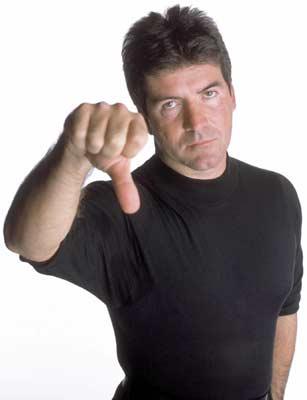
Content vs. Craft: The Dumbing Down of the Literary World

"The years passed, mankind became stupider at a frightening rate." (Narrator from Idiocracy)
What's a guy of average
intelligence to do
in the dumbed down future?
I have something that has been bugging me lately. I've often wondered if perhaps it's just me, but I don't think so. With many things I read, and most often times conversations in which I happen to get involved, there is a remarkable lack of attention paid to grammar. Now, I know as an English-speaker in the United States that we tend to have a certain pride when it comes to our overall English language. But that's pretty much where our pride stops. Having studied a second language for much of my college career, it didn't take me long to realize that when it comes to grammar, American English speakers, for the most part, couldn't care less. This lack of attention and enthusiasm is reflected in the way literature is being written today. Don't believe me? Well, let's take a look at some recent activity going on in the publishing world.

Let me preface this article by first saying I have nothing against the wonderful industry of e-publishing. I believe the ever-increasing popularity of publishing books in this format is due, largely in part, to the fact that it makes novels more available and easy to access on just about any mobile platform. (Hey, I have a Kindle and I enjoy it!) However, I do take offense with some authors who believe just about anything is publishable and, yeah, anyone should be happy with it and not rip it apart. Those who believe this way, believe the content (i.e. their story, the creative idea behind his/her work, the saturated genre) is fine the way it is, and that the craft (i.e. the wordcraft, the language, the actual plot, the beauty in which one creates the story, the actual prose) isn't all that important. In other words, if the story is dumbed down for the reader, who cares? I care, and so should any serious writer/reader out there.

Why have my hackles been raised? For two reasons:  firstly, celebrity (or celebutante) authors, and secondly, a recent article pertaining to a poorly written e-book series getting snatched up for traditional publication.

The Truth About
Diamonds

by Nicole Richie
Although there are a few who can pull it off (and I'm not talking about autobiographies, I'm talking fiction), for the most part, celebrity authors just don't have what it takes. Ones who make me cringe are those such as Lauren Conrad (according to Lisa Schwarzbaum of EW.com -- "Is there anything LC can't do? Well, uh, yes. Write a 'novel.'"), Pamela Anderson (according to Blogcritics.org, "Pamela Anderson's recent tome is unlikely to toll any bells in the halls of academia,") and Nicole Richie with her "reality fiction" (one commenter at Amazon.com said, "How this was published when real authors are struggling just to get their work read is amazing."). These "authors" lace their plots and storytelling with glitzy, superficial worlds that don't really speak to most readers. These "creations" are mostly "reality fiction," meaning the novel has become a vehicle they use in order to spill the beans about their own lives. These works are wolves in sheep's clothing and rarely do they carry any depth when it comes to crafting a great novel. And rarely do they last more than a few months on book shelves. For some reason, because someone like Snooki has an MTV audience, therefore she must make a great writer (here's an article about her novel A Shore Thing. Classy.). Hmm.

Virtue
by Amanda Hocking
I think the final straw that broke this camel's back is an article I read in *Entertainment Weekly. Two authors, Minnesota native Amanda Hocking and former insurance salesman John Locke, have been making waves in the self-publishing world. Hocking, who writes supernatural romance, recently signed a $2 million deal with St. Martin's Press, and Locke has moved more than a million downloads with his detective crime series. The quality of the writing is what really hit a nerve. Article writer, Rob Brunner, has this to say about Hocking's writing:
❝Hocking, it's safe to say, is not a stylist. Her work reads like a high school creative-writing assignment, full of typos and misused words and lifeless language. But while wordcraft may not be her thing, Hocking definitely does have something. Despite its faults, the trilogy zips along pleasantly enough, and although the books aren't remotely in the same league as Harry Potter or The Hunger Games, they do poke at the same pleasure centers.❞
And as to Locke? This is what Brunner has to say:
❝The latest, Vegas Moon, features characters with forced-funny names like Dr. Phyllis Willis and Fast Eddie Pickles, and a flimsy plot about a lethal computer chip implanted in Creed's brain gets padded out with a weirdly detailed pasta recipe and an impassioned defense of airport baggage handlers.❞
When, as readers, as purchasers of novels, did we start asking for dreck like this to be a proper representation of skill in an industry where almost anything goes nowadays? (After all, Hocking and Locke are at the top of the unrepresented self-published game.) When did we become complacent about shelling out those $3 or less for these e-books? We have a voice, and those of us who enjoy quality literature should use our voices by not throwing away our dollars on junk, because that's about all that some of this "literature" is -- junk. I don't know about you, but I'd rather keep visiting the local library where all my choices are free and I can usually see what I'm getting into.

In the case of Amanda Hocking, as a writer, I would have been excited to hear how oftentimes belittled self-publishing landed her a fantastic deal with St. Martin's (because I truly believe there are some great self-published works out there), but when I continued reading the article I felt disgust more than anything else. I often hear people say, "Why, I should write a book. I'd make soooo much money." I just shake my head. But then a story like this crops up and I think, "Yeah, you should write that book, Mr. I-have-no-idea-how-to-even-do-it. How much worse could your writing possibly be?" After all, if Hocking and Snooki can pull it off, then anybody can pull it off. Right?

In my opinion, anyone who wants to self-publish needs to do the same amount of legwork that one would do if he/she was going the traditional route. Have a critique group and beta readers, know your genre, get all the feedback that's necessary in order to have a finely crafted creation. If you want to be taken seriously, then treat your writing seriously. Then, it would be worth the few extra bucks people would be willing to pay to read something memorable.


What about for you? Are you wasting your dollars on a high caloric diet of literary junk? Do you feel there is an influx of badly crafted work hitting the self-publishing world? Should there be a better way of regulating it now that the so-called gatekeepers (agents) of the industry no longer work as filters? Feel free to point out any grammatical errors in this article!


* The article, "The Hottest Self-Published Books," can be found in the July 29, 2011 issue, #1165.


✿ Also, for an upcoming article I'm looking for anyone who has done work as a ghostwriter. Feel free to e-mail me at writing.sisterhood@gmail.com!

Tuesday, September 20, 2011

Congratulations Sister Lorena!


The Sisterhood is happy to announce, and congratulate, our Sister Lorena Hughes for being one of the winners at the recent Annual SouthWest Writers Writing Contest.
Sister Lorena’s novel “The Black Letter “ was awarded First Place in the Historical Novel Category.

May this be the first of many awards!

Sunday, September 18, 2011

How To Handle Negative Criticism

Let’s face it. Criticism sucks. None of us want to hear a long list of things we did wrong (especially with something as personal as writing). We don’t always admit it, but what we’re really hoping for when we submit our beloved babies for evaluation is a pat on the back and something along the lines of: “This is a masterpiece like no other. Go ahead and open a bank account for all the profits this book will generate.”

Unfortunately, this never happens. And if it does, the comment probably came from a family member or close friend (aka: people who love you and think you’re awesome, which you probably are, but that is irrelevant here.) More often than not, our “objective” critiquers—colleagues, teachers, agents or editors—will come back to us with a list of grievances the size of Russia. The effects can be devastating. They can range anywhere from shame, frustration, anger, sadness, self-doubt, self-deception, or all of the above. You may also experience a sort of indifference or numbness (if you’ve been exposed to this kind of criticism too many times—in the form of rejection letters, for example—but in my experience, this is a rare occurrence.) The most common emotions after a negative critique are pretty intense. After all, your life-long dreams are being crushed in a matter of minutes. These emotions are normal and I believe happen to all writers at some point in their careers. Some survive this bitter episode, but others may question their writing abilities and give up altogether.

Don’t let this happen to you! Here are some of the techniques that have helped me make the best out of a negative critique.

1. Don’t get defensive

In my own experience with critiquers, defending my work didn’t lead anywhere. The initial impression the writing caused cannot be changed. Even if you change the reader's mind later with an explanation, you cannot change what they thought while they were reading. Knowing what this initial impression was can help you determine if you're coming across how you intend to.

When you get defensive, you're in a position where you're not really listening to suggestions. You're just thinking of how the other person is wrong and you're right. A back and forth between writer and critiquer is not productive for either one. The end results are not the best: either you lose your beta reader or they stop being honest with you to avoid the drama.

2. Give it time

Your first reaction when you get a critique (be it written or verbal) will probably be surprise (after all, if you thought you’d made a mistake, you wouldn’t have done it, right?) The second may be one of the following: frustration (“such-and-such doesn’t get my work”), shame (“how could I have made such a stupid mistake? Must defend my work immediately so critiquer doesn’t think I’m an idiot/bad writer”) or anger (“how dare evil-critiquer judge my work so harshly when he a, b and c in his novel!”)

My advice is to detach yourself as much as humanly possible (for the moment) from your novel/critique and just listen/read the notes without responding (unless you plan to be gracious when you open your mouth/type back.) Thank your critiquer, grab your manuscript and leave the premises immediately before your ego responds prior to having a chance to process the unpleasant information. The longer you take before reacting to your critique (be it by making the suggested changes, ripping your manuscript to pieces or insulting those who dared criticized your protagonist) will make your decision more objective. The time you should wait really depends on the person. It has taken anywhere from days, to weeks, to even months before I could really grasp the criticism without emotion.

3. Go back to your notes

After you’ve cooled down, it’s time to go back to your critiquers’ comments. Reread everything they’ve told you. You will realize this time that either your critiquers were way off with their comments, or they were actually right and their suggestions will make your work stronger. Either way, you will see that whatever they told you wasn’t as inflammatory as you originally thought.

4. Evaluate suggestions and value of critique

Now that you’re back to your charming and reasonable self again, you’re in a position to evaluate whether or not the solution(s) your critiquers offered will make your manuscript better. Make the easy changes first (those suggestions you had no problem with). If you’re not ready to make a big change, DON’T do it. Give it more time, but keep it in the back of your mind.

If you’re comfortable with your critiquer and know this disagreement was temporary, then continue working together, but if the experience left a bitter taste in your mouth, you must evaluate if this person’s style will work for you. (More on this later.)

5. Take more time off and reread work

Now that you’ve implemented the suggestions you agreed with, give your mind a rest for a few days (the longer, the better, especially if the change was a big one.) Work on other projects or other portions of the novel. What you want to achieve with this break is to become as objective as you can be in this subjective endeavor.

Once you’ve created enough distance, read your entire manuscript so you get an overall sense of your story’s progression, and see if the applied changes flow well with the rest of the novel. This is the true test of whether the criticism you received was on target or not.

Final thoughts

At some point in our relationships with critiquers, there needs to be an objective evaluation of whether they’re a positive or a negative influence on our writing (this doesn't mean that a critiquer who always likes your work is necessarily a positive influence, or one that is always pointing out your mistakes is always negative.) What, IMO, determines a good relationship is whether or not after a constructive critique (which, as earlier established, you may not be ready to accept/understand/open your mind to right away) you are still encouraged/enthusiastic about your writing and after implementing the changes your work becomes stronger. (As opposed to having the feeling after every meeting that you're not good and you might as well give up.)

What are your feelings on critiques? Do you think you should only point out the positive about a writer’s work (in order to encourage them to continue writing)? Or do you believe that honesty (as brutal as it may be) will be more helpful to the writer in the long run? Should friends/family members be beta readers? Are peers or industry professionals too harsh/uptight in their critiques?