Showing posts with label Editors. Show all posts

Sunday, September 18, 2011

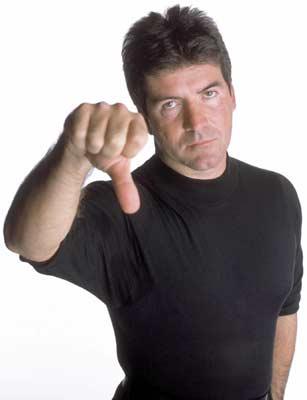
How To Handle Negative Criticism

Let’s face it. Criticism sucks. None of us want to hear a long list of things we did wrong (especially with something as personal as writing). We don’t always admit it, but what we’re really hoping for when we submit our beloved babies for evaluation is a pat on the back and something along the lines of: “This is a masterpiece like no other. Go ahead and open a bank account for all the profits this book will generate.”

Unfortunately, this never happens. And if it does, the comment probably came from a family member or close friend (aka: people who love you and think you’re awesome, which you probably are, but that is irrelevant here.) More often than not, our “objective” critiquers—colleagues, teachers, agents or editors—will come back to us with a list of grievances the size of Russia. The effects can be devastating. They can range anywhere from shame, frustration, anger, sadness, self-doubt, self-deception, or all of the above. You may also experience a sort of indifference or numbness (if you’ve been exposed to this kind of criticism too many times—in the form of rejection letters, for example—but in my experience, this is a rare occurrence.) The most common emotions after a negative critique are pretty intense. After all, your life-long dreams are being crushed in a matter of minutes. These emotions are normal and I believe happen to all writers at some point in their careers. Some survive this bitter episode, but others may question their writing abilities and give up altogether.

Don’t let this happen to you! Here are some of the techniques that have helped me make the best out of a negative critique.

1. Don’t get defensive

In my own experience with critiquers, defending my work didn’t lead anywhere. The initial impression the writing caused cannot be changed. Even if you change the reader's mind later with an explanation, you cannot change what they thought while they were reading. Knowing what this initial impression was can help you determine if you're coming across how you intend to.

When you get defensive, you're in a position where you're not really listening to suggestions. You're just thinking of how the other person is wrong and you're right. A back and forth between writer and critiquer is not productive for either one. The end results are not the best: either you lose your beta reader or they stop being honest with you to avoid the drama.

2. Give it time

Your first reaction when you get a critique (be it written or verbal) will probably be surprise (after all, if you thought you’d made a mistake, you wouldn’t have done it, right?) The second may be one of the following: frustration (“such-and-such doesn’t get my work”), shame (“how could I have made such a stupid mistake? Must defend my work immediately so critiquer doesn’t think I’m an idiot/bad writer”) or anger (“how dare evil-critiquer judge my work so harshly when he a, b and c in his novel!”)

My advice is to detach yourself as much as humanly possible (for the moment) from your novel/critique and just listen/read the notes without responding (unless you plan to be gracious when you open your mouth/type back.) Thank your critiquer, grab your manuscript and leave the premises immediately before your ego responds prior to having a chance to process the unpleasant information. The longer you take before reacting to your critique (be it by making the suggested changes, ripping your manuscript to pieces or insulting those who dared criticized your protagonist) will make your decision more objective. The time you should wait really depends on the person. It has taken anywhere from days, to weeks, to even months before I could really grasp the criticism without emotion.

3. Go back to your notes

After you’ve cooled down, it’s time to go back to your critiquers’ comments. Reread everything they’ve told you. You will realize this time that either your critiquers were way off with their comments, or they were actually right and their suggestions will make your work stronger. Either way, you will see that whatever they told you wasn’t as inflammatory as you originally thought.

4. Evaluate suggestions and value of critique

Now that you’re back to your charming and reasonable self again, you’re in a position to evaluate whether or not the solution(s) your critiquers offered will make your manuscript better. Make the easy changes first (those suggestions you had no problem with). If you’re not ready to make a big change, DON’T do it. Give it more time, but keep it in the back of your mind.

If you’re comfortable with your critiquer and know this disagreement was temporary, then continue working together, but if the experience left a bitter taste in your mouth, you must evaluate if this person’s style will work for you. (More on this later.)

5. Take more time off and reread work

Now that you’ve implemented the suggestions you agreed with, give your mind a rest for a few days (the longer, the better, especially if the change was a big one.) Work on other projects or other portions of the novel. What you want to achieve with this break is to become as objective as you can be in this subjective endeavor.

Once you’ve created enough distance, read your entire manuscript so you get an overall sense of your story’s progression, and see if the applied changes flow well with the rest of the novel. This is the true test of whether the criticism you received was on target or not.

Final thoughts

At some point in our relationships with critiquers, there needs to be an objective evaluation of whether they’re a positive or a negative influence on our writing (this doesn't mean that a critiquer who always likes your work is necessarily a positive influence, or one that is always pointing out your mistakes is always negative.) What, IMO, determines a good relationship is whether or not after a constructive critique (which, as earlier established, you may not be ready to accept/understand/open your mind to right away) you are still encouraged/enthusiastic about your writing and after implementing the changes your work becomes stronger. (As opposed to having the feeling after every meeting that you're not good and you might as well give up.)

What are your feelings on critiques? Do you think you should only point out the positive about a writer’s work (in order to encourage them to continue writing)? Or do you believe that honesty (as brutal as it may be) will be more helpful to the writer in the long run? Should friends/family members be beta readers? Are peers or industry professionals too harsh/uptight in their critiques?

Monday, February 28, 2011

Interview with Editor Nick Harrison

I'm delighted to have Mr. Nick Harrison in our blog here today. Mr. Harrison is an editor at Harvest House Publishers and also a published author.

Welcome Mr. Harrison to the Divine Secrets of the Writing Sisterhood!


Q: How you did you get your break in publishing?

A: I’ve always wanted to write. In college I majored in English and minored in Journalism. I eventually went into bookselling and during slow times, wrote articles. When I grew too fast, I lost my bookstores and had to start over. Amazingly, I got my first contract for a book easily. The second followed. Subsequent contracts have been harder to get.

Q: Please tell us about Harvest House Publishers. What are your responsibilities there?

A: I’m one of five senior editors at Harvest House—a mid-sized Christian publisher. I acquire new books and edit those assigned to me. Our website is at http://www.harvesthousepublishers.com/

Q: What genres do you acquire?

A: Both fiction and non-fiction. In fiction, historical romance is hot right now. Contemporary fiction is pretty slow for us. We tried fantasy and that didn’t work for us, I’m sorry to say.

Q: Is there anything in particular you are looking for at the moment?

A: I’d like to see some fiction with quilting as a backdrop. Fiction that has warm and fuzzies associated with it.

Q: What are your top three authors of all time?

A: Barbara Pym, Sherwood Anderson, Willa Cather.

Q: What are your top three books?

A: A Glass of Blessings by Pym, Winesburg, Ohio by Anderson, and probably My Antonia by Cather.

Q: Do you accept unagented writers’ submissions?

A: Yes, but it’s best to meet us at a writer’s conference for that to happen.

Q: What is the average time it takes you to respond to a submission?

A: A month.

Q: What percentage of the submissions that you receive do you end up buying?

A: One percent, perhaps.

Q: What is the most common mistake you find in manuscripts? What kinds of problems are deal-breakers for you?

A: Poor writing and submitting to the wrong publisher are the two biggest mistakes. Authors who perceive as being unteachable would be deal-breakers.

Q: Have you ever acquired a book from someone you met at a conference?

A: Oh yes, several times.

Q: Please tell us what the day in the life of an editor is like.

A: Most of my time is spent editing manuscripts assigned to me. The rest of the time is reviewing manuscripts and book proposals.

Q: Could you take us through the process of acquiring a book? How many people are involved in the final decision?

A: Really only five. These five people are on the publisher’s committee and they make the ultimate decision as whether or not to publish a book. I don’t have a vote. The five are the president of the company, the head of sales, the head of marketing, the head of editorial, and our acquisitions director.

Q: How much weight does the personal taste of an editor have in the decision of acquiring a book?

A: Very little. What matters is if the book will match the personal tastes of our readers.

Q: How much marketing/self promotion does Harvest House expect from a writer aside from internet interviews/blogs?

A: When the book is new (front list), it gets some attention from our marketing department. But the following season, it’s backlist and the burden falls to the author, although we still do what we can in booking radio or TV appearances.

Q: Is it true that it is now harder for new writers to sell fiction? In your experience, do authors more often than not exceed their advances with debut novels?

A: I don’t think that’s necessarily true. If a new writer is a good writer, their fiction should sell to a publisher and then to the public. That’s provided they have the right publisher. Some good fiction doesn’t sell because the publisher isn’t able to reach the readers for that book. Publishers are distinctive in that way. They don’t all have the same readership.

Q: I understand you write a lot of non-fiction. Have you ever written or considered writing fiction? If so, what genre appeals to you?

A: Oh yes. I wrote two historical novels years ago. I may try again. My problem is that I come home from working on other people’s manuscripts and the last I want to do is sit in front a computer working on yet another one….even though it’s mine.

Q: As a writer, it must be handy to also be a professional editor, but how much does your inner critic prevent you from letting your creative side loose?

A: I try not to listen to my inner critic during the first draft. After the thing is down on paper, then I turn him loose.

Q: Finally, what advice do you give new writers on how to get published? Do you think nowadays it is indispensable for a writer to have an agent?

A: It’s not indispensable, but increasingly important. My advice is always have project underway, attend conferences, read the writing magazines, know the market, and persist.

Thank you, Mr. Harrison!

For more information and advice from Nick Harrison, please visit his blog:
http://www.nickharrisonbooks.com/blog/

Monday, December 27, 2010

Agents Don’t Bite: How to Maximize Your Experience at a Writers Conference

To novice writers, agents are mythical creatures that live in a distant paradise of tall skyscrapers, café lattes and furry boots; a wonderland where dreams come true and books get published: New York City.

Fortunately, we don’t all have to travel to the Big Apple to meet them. Nowadays, they come to our distant locations with regularity, displaying their charm and wisdom on panels filled with top industry professionals. Nothing could be more intimidating, yet exhilarating for the novice writer. (I know a writer who was unable to perform a bodily function just knowing that the agent of her dreams was in the adjacent bathroom stall.*)

Opportunities like this simply don’t come by every day (they’re not cheap, either.) So we’d better make the best of them. But how do we do this? How do we overcome the fear of sounding like stuttering fools with the eloquence of an orangutan? How do we grab their interest and get those five little words that are the object of our obsession and prayers: “Please send me your manuscript”?

After attending six conferences in the last few years, I can tell you that speaking to agents and editors does get easier with time. At first the idea of sitting down and talking to a real-life agent or editor in a one-on-one scenario is as appealing as chewing on a shoe sole. You would rather sit in the back row, as far away from their prying eyes as possible, and listen—memorize—every single word. You take so many notes you could write a book, you analyze every gesture, every scoff and giggle, all along fearing and dreading the moment when you will sit across the desk with this person for your pitch session.


Then, during a lecture you've been halfway listening to, you look at your watch (you did it ten seconds ago) and you realize you must face the two-headed beast (no offense to agents/editors, I know some of them are very cute.) Along the way, you forget everything you were going to say, and the novel that you’ve been slaving over for months (or even years) becomes a blur in your mind.

You introduce yourself to the agent/editor, offer your cold, sweaty hand and remove your notes. Here comes the worst mistake of the novice conference-goer:

You read your notes.

I have to admit that in my first encounter with an editor I did this, but she was so kind and understanding that she listened (and even requested a partial.) However, in my second conference, the agent was not so patient. The minute I removed my index cards, now typed and organized with numbers, the agent started darting questions in my direction. Every time my eyes lowered to read my notes, the agent would assault me with another question. In the end, I set them aside and listened—she had a lot to say. Another partial request followed (out of pity, I think.)

What is the problem with reading? You may ask. Well, I don’t know about you, but when I read, I’m not really thinking about what I’m reading, especially when I’m nervous. The problem is that unless we are trained in reading for say, an audio book or a performance, we read in a very monotone, rapid fashion, with our cheeks burning and sweat building in copious amounts under our armpits.

After these two experiences, I concluded that I shouldn’t be reading. And I came up with a better idea: I was going to memorize my pitch.

As it turns out, when you memorize you don’t think much, either. Even worse, if you lose your train of thought, by say, the agent/editor asking a question (how dare they?!), it becomes extremely difficult to resume your flawless pitch with the fluency you had when you practiced in front of your spouse (or cat, or canary, whichever applies.)

You may have also heard about the X meets Y pitch. Well, I heard about it too. Twenty minutes before my pitch session, when an editor grabbed the microphone during the panel and announced that all she wanted to hear was a clever comparison of your novel with two blockbusters (from the last ten years) in a combination that sounded so appealing and complete that the editor in question could already picture your novel in the book shelf. “And then you shut up and listen,” she concluded.

Needless to say, the next few minutes turned into a nervous explosion of writers trying to come up with appropriates X and Ys to describe their books, and attempting to help each other out without any knowledge whatsoever of each other’s plots.

I didn’t get a request during that conference.

Conclusion? I was going to have to actually talk about my novel.

And this, my friends, was the best idea I ever had. I know it’s nerve-wracking to imagine sitting in front of a stranger who holds the key to your dreams. What if you forget? What if your mind goes blank? Well, I’m living proof that these things won’t happen. After all, you’ve only obsessed with your novel for one, two, five or even ten years, right?

So that is the key, it’s that simple. Talk about your novel as though you were telling your best friend about it. Just keep in mind there are some very important facts you must tell the agent/editor:

  1. Title
  2. Genre
  3. Setting
  4. Word count
  5. Who is the protagonist and what is his/her goal?
  6. What is the main conflict in the story?

Another thing that helps is to mention any recurring themes throughout the novel, if you have any. (For example: the world of wine, music, dance, photography, etc.) Also, if you’re pitching a Women’s Fiction novel, do mention if there is a love interest. I know this was a big hit with the agents I pitched to.

After I implemented this new “pitch philosophy,” I got one partial (from an agent) and two full requests (one from an agent and another from an editor) in ONE single conference.

Mission accomplished!

A few random things to keep in mind (you’ve probably read this just about EVERYWHERE, but I saw it done WITH MY OWN EYES) and this wouldn’t feel like a complete guide if I didn’t mention this very important rule:

  • DO NOT harass/approach an agent with a story idea IN THE BATHROOM.

But:

  • DO approach them during lunch.
  • DO talk to other agents/editors that interest you even if you don’t have a pitch scheduled with them. In my experience, they are very open to listening.
  • Try to sit at the table of an agent that interests you but you don’t have an appointment with (even if it means pushing all the other writers out of the way—forgive me, colleagues.)

One last thing: enjoy yourself. Don’t simply obsess with agents and editors. You may meet wonderful people in the business that may enrich your lives in many other ways. I met a good friend of mine at a conference, the lovely Aurora. So keep your eyes open for other writers.

And now, let’s hear about you—have you had good or bad experience at conferences? Which approach has worked best for you? Does the idea of meeting an agent in person give you nightmares?

*names have been omitted to protect the innocent.

** Correction: the writer with “bathroom stage fright” has recently clarified that said agent was not really “the agent of her dreams.”