During a writing workshop I took not too long ago, one of my
classmates submitted an excerpt from a piece he was working on: a memory
of his, which he’d embellished and turned into a story. It was a ghost story,
and we’ll leave off for the moment that the “ghost” bit was something he
believed was reality. The problem I had with the opening scene was the dog’s
name.
“I don’t think ‘Smoodgy’ really matches the feel you’re
going for here,” I said.
“But it was really his name,” he said.
“Right. But this is fiction, so you can change the name.”
“But why should I?”
“Because it’s a ghost story, and that name lightens the mood. I don’t think you want a light mood here.”
He stared at me. “It was really his name.”
I gave up at that point. But the student’s difficulty in
deciding which real bits to keep, and which bits to change for the sake of the
scene, was all too common. I face similar problems with my own work, only it’s
much easier to spot it in other writers’ stories.
 |
| But Cujo really looked like this! |
Our own lives are the richest source of material we have for
fiction. Even the most out-there spec-fiction writer is drawing from her
experience in some way or another. But stories that very closely mirror reality
can still legitimately be called “fiction”: it’s up to the writer (within
reason) to decide. It seems to me that as long as names and details are changed
to protect others’ privacy, it’s totally legit to present memoir as fiction –
though not the other way around.
At the moment, I am most moved to write about my own life,
probably because I’ve been reading a lot of microscopic navel-gazing
autobiographical fiction. Suddenly that thing that happened in fourth grade
with the large boy who pretended he was the Incredible Hulk until we all ganged
up on him and literally kicked him as he lay howling Hulkishly on the ground …
it seems like fodder for a good story. It begs to be fictionalized. But I have
to keep some caveats in mind:

Don’t be too literal. It
doesn’t matter what really happened. Reality is merely a suggestion here. To
break yourself out of reality, deliberately change at least one thing about the
story before you even start: change the sex of a major player, change the
setting, change the year. This will help you break out of the mode of “memoir”
and release yourself into “fiction.” This is important because real life is
messy and, frankly, mostly pointless; stories, on the other hand, must be
meaningful and organized in order to be emotionally satisfying.
Don’t be vague.
Writers who tell a story that really happened to them may forget that the
reader wasn’t there. They make assumptions, letting the reader fill in the
blanks. Don’t forget to provide details. Describe the setting, describe how the
people looked, describe the time period. You can always go back and edit things
out if you’ve overdescribed, but get the details clear first.
Don’t mistake
‘anecdote’ for ‘story’: Many
of us have been warned against “slice of life” stories, but we don’t really
know what that means. It means you don’t have conflict. All you have is
description. A curious event is not a story, quirky people are not stories. You
have to have problem. If there was none in your anecdote, make it up: conflict
is the heart of every story.
 |
| This is not you |
Don’t portray
yourself as a saint: Stories in which we star have a major potential pitfall: we make
ourselves look way too good. In that anecdote about the Hulk Boy, I would be
sorely tempted to make myself the person who did none of the kicking; especially
since I was bullied myself, I certainly don’t want to tell everyone about what
a horrid little mutant I was that day. But that fact may be the heart of the
story: it’s more interesting to be behind the spectacles of the nice person who
makes a terrible decision than to observe a nice person just … being nice. If
your anecdote has you being heroic or merely passive, change it. Switch
POVs, if you need to: write the story from the most dynamic person’s viewpoint.
Don’t implicate real
people: I touched on this before, but if your characters are based on real
people, change enough things about those people so nobody can tell who they
are. As Violante mentioned in
her post on Romans-
à-clef, Miranda Priestly in The
Devil Wears Prada was widely assumed to be based on Anna Wintour, the very real
Vogue editor. You can get away this kind of thinly-disguised character
assassination, probably, but it’s safer and kinder to disguise your characters
thoroughly. It will also make high-school reunions and family Thanksgivings less awkward.
An addendum to this “Don’t” is the flipside “Don’t be
afraid to write about real people.” Someone told me she recently trashed all her journal entries about one crazy family she’s been peripherally
involved with, because she was afraid the information might somehow get out and
cause problems. I thought this was a terrible shame; she's been telling me these
stories, and they’re quite colorful. All she needs to do is hide the
identifying details. I’ve been afraid to write about my own
(significantly less crazy) family, for fear of causing rifts. But writers need
to write. As long as you are protecting people’s privacy, don’t stop yourself
from writing a good story, for any reason. At least get the words down: you can
always vet the story before publication, if you are so lucky as to get a
publication offer.
Now that the Don’ts are over, let’s focus on the Dos: much
more fun. (For a more thorough exploration of these, see
“Turning Life IntoFiction,” by Robin Hemley.)
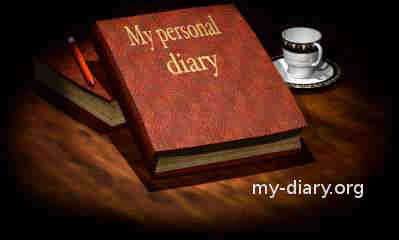
Keep a journal: Writers
are usually more observant than the average person, by nature, but you can
train up this quality by keeping a writer’s observation journal. Notice
conversations, jot down memories, describe scenes. Not only does this sharpen
your perception skills, but the notes may later serve as filler for your stories.
An anecdote or fragment of a dream may even be the seed for a complete story.
Writing every day also keeps you in the habit of, well, writing every day.
 |
| Scenes from life |
Experiment with form:
Since this is a post about turning life into fiction, I’ll skip the memoir and
focus on short story vs. novel. My favorite autobiographical fiction form is
the short story: it allows for a more impressionistic approach. If you go on like that in a novel, you’re likely to bore the reader: there has to be more
conflict and more action in a novel. The downside of the short story is that
you have to be extremely economical with language: every little word counts.
The short story also tends to be less character-focused, since you don’t have
time to develop the characters except in rough portrait. Description reigns.
 |
|
Although I have no stats on this, it seems to me that short
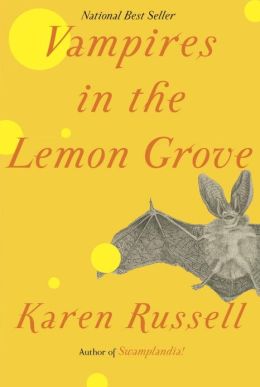
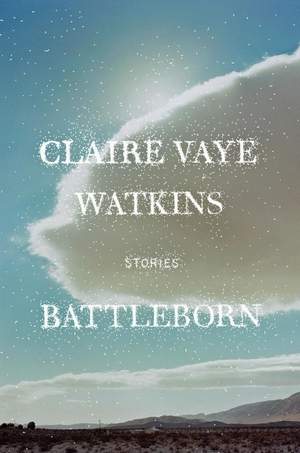
stories are making a comeback: Several writers of note (such as Jhumpa Lahiri,
Junot Diaz, Alice Munro, and Michael Chabon) have put out recent short story
collections that have done well. These stories are typically not big clever
ideas with a twist, but meditations on the everyday. You get the feeling they
are highly autobiographical. On the novel side, I recently finished Justin
Torres’s beautiful, luminous little gem, We the Animals, which is based
partly (mostly? entirely?) on his childhood. The slim little book barely
registers as a novel, though, and took him – by his own admission – five years
to complete. Sometimes, the more of ourselves we pour into a story, the harder
it is to write. Worth keeping in mind.
Focus: Because
life is messier than fiction is allowed to be, we need to impose structure on
our autobiographical fiction. This has been, as my sisters know, my biggest
struggle. I almost feel unqualified to talk about it, but let me pass on
Hemley’s advice: pick one aspect of your story to focus on: character, theme,
setting, or Big Event. He gives examples: Nick in The Great Gatsby is an
example of the narrator as observer, telling the story from a distance. In Gone
with the Wind, the focus is on Tara, the estate. Setting is primary there.
Sylvia Plath’s The Bell Jar uses theme (the titular bell jar) to organize her
autobiographical work. The Big Event focuses on one cataclysm, such as the
big-game hunt in Hemingway’s The Short Happy Life of Francis Macomber, or the
suicide that forms the framework for my own WIP.
If you’re like me, you look at that list and think, well,
each of those aspects is vital. How can I possibly zero in on one? I suppose
they key is not to exclude the others, but to make one the hook, the center of
gravity around which the others revolve. Certainly Gone with the Wind has
strong characters, and The Great Gatsby has a Big Event, but the stories spin
around one axis. Think of which axis your story really spins around: that can
be your organizational guide.
How much of your own writing stems from your experience?
What advantages and pitfalls have you encountered when trying to write about
your life? How have you overcome them?