Monday, April 18, 2011

The Rules of This Game

When it comes to writing fiction, a novice is likely to feel strangled, if not utterly terrified, by the plethora of dictates that rise up to confront her efforts. The list of “thou shalt nots” seems longer than anything found in the Old Testament, and some rules seem nearly as arcane. The temptation is to throw one’s hands up in the air and go with the comforting notion of “write whatever you want.”

I’ve actually heard writers say this, usually when their atrocious grammar is pointed out to them. “I don’t care about the rules; rules cramp my creativity.” Well then. If our writing consists of dated entries beginning with “Dear Diary” and kept behind a lock, that’s fine. But surely some rules do matter. It’s worth sorting the wheat from the chaff and following those conventions.

I’ve got my own list of rules that matter, and another list of rules I happily ignore. Grammar and spelling are in the former category. These are the tools of our trade, and it pains me to see even the most basic rules violated by people who call themselves writers. A writer needs grammar and spelling like a kindergartner needs to know her letters. This is not a debatable point. Anyone hoping to get published needs to find a good grammar guide (English Grammar for Dummies comes highly recommended) and apply those principles to her own work. In the bathroom, next to the Sudoku puzzles and yellowed People magazines, keep a copy of Woe Is I: The Grammarphobe's Guide to Better English in Plain English by Patricia O’Connor. And Eats, Shoots & Leaves: The Zero Tolerance Approach to Punctuation by Lynne Truss. Both books are funny, irreverent, and instructive.

That said, there are some grammar rules I put in the “pedantic and ignorable” category, such as “thou shalt not split an infinitive.” This commandment is the result of Latin grammar forced on a non-Latin grammar system. Star Trek boldly split an infinitive with “to boldly go where no one has gone before,” and so can you. I still have trouble making myself split an infinitive, but this is because I worry some grammarphile will see my split infinitive and judge me. I avoid it when I can, but for no good reason.

Also in the latter category are such rules as “thou shalt not use an adverb.” How did the poor benighted adverb wind up under the boot heel of modern usage? A writing instructor once told our class we needed to do a text search on “ly” and evict every single adverb from our work. Every one! This is an example of someone unable to see the difference between gentle rule of thumb and Mosaic law. Very occasionally, when critiquing, I come across a writer who overdoes adverbs in a passage. It rarely pulls me out of a story, and is even less likely to pull the average reader, untrained in the art of adverb-hating, out of the story. Perhaps someone can fill me in on how this part of speech became so abominable. Until then, I will continue to willfully use them as I see fit.

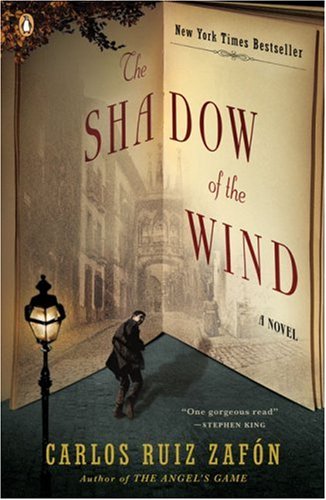
Head-hopping: This belongs in the former category to me, and to most American writers, but (oddly, it seems) not to writers in other languages. In case you don’t know what it means: head-hopping is another word for point-of-view violation. If you are in Jane Smith’s head, you can’t know that Harry Jones is admiring her fine flaxen curls. This is one of the easiest things for a critiquer to point out about another’s work, and so we do. But in (for example) The Shadow of the Wind, by Spanish author Carlos Ruiz Zafón, we see head-hopping galore. When we’re in Nuria Monfort’s viewpoint, we find out things poor Nuria can’t possibly know. It’s worth pointing out that this book is a massive bestseller not only in Spain, but across the world. Most readers don’t seem to care, in spite of the “thou shalt not,” that Zafón head hops. Their attitude surprises me a little bit because this rule (unlike the adverb one) actually makes sense. If you are in one point-of-view, you can’t know what someone else is thinking. And nobody writes in third-person omniscient anymore. (Another “thou shalt not” that you violate at your own peril.)
In my snarkier moods, usually after I’ve been caught breaking a rule, I suspect that many of our “thou shalt nots” in writing exist mostly to separate those in the know from novices. Insiders never use adverbs, never split infinitives, never end a sentence in a preposition. This snobbish tendency annoys me. It’s clubby, cliquish. Some of us are in, and know the secret code. Some of us are out, and are regarded with kindly pity. It especially annoys me when rules appear to exist for this reason alone.

The primary way of sorting out good wheat from cliquish chaff is to determine whether a regular-Jane reader will be pulled out of your story, or confused, when you violate the rule. The purpose of grammar, and hopefully of these other rules, is to improve understanding. To provide clarity. If violating the rule muddies the waters, then best you go back and fix the problem. Don’t follow a rule only to impress grammarians with your mastery of the esoteric. To this end, it’s useful to have a first reader who is not trained in the art of critiquing (although critiquers are quite useful in their way). Your first reader, ideally, should be someone who likes your genre, is honest, and has never taken a creative writing workshop.

What about you? What rules do you feel make sense, and which do you ignore, and why?

Monday, April 11, 2011

I'll Be the Judge (but You Could Be, Too!)

Put you're writing to the test.
Are you doing what you
need to do in order to
win that contest?
Over the past two years, I've been privileged enough to have helped judge both national and local literary contests. Literary contests are an undertaking that I believe every writer should experience on both sides of the fence. In a previous post, I shared my know-how when it comes to entering literary contests in "To Enter or not to Enter:  The Pros and Cons of Literary Contests." If you haven't read that post, then I encourage you to do so. Today's article will deal with the other side of that monster -- judging a literary contest.

Since we are currently in the throes of contest season, I thought this article would be beneficial to those of you out there who might be considering entering a contest. Whether you're a newbie at having your work judged, or you're a seasoned pro who has been at this for years, I believe there are a few suggestions that we could all find useful. As a judge, I've seen quite an array of manuscripts that range from well written, well plotted storylines, to aimless ramblings with little to no direction thrown on the page. So let's have a little guidance, shall we? What are those judges really looking for? What are the pitfalls that many writers tend to fall into? And how can you, my anxious writing friend, avoid a dreadful critique -- one that probably cost you a pretty penny to obtain. Here's what you can expect:

  1. Follow the Rules ~ As a judge, nothing chaps my hide more than receiving an entry where the author thinks he/she is above the rules. I've seen manuscripts with teeny-tiny margins, excessively long synopses (a seven-page synopsis does not make for a happy judge), manuscripts that go well over the page number count for submission, funky fonts, etc. You name it, it's out there being turned in as "quality" work. I've actually deducted points when an author doesn't follow the rules. If he can't do it for a contest, what makes him think he can get away with thumbing his nose when it comes to submitting to an agent? Stick to the contest rules, plain and simple.
  2. Synopsis ~ The. Bane. Of. Any. Writers. Existence! Yes, the synopsis is incredibly hard to write, but that doesn't mean the author should gloss over the whole plot and write a happy ending on the last line. First, know your genre and make sure you write the synopsis geared towards your target audience. Jump right into the plot of the story, make it flow, hit the best highlights, and give away the ending. Don't make your story one big mystery to figure out (that is, unless it's in the mystery category and then revelation is up for debate). As the judge, I need to know if the plot is even working, or perhaps it's not original enough, or perhaps it's not even plausible. And one last bit of advice with your synopsis (and some of you out there might argue with me on this one) -- Don't start with the words "My story is about . . . " or something similar. Your synopsis has to read like its own story. Leave all the introductory wording for your query letter.
  3. Grammar and Mechanics ~ It always surprises me when I get an entry full of glaring grammar, formatting, punctuation, and verb tense mistakes. In my opinion, this is the one element where a writer can easily make the manuscript look professional. Get a useful, to the point, grammar guide, like Grammar for Dummies and have it next to you as you polish those 20-30 manuscript pages. You'll be glad you did.
  4. Plot Structure and Pacing ~ After perusing countless manuscripts, the one bit of advice that I think any author should know when it comes to plot and storyline is originality. So, your main characters have "painful pasts" they are running from. Or perhaps one character inevitably ends up falling in love with another. Or they all end up in happy land in the end. But why? Why do these painful pasts mark your characters and how do these pasts affect them? What series of events causes them to meet and fall in love? I only ask that you not put them in happy land in the end unless there has been some fantastic crisis or obstacle they have overcome and we, the readers, really need that happy ending. As to pacing, don't bog down your first few pages with backstory. Most entries I judge generally lose me within the first few pages because the author is too busy explaining the grandfather or the mother-in-law's history. Start with some sort of crisis and keep the action moving from then on out.
  5. Characters and Dialogue ~ Your characters so desperately want to be loved by the reader! What makes your main character pop off the page and sets him/her apart from all the others? Make sure your MC has a great, compelling backstory, but please, don't dump that backstory into the first ten pages. Give each one of them some sort of specific trait or characteristic, but don't make it clichéd. Even the minor characters. Avoid creating every secretary to look cheap with big boobs and blonde hair or every cop seem crooked. Give them variety. Same goes for the dialogue. Not only do your characters want to be loved, but they also want to be heard (but not sound ridiculous when they open their mouths to speak). Each one is unique, so really think about the dialogue and how your main character would speak. Does she have an accent? Is she educated? Does she use a certain dialogue line that is hers and hers alone? Make it believable, and please, please use dialogue tags properly. And remember, your dialogue must move the story along in a meaningful way. Avoid writing random conversations -- make them have a point in the story.
  6. Point of View ~ You wouldn't think this would be a tricky element to work with, but I have to admit (and I've been guilty of this at times as well) that many new writers run right off the tracks with POV. Don't head hop, which basically means you are in and out of every characters head without even letting the reader know. Distinguish when you plan to change POV (usually with the three asterisks [***] the universal way to separate POV and scenes, or by simply starting a new chapter). When in one character's head, make sure she isn't noticing things about herself unless there is a mirror right in front of her (ex: "she had reddened eyes" or "a sinister smile crept onto his face"). How do they know if their eyes or red or if their smile is perceived as sinister? Keep POV where it needs to be.
You might be wondering what I mean by saying you could be a judge, too. I recently had someone ask me how an unpublished writer is allowed to judge contests. Simple -- win or place in the contest. Most contests are surprisingly very selective in who they choose as judges. I'm a preliminary reader (meaning I don't judge the final round, except in one contest I did) and my job is to weed out the manuscripts that need work and I pass the ones that work on the page onto the final judge (usually a published author or an agent or editor). It can be both a humbling and aggravating experience. Here are three ways to get on the judging side:
    • Ask around at just about any local writing venue you might know. You'd be surprised at how many local writing contests are out there. 
    • Contact your contest chair at your local writer's group. 
    • Place or win in an annual contest that is usually scouting the winners for preliminary round judges.
    My advice is to enter contests (But please, only the ones that work for your genre. Don't force a square peg into a round hole!) and, if at all possible, taste the judging side of writing for yourself as well. You will most certainly be able to relate to others out there who are struggling through the process as much as you are.

    How about for you? Have you ever sat on the judging side of the fence? If so, what was your experience like?


    Hop on over to The Random Book Review and take a look at my read for this week!

    Sunday, April 3, 2011

    On the Inexhaustible Subject of Query Letters: To Compare or not to Compare


    Every aspiring writer has a list of what not to do when querying agents. As time goes by and rejections pile upon our backs, that list keeps getting longer. The rules seem to be getting more abstract and absurd. Did you know that you are not supposed to attach sexy pictures of yourself to your query letter? Has it cross your mind to bribe an agent? And hear the last one. It really takes the cake! Agents want you humble so under no circumstances compare your work to current bestsellers. Say that again?


    Whenever I hear a tale of querying woes, I immediately side with the rejected. However, reading Betsy Lerner’s “How to approach agents and editors.” (The Writer, February, 2011) have to side with the agent. I mean, just picture a misguided writer attempting to “buy” representation and with the meager sum of five dollars! What were you thinking when you mailed a query on scented pink paper? And I was floored by Ms. Lerner´s story of the gallery kept at a former job displaying photographs (all showing cleavage) sent by potential clients who, despite their well-endowed bosoms, ended up in the slush pile.


    We all know the basics of querying. We´ve all heard about the dynamics of packing manuscripts, to avoid typos and spelling mistakes like the plague, and not to attach unnecessary paraphernalia. Yet according to Ms. Lerner she has received gifts that include candy, jewelry, perfume and wine.

    I would like to play Devil´s advocate and think that perhaps the generous writers are not trying to get on the good side of the agent. Maybe the $5 bill was sent in lieu of SASE. The gifts might have something to do with the content of their book. Who knows? Maybe the perfume came with a story about scented oils, or the candy was part of the marketing of a cooking book. And the sexy snapshots might be a way to prove the aspiring client is a healthy good-looking person who won´t bring shame to the agent or die of old age while he/she struggles to sell her manuscript. After all, we are bombarded with agents’ opinions on how we, aspiring writers, should sell ourselves using all kind of gadgets.


    Well, so much for the benefit of the doubt. The truth is that in our eagerness to please, our hurry to draft the best query letter, plus the sum of our fears and anxiety, we keep on plaguing agents with unrequested chapters, misspelled names, and other blunders. I must confess that the first agent I contacted was one that was looking for young adult stories dealing with Italian-American characters. I sent him a very adult novel set in Italy. Of course, I was the perfect candidate for the trash can.

    I was having a good laugh while reading this entertaining article, when I hit a statement that blew my mind. “I am always struck by the writer who with no credentials per se, compares his wok to current or past bestsellers…” Ms. Lerner writes. Wait, isn´t that what you are supposed to? All the lists of “Do‘s” tell us that the one thing agents want to see, is comparison to other well-known, and hopefully, current bestsellers. It’s the only edge they have to peddle our novel to the publishing industry.

    Then Ms. Lerner adds, “Just once I´d like to see a writer make a humble promise or estimation of his expectations. Just once I’d like to see a writer compare her work to a book that isn’t a commercial blockbuster. Better yet, let the publisher draw the conclusion, based on the quality of the work.”

    I understand where she is going. It´s undignified, not to mention arrogant, to compare our fumbling first steps to well-established novels, but does she really think novice writers are afflicted by a pandemic case of vanity?


    We are told by books, articles (and even YouTube videos) on how to write a query letter, that comparison is a must. Look at this sample, “the best approach is to compare and contrast your book to a publishing success, and the more successful the better.” (Dave King. “Query Letters: Getting Over the Transom”).This is a recurrent advice.


    Although we are wise enough to know we can´t match ourselves against Shakespeare and that Dan Brown/Dean Koontz comparisons sound highly conceited, I still feel it´s fine to align our first novel with other books that are doing well in the market. What harm could come from revealing that our stories share traits in common with The Help or Water for Elephants? Would it be so ill-advised to draw a comparison between our manuscript and the work of authors the contacted agent represents?

    Most agents say they like the contrast so they can get a feel of where the book might be shelved. What do you think? Are we shooting ourselves in the foot when we play the comparison game?