 When it comes to writing fiction, a novice is likely to feel strangled, if not utterly terrified, by the plethora of dictates that rise up to confront her efforts. The list of “thou shalt nots” seems longer than anything found in the Old Testament, and some rules seem nearly as arcane. The temptation is to throw one’s hands up in the air and go with the comforting notion of “write whatever you want.”
I’ve actually heard writers say this, usually when their atrocious grammar is pointed out to them. “I don’t care about the rules; rules cramp my creativity.” Well then. If our writing consists of dated entries beginning with “Dear Diary” and kept behind a lock, that’s fine. But surely some rules do matter. It’s worth sorting the wheat from the chaff and following those conventions.
I’ve got my own list of rules that matter, and another list of rules I happily ignore. Grammar and spelling are in the former category. These are the tools of our trade, and it pains me to see even the most basic rules violated by people who call themselves writers. A writer needs grammar and spelling like a kindergartner needs to know her letters. This is not a debatable point. Anyone hoping to get published needs to find a good grammar guide (English Grammar for Dummies comes highly recommended) and apply those principles to her own work.
 In the bathroom, next to the Sudoku puzzles and yellowed People magazines, keep a copy of Woe Is I: The Grammarphobe's Guide to Better English in Plain English by Patricia O’Connor. And Eats, Shoots & Leaves: The Zero Tolerance Approach to Punctuation by Lynne Truss. Both books are funny, irreverent, and instructive.
That said, there are some grammar rules I put in the “pedantic and ignorable” category, such as “thou shalt not split an infinitive.” This commandment is the result of Latin grammar forced on a non-Latin grammar system. Star Trek boldly split an infinitive with “to boldly go where no one has gone before,” and so can you. I still have trouble making myself split an infinitive, but this is because I worry some grammarphile will see my split infinitive and judge me. I avoid it when I can, but for no good reason.
Also in the latter category are such rules as “thou shalt not use an adverb.” How did the poor benighted adverb wind up under the boot heel of modern usage? A writing instructor once told our class we needed to do a text search on “ly” and evict every single adverb from our work. Every one! This is an example of someone unable to see the difference between gentle rule of thumb and Mosaic law. Very occasionally, when critiquing, I come across a writer who overdoes adverbs in a passage. It rarely pulls me out of a story, and is even less likely to pull the average reader, untrained in the art of adverb-hating, out of the story. Perhaps someone can fill me in on how this part of speech became so abominable. Until then, I will continue to willfully use them as I see fit.
Head-hopping: This belongs in the former category to me, and to most American writers, but (oddly, it seems) not to writers in other languages. In case you don’t know what it means: head-hopping is another word for point-of-view violation. If you are in Jane Smith’s head, you can’t know that Harry Jones is admiring her fine flaxen curls. This is one of the easiest things for a critiquer to point out about another’s work, and so we do.
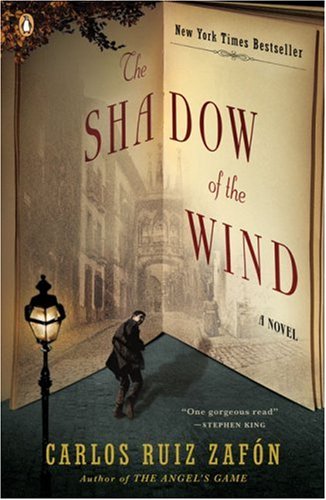 But in (for example) The Shadow of the Wind, by Spanish author Carlos Ruiz Zafón, we see head-hopping galore. When we’re in Nuria Monfort’s viewpoint, we find out things poor Nuria can’t possibly know. It’s worth pointing out that this book is a massive bestseller not only in Spain, but across the world. Most readers don’t seem to care, in spite of the “thou shalt not,” that Zafón head hops. Their attitude surprises me a little bit because this rule (unlike the adverb one) actually makes sense. If you are in one point-of-view, you can’t know what someone else is thinking. And nobody writes in third-person omniscient anymore. (Another “thou shalt not” that you violate at your own peril.)
In my snarkier moods, usually after I’ve been caught breaking a rule, I suspect that many of our “thou shalt nots” in writing exist mostly to separate those in the know from novices. Insiders never use adverbs, never split infinitives, never end a sentence in a preposition. This snobbish tendency annoys me. It’s clubby, cliquish. Some of us are in, and know the secret code. Some of us are out, and are regarded with kindly pity. It especially annoys me when rules appear to exist for this reason alone.
The primary way of sorting out good wheat from cliquish chaff is to determine whether a regular-Jane reader will be pulled out of your story, or confused, when you violate the rule. The purpose of grammar, and hopefully of these other rules, is to improve understanding. To provide clarity. If violating the rule muddies the waters, then best you go back and fix the problem. Don’t follow a rule only to impress grammarians with your mastery of the esoteric. To this end, it’s useful to have a first reader who is not trained in the art of critiquing (although critiquers are quite useful in their way). Your first reader, ideally, should be someone who likes your genre, is honest, and has never taken a creative writing workshop.
What about you? What rules do you feel make sense, and which do you ignore, and why?

