Sunday, December 8, 2013

Killing Them Kindly

Okay, I have a confession to make. (A new year is quickly approaching, so I can make an early resolution if I want to, right?)

I tend to laugh during movie death scenes.

There, I said it. (My resolution will be to try and stop laughing during death scenes.)

Last week, I joined some friends in viewing a film that was kind of 'meh' for me, but what really got me was the storyline. It was neatly tied in a bow and everyone lived happily ever after. Oh, except for the one guy who got shot by the drug cartel and died a slow, chatty death. And I couldn't help but laugh.

After watching the film, a friend who'd been sniffling behind me during the death scene called me out on my inappropriate behavior during such a poignant scene. Oh, for shame! He had leftover tears in his eyes, but a smile on his face when he asked, so I knew he wasn't really angry at me. But, I did have a moment of "Oh, I'm a horrible person!" And I hadn't realized I'd laughed. I guess it's become second nature when it comes to certain scenes I watch (by "certain" I mean unbelievable scenes that make the story seem cheesy).

So, why did I laugh?

Well, it goes back to that chatty character shot through with a bullet. He just wouldn't stop talking and die already. Maybe that sounds callous, but in reality, chatty deaths are not the way to take your character out of the story. It prolongs the scene as your character stands on his/her soapbox one last time, when you're almost sure he/she would be dead by now. It boils down to suspension of disbelief for the viewer or reader.

Then the question may be -- "What is the best way to kill off a character?"

Well, that depends on your genre. Even in the murder mystery realm there's a difference of opinion as to how to knock someone off right. A hardboiled crime novel will have no qualms of shooting things up as a character walks down the street. No one bats an eye when the body count rises. And the more expendable characters, the better. But, then you get into your cozy mysteries and the blood and gore is left off the page. Characters tend to "happen upon" the murder victim, and from there clues are meticulously sought out while the body is quietly removed from the scene. Literary tends to go either way. There could be a very public, gory display of death, or it could be a story centered around a mother slowly dying of cancer throughout the length of the novel. It all depends on genre and what the audience is expecting.

But, here are five things you don't want. These will leave your readers rolling their eyes:

  • Chatty Cathy Deaths -- As I mentioned above, nobody enjoys a chatty corpse. These are death scenes where it's obvious the victim is on death's door, but for whatever reason the author has decided that a long, lengthy soliloquy is needed. Unless you're Shakespeare, a drawn out, more than "merely a flesh wound" death is unnecessary. Don't let the character keep pulling his own string!
  • The Incredibly Overworked Death -- In these deaths, characters are fatally wounded, but they flail and carry on. They just won't die. A 1973 Turkish film, Kareteci Kiz, was voted in 2012 to have the worst death scene ever. (You're intrigued now, aren't you?) I didn't add the clip, but you're more than welcome to hop on over to YouTube and check it out. You'll see a useless bystander, some tragically horrible karate and knife action, about five random shots fired, lots of badly placed fake blood, and death in slow-mo. Sounds believable, right? You'll get a good laugh!

Look at all that fake blood!
And I thought the bullet wound was
 somewhere else!
  • The "No, He's Not Really Dead! It Was Just a Dream!" -- One great television show comes to mind when I think of this one:  Newhart. This show pulls off what could be seen as a death that didn't really happen (I was never really sure if Dick was supposed to have died in that final scene). After Dick is struck on the head by a golfball and the scene fades to black, we see that Newhart was nothing more than a dream during The Bob Newhart Show. Sound trippy? It kind of is if you've ever watched it. Although Newhart pulled this off beautifully, deaths that end up becoming dream sequences just don't work anymore. They've become clichéd and are seen as an easy out for the writers. Nobody likes to bid adieu to a favorite show, so why not make it seem like it was all a dream? Just ask the folks over at Roseanne. They tried to pull off something similar, only they didn't fare as well in their final episode.

One of the best season finales ever,
only, I wouldn't try this in your
own writing.
  • Fatal Cliffhangers That Fall Flat -- Arguably one of the best "will he or won't he die" cliffhangers ever comes from Dallas (the 1980s version, not the more recent one). During one hot, feverish summer in 1980, fans of the show barely slept because one question nagged their thoughts:  "Who shot J.R.?" Although J.R.'s life hanging in the balance at the end of Season 2 is one for the record books, chances are many of you can't even name his revealed shooter. As spectacular as the shooting may have been, it's best if a main character goes out at the hands of someone important, someone who holds a lot of meaning in that character's life. It took the show two months to reveal who-done-it, and it turned out to be a jealous mistress shooting him in a fit of anger. Hmm...With so many other characters out for J.R.'s blood was this the best move? That one is up for debate! Oh, and the shooter's name was Kristin Shepard.

Fascinating show, but I'm not so
sure about the shooter's reveal.
What do you think?
  • Killing the Most Beloved of All Characters -- This final point pertains more to who you take out and not how you take them out. We've all read a book or two where a beloved character gets killed off in the end. Mainly, these are stand alone novels, ones where the stakes are high and you know there is potential for death for the MC. But what happens with a series? For instance, in Catching Fire, the second book in The Hunger Games trilogy, I was pleasantly (but also horribly) surprised when Cinna, Katniss's much-loved stylist, gets killed right before she's scheduled to enter the arena. I was pleasantly surprised because Collins pulled that one off very well. (Sad, because, you know, it's Cinna.) But, let's say you take your readers through the entire trilogy and then BAM! You take out the MC? Not many series do this, but those that do tend to get angry reactions. Why? Because of the investment the reader has made. They are connected to this particular character and they want to see the best for them in the end...not death. How would you have felt if Katniss had met a random death at the end of Mockingjay? My point exactly.

Rewrite this ending:
Katniss dies.
So, there are a few pointers for you as you muddle through the decisions you must make when it comes to thinning the herd of characters in your book. At the very least, try to let your characters go out with a little dignity. Keep in mind that anything cheesy will induce eye rolling and possibly make your reader or viewer laugh!

Are there any death scenes from either books or films that just send you rolling on the floor? Are there any other pointers that come to mind for you? Share with us!

Friday, November 29, 2013

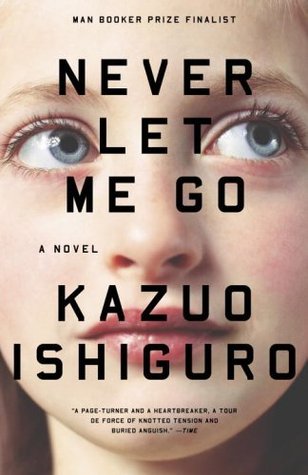
Cephalopod Coffeehouse Review: Never Let Me Go

As the Cephalopod Coffeehouse review for November approached, I began weighing and comparing the various books I read this month. As I am writing two Cephalopod reviews, I think will save my actual favorite for my personal blog. For the Writing Sisterhood I'm going to cheat a little and present the weirdest book of the month for me: Never Let Me Go, the strange, semi-dystopian novel by Kazuo Ishiguro.


First, it's a book written by a Japanese-Brit, which is a little unusual. Ishiguro moved from Japan to the UK when he was five years old, and if this book is any indication, he thoroughly identifies as an Englishman. Ishiguro is best known for his novel The Remains of the Day, about a lovelorn butler, whom most of you are probably picturing as Anthony Hopkins. As with that novel, Never Let Me Go was turned into a major motion picture. I haven't seen it yet: I'm hoping the film fixes the problems I had with the novel.

Before I progress, there's no way to talk about this book without spoiling it, as mystery and slow-reveal are the driving force behind it. So if you haven't read it yet, you may not want to continue past these next few caveats: first, it's not really as sci-fi book, so ignore that description. It's not even dystopian, not in the sense you're used to. I am reviewing it as a highly-praised polemic that ultimately misses the mark; if you still want to read it, go do that. If you expect you never will, you can keep reading this review.

I read this book in less than 24 hours, so clearly I found it gripping. The setting is an modern-day English boarding school, called Hailsham, populated by "special students," which will put many people in mind of Harry Potter. But what makes these students special is left deliberately unclear, both to themselves and to the reader, for much of the book. The reader learns about what's happening roughly at the same time as the main characters, but unlike the reader, the main characters don't seem to care. And this is one serious flaw of the book: the characters don't care about their own fate.

We've gotten used to dystopian novels—especially where teens are involved—as "rage against the machine" stories where the young 'uns fight back, form a rebellion. And most dystopian novels nowadays are written expressly for a teen audience, but there is a respectable subset of dystopian novels that are written for adults, and in these, the system usually wins: the opposition is crushed or assimilated. Fahrenheit 451, 1984, Minority Report, and Brave New World are examples. Never Let Me Go seems to want to be this sort of book, although the nemesis is less speculative and more realistic than in classic dystopian works. In any event, the system appears to win in the end of Never Let Me Go. But unlike most dystopian novels, nobody even fights back in this one. As I came up to the end of the book, I began to wonder if passivity had actually been bred into the students. Humans, the real kind, have a survival instinct. Are these characters truly human? Did Ishiguro mean to be so ambiguous about that?

What drove the book forward was the unanswered question of what Hailsham is about; you don't know what's going on and you keep thinking the next page might give you the answer. So you keep turning pages. I was glued to the sofa for five hours straight. But once the majority of the questions were answered by the Hailsham's administrators (about 80% if the way through), the forward momentum was really lost for me, and I kind of plodded through the rest of it. And here it is (true spoiler alert here): Society is breeding clones for the purposes of organ transplants. The clones are informed of their purpose and know that the organ donations will result in their death; they seem all right with this. The purpose of Hailsham is not just to rear clone children, but actually to form a little rebellion: the administrators want to prove that clones aren't just vessels, but living breathing feeling human beings. Hailsham is a sort of arts school, and the art that the students produce is supposed to be a sort of Turing test: only real humans, not machines, can make art. The students dutifully churn out art, but the rebellion is quashed when something totally unrelated to the rest of the story happens offscreen, and so the school is shut down.

And so the reader is left with a big "meh." If society doesn't mind, and the clones themselves don't mind, what's the point of a rebellion? If the rebellion ends because of actions completely outside the plotline, what was the storytelling purpose of it? In the end, when the main characters "complete" (i.e., die from having given up all their vital organs) I had a hard time caring. Society didn't care about them, their protectors didn't care about them, and they don't even care about themselves. So why should the reader care? The point of the novel was not the people, but the morality tale. Morality is always a weak pillar on which to hang a story, and Ishiguro doesn't even seem clear on what his moral message is. I have to give it a certain number of stars for holding my attention, but I was left fairly unsatisfied. The whole question raised is whether these test-tube clones, raised only for their organs, are really human. The purpose of the art gallery and the whole Hailsham project was to prove the students had souls, had feelings. But do they? They seem like normal enough children and teens, but when they are asked to walk into the slaughterhouse, they don't hesitate. There's no attempt to escape. There's the barest nod to the idea that at least claiming to fall in love with another student can defer the slaughter for a few years, and the two protagonists make a halfhearted stab at this, but it's not at all convincing.

I have to say, for a book that I didn't especially love, Never Let Me Go has stayed on my mind for days and days since I've finished. Mostly I'm trying to reconcile how it was I was so gripped by the narrative and yet left so terribly unsatisfied. I felt like the novel was a long-winded way of saying, "Hey y'all, don't do cloning, OK?" Or maybe it was the more generic "Science Is Dangerous!" morality tale that much sci-fi (ironically) seems to be. If you're going to write a polemic, you'd better be very clear on your moral message and all your characterization and plot had better be in service to that message. Otherwise, please for the love of God, save us hours of feverish page-turning and just write an essay.

Did you read the novel? Have you read anything else by Ishiguro, and what do you think of his style? Are there novels with a moral message you feel work better than others, and how do they pull it off?

Be sure to check out these other Cephalopod Reviews:


1.The Armchair Squid2.Scouring Monk
3.mainewords4.Huntress
5.DeniseCCovey6.A Creative Exercise
7.Trisha @ WORD STUFF8.Katie O'Sullivan ~ Read, Write, Repeat
9.V's Reads10.Bird's Nest
11.Hungry Enough To Eat Six!12.The Random Book Review
13.Words Incorporated14.Defending the Pen

Sunday, November 24, 2013

Women of Letters

Within a few short days of each other, three great women authors have just died: Barbara Park on November 15, Doris Lessing on November 17, and Charlotte Zolotow on November 19. I'd like to take a moment remembering them and what they've meant to me and to the writing world.

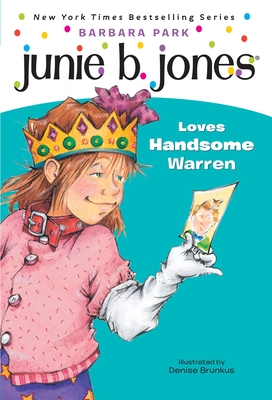
Barbara Park helped me raise my children. I don't think I'd be the same or my kids would be the same without spunky Junie B. Jones, who started kindergarten with my daughter. They rode on the same stupid smelly bus and were best friends with That Grace and richie Lucille. My daughter and Junie B. bonded over their loud-crying baby brothers together, and lost their first teeth together. Junie B. was not a proper girl: she used language incorrectly and got dirty and held grudges and sometimes lied. We loved her for this. And she was hilarious. I would often laugh so hard reading these books to my kids that I'd have to stop and let someone else take over. We bought the audiobooks to play in the car. I read the books to both kids when they were tiny, and when they were learning to read they turned back to the books as early readers. And while my children never developed the terrible habits critics were so sure Junie B readers would pick up (like saying "worstest" and "thinked" and getting the Pledge of Allegiance wrong), I have continued to this day to talk a little bit like Junie B. Plus also, I am glad of that. Barbara Park was wonderfully witty and irreverent, and was instrumental in teaching my children to love books. Park was only 66 when she died, taken far too soon. She died of ovarian cancer.

Also critical to me as a parent was Charlotte Zolotow, who wrote magical, ethereal picture books. She was most famous for Mr. Rabbit and the Lovely Present, but my favorite book of hers was When the Wind Stops, which delicately touches on the issue of mortality. Using the wind as a metaphor for life, Zolotow explains that nothing ever really vanishes, but appears in another place or another form. From the book description: "Rain goes back into the clouds to create new storms, waves fold back upon the sea to become new waves, and the day moves on to make way for the night, bringing the darkness and stars for the little boy to dream in." It's almost Buddhist in its viewpoint, and the gorgeous artwork by Stefano Vitale, painted on wood, perfectly matches the lovely language and flow of the story. I must have read the book a hundred times to my kids, and when I mentioned Zolotow's passing to my husband, he got mistily nostalgic and said he, too, remembers being asked to read that book over and over. It was a perennial favorite. We still own it; I will keep it for my grandchildren. Unlike Barbara Park, Charlotte Zolotow had a good long run of it: she was 98 years old when she died.

Doris Lessing also had a good long run of it: she was 94 when she died. I haven't read Lessing yet, something I intend to remedy quickly, but she still means something to me, as she does to every woman writer. She is an author who is female but is recognized first for her work. The London Times ranked her fifth on a list of "The 50 greatest British writers since 1945," with no gender attribute between "greatest" and "writers." This is a perk every male writer gets automatically—when is the last time you heard of "men's fiction" or heard an author described as a "great male author?" But for women artists, it is rare to acknowledged without reference to your bits.

Lessing broke a lot of rules: she was a communist, she abandoned two of her children, she didn't attend school past the age of fourteen, she declined damehood. To prove how snobbish the literary world is, how difficult it is for new writers to break in, she tried to publish two novels under a pseudonym. Sure enough, they were rejected by her own publisher, though later picked up by another publisher. She was not especially friendly to the feminist movement, but nonetheless paved the way, merely by her perseverance and success, for other women writers to be taken seriously as writers, rather than as decorative dabblers in the arts.

So for all you did: thanks, ladies. You will be missed.