Sunday, August 5, 2012

No Way Out


A friend asked me the other day if there’s one recurring theme I return to in my fiction. That is a hard question to answer (try it!). After some thought, I decided that “the moral dilemma” is something I find incredibly appealing in storytelling … both as a creator and consumer.

To be clear, when I speak of “moral dilemma,” I do not mean “controversial political issue.” The two are often conflated. A moral dilemma is a situation where every alternative available breaks a moral rule. Your character has to take some action, but there is no “good” action to take. If structured well, the reader will feel the pain of the terrible choice, and will leave the scene or story wondering what she would have done. The more anguished the character, the more powerful the story. The reader and the writer alike are left as unsettled as the character, and the story becomes unforgettable.


Reaching far back in world literature, we have the wretched decision faced by Abraham in the Old Testament. God instructs him to slay his own son, Isaac. Abraham has exactly two unpleasant alternatives: ignore God (and, hello! disobey the creator of the universe!) or kill his own child.

Agamemnon and Iphigenia
Abraham wasn’t the only one confronted with such a decision: the gods of many cultures are fond of putting their people in this particular pickle. Poor Agamemnon, for example: Zeus orders the warrior to lead an expedition to Troy to punish that city. En route, a storm breaks out that endangers the quest; Agamemnon is ordered by the goddess Artemis to slay his own daughter as a sacrifice, at which point the gods will stop the storm. If he does not slay his daughter, everyone on the ship (including his daughter, natch) will die. Ags also will be disobeying Zeus: if he does not murder his daughter, Troy will not be revenge-sacked. The flipside is obvious, and the same as Abraham's: he will have murdered his own child, one of the deepest taboos across time and culture. No good choice.

World mythology is full of people sacrificing their offspring to the gods, but in the case of Tantalus, the gods didn’t appreciate the act. He killed his son in offering to the Olympians, and for this he is eternally punished: he is sent to Hades, to stand forever in a pool of cool water with fresh fruit dangling above his head. When he is thirsty and bends to drink the water, it recedes from his lips. When he is hungry and reaches for the fruits, they retreat from his grasp. A miserable situation, all right: but not a moral dilemma. It’s good to keep in mind that being trapped or stuck is not necessarily the same as a moral dilemma — though it can increase the tension and pace of a story.

Stephen Blackpool and his burden
In Charles Dickens’ Hard Times, hardworking Stephen Blackpool is saddled with a wretched, drunken wife. He and his wife are estranged, and since then he's (chastely) fallen in love with another woman, the angelic Rachael. He desperately wants to obtain a divorce, but due to the class-biased divorce laws of the time, he cannot. One night, he comes home to find the wife back in his flat, drunk and aggressive. As she passes into semiconsciousness, he notices there are two bottles on the nightstand: one is alcohol, the other is poison. The wife wakes up blearily and reaches for the poison. Stephen is faced with a terrible moral dilemma here: allow the wife to poison herself, thus ridding him of his burden, or save her.

I know what I would have done. As I was reading along, I wanted to yell at him, “Let her drink the poison! Come on, Stephen!” Dickens masterfully draws out the scene, ratcheting up the tension, drawing you into Stephen’s agonized state of mind. (For the resolution, turn to the chapter entitled “Rachael.”)

Which child will you choose?
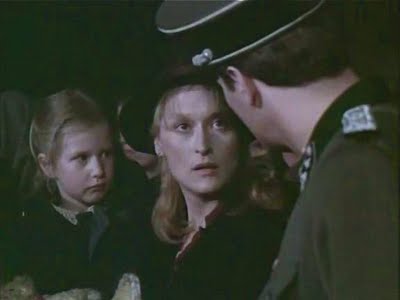
The classic moral dilemma in modern fiction is Sophie’s Choice. Written by William Styron in 1979, the story revolves around a young mother in a Polish concentration camp who must choose which of her two children will die. You don’t have to be a mother to feel the horror of this impossible decision. (But every mother who knows the story feels a particular knot of agony.)

Continuing forward in time, we have perhaps the current reigning queen of the ethical dilemma, Jodi Picoult. Her novel My Sister’s Keeper has the protagonist caught between continuing on as her sister’s bone-marrow donor, or seizing control of her own destiny and refusing to be part of her parents’ plans anymore. In addition to the grueling choice faced by the main character (it’s ethically muddier than it even sounds), you are also presented with the initial decision made by the parents: is it ethical to conceive a child for the sole purpose of becoming a bone-marrow donor for her sick sister?

In Erin Morgenstern’s magical, literary genre-bender, The Night Circus, young magicians Celia and Marco are caught up in a competition than lands them both in an ethical dilemma. The bad guy has set them up to choose between their love for each other and their own survival. Sound familiar? It’s quite similar to the situation faced by Katniss and Peeta in The Hunger Games: you love each other, but only one of you will get out of this alive. Hmmm, what to do, what to do.

One key to a good moral dilemma is that the writer and the reader feel just as torn as the character. Too often, writers think they are setting up a moral dilemma, when it’s clear they have a “right” answer in mind. An example would be the teen novel which has the girl choosing between the handsome-schmucky rich guy and another guy who’s not so rich or popular, but is obviously the better pick. See: virtually every John Hughes movie ever made. Writers should be alert for this easy-out, and work to ensure that the dilemma is real. You don’t know, and you don’t want your readers to know, what is the right thing to do.

What sacrifices will a mother make?
In one of my current WIPs, my protagonist is a young, extremely impoverished mother whose baby has been snatched by a wealthy woman. The rich woman hopes to pass off the child as her own, in order keep her husband married to her: he is married solely for the sake of acquiring an heir. He’ll dump any wife who doesn’t provide, and no wife has been able to provide thus far (shades of Henry VIII). The young mother eventually tracks down her child, without really thinking about what she’ll do when she finds him. Does she take him back, to live with her in the streets? Or does she leave him in his new home, where he stands to inherit an estate and a title? I think that's a genuinely difficult decision, especially when I take into consideration the setting and some other extenuating circumstances.

Ideally, however you resolve the moral dilemma your character faces, the character should change as a result. One of the most important signs of real adulthood is the relinquishing of a black-and-white worldview. It’s comforting to think that every question has a clear right-or-wrong answer, and many stunted adults still cling to this childish notion. But a developed person (and character) understands that many choices are far from straightforward, and that clarity is rare. A satisfying story can show a character moving through the moral dilemma and coming out wearier but wiser: able to approach life with a more nuanced view. Another possibility is that the character is simply ruined by the dilemma. Sophie, of Sophie’s Choice, is such a character: she never recovers from the devastation inflicted on her. Faust is another classic example: he is offered a deal with the devil: give me your soul, and in exchange I give you unlimited knowledge and worldly pleasure. Tough choice, and it does him in.

What are your favorite moral-dilemma stories? Do you try to work those into your own writing? Can you think of other examples of characters ennobled — or ruined ‚ by the decisions they face?

Sunday, July 29, 2012

Admit It . . . You've Judged a Cover

We've heard many times throughout our lives to never judge a book by its cover. Usually, we are referring to other people and what they look like on the outside as opposed to what they might be like on the inside. But the truth of the matter is that idiom really does pertain to what it's saying. We probably shouldn't judge a book by its cover, but the fact of the matter is that we all do. I know I do, and if you're an honest individual, then I think you'll agree that you do too.

But why? What compels us to pick up a book at a bookstore or click on an enhanced image on Amazon and say "no" even before we've read a snippet on what that book is about? Whether we want to admit it or not, we are very visual creatures. We enjoy the beauty of art that's had time put into it and is well done and tasteful. We want to put our money into something that can get us with just an image, and that is why a book cover can either make or break your novel in such a competitive market.

We've all seen the obscure, complicated, ridiculous, or just downright strange covers that some authors choose. When I see one that particularly looks bad, I shake my head and wonder what the author was even thinking in choosing an image like that on the cover. The sad part is that many self-published novels tend to have less than stellar artwork on the front. Just go over to Smashwords and do a cursory search and you'll see that almost every genre listed has a few hard-to-understand covers. (Personally, I have a hard time with the Fantasy category, but that just might be me.)

As readers, we look for certain things on our covers that will reflect the author's seriousness when it comes to his/her writing.

QUALITY

Many of us look for highly polished prose that doesn't drag on and on forever. Some prefer a quick-paced novel, but still, the quality of writing has to be good. The author needs to make his/her point and then move on. Does the cover need to convey the same feeling of quality? Yes. If you're writing a thriller, you want to make sure that the excitement your readers will feel when reading your story is felt the moment someone picks your book off the shelf. Michael Connelly's novel The Reversal was shortlisted for the 2011 ITW Thriller Award for the best hard cover novel. You tell me. Does the cover convey the quality of the writing one would find within?

Michael Connelly's
The Reversal
Personally, I think it's a nice, crisp, simple cover that conveys the genre Michael Connelly writes. It's not overdone with different images fighting for attention. The colors are basic and makes one think of a cold courtroom where justice will be dealt out. Since Connelly is a big name in the thriller genre, his name is more dominant than the title, but even so, it's clear what the title is and not shoved into a tiny size. A clean font that blends in with the cover is also a must. 

Here's another novel shortlisted in the 2011 ITW Thriller Awards. 

Brian Freeman's
The Burying Place
Not having read the blurb, I'm expecting a chilling discovery of dead bodies in a remote house along a river. It kind of scares the crap out of me just looking at it! But at least it's doing what it's supposed to do and that is to get the wheels in my head turning about what I might find under that cover.

UNIVERSAL THEMES

A good cover will catch our attention because we simply enjoy that genre or those kinds of stories. As readers, we are drawn to universal themes, like with the two novels mentioned above, which deal with solving a crime and catching the bad guy. The same goes for war novels, romances, YA novels, and fantasy or sci-fi. Let's take the romance category for a moment. I can't think of one genre romance novel cover that doesn't look like the next. They are all very similar, but that's exactly what attracts the readers. How many do we come across that could be identical stories?

Jaci Burton's
Taking a Shot
Erin McCarthy's
Jacked Up
Other than the fact that these two men obviously enjoy different sports, it looks like both authors used the same model for the covers. And one would expect similar story lines, but as you can see, that's what the romance genre is all about. The covers need to bring in the readers with unspoken words. Both of these covers scream hot love, hot men . . . oh, and hot sports, whether it's on the ice or off. What do you think?


THINKING AND FEELING

When a potential reader pulls a novel from the shelf they are already thinking and feeling what might happen in that story? What will pull them into this story? Will it be worth his/her while? Does it excite them? The cover needs to say a resounding "Yes!" Thrillers and romances have the market cornered when it comes to getting the buyers through the door. But what about other genres? One I repeatedly struggle with is the fantasy genre. Rarely do I see one that catches my eye. (I'll be honest and say that as soon as I read the back cover and see that it's fantasy, it usually goes right back on the shelf.) But there is so much going on in the fantasy world and it's such a mixed genre that a reader needs to know if vampires suck blood or dwarves walk around Middle-earth.

Do these covers convey what the author is offering the reader?

George R. R. Martin's
A Game of Thrones
(original cover)
J.R.R. Tolkien's
The Hobbit
(original cover)
Perhaps you're thinking I'm not being fair by using an older cover of The Hobbit, but think about it. If you had picked up this first edition from 1937, would it hold your interest enough to read it? This brings up another point -- sometimes novel covers just need a face lift as time passes.

Would either of these covers interest you more?

Updated Cover


One of many updated covers.

My guess would be yes. Original cover art can change over the years if the novel is a bestseller. In both cases with A Game of Thrones and The Hobbit, these covers have had numerous makeovers to appeal to the changing audiences, particularly The Hobbit. It was published in 1937 and in just a few short months will have a big box office release. If the film's producers and marketing department were to go with a very bland poster like the book's original cover, then not many moviegoers would be interested in seeing the film. A book like this, that has been around for readers of many different generations, will continue to have work done on its cover. The idea is to entice those who will read it ten, twenty, even fifty years from now.

ENTERTAINMENT

How many times have you gone to see a film based off of the book, simply because you read the book first and you just couldn't wait to see how it was developed into a film? I think a majority of anyone reading this has. I know I have, although I tend to do the reverse. I'll see the movie first and then read the novel, mainly because I know the novel will have so many more juicy tidbits to share than the movie could fit into those two hours. But what's one of the main things we seek out first before going to see that film? The movie poster! It is one of the most solid pieces of advertising that studios have at their disposal. And if the book was a big hit, then that poster better darn well say the film will be a big hit. Notice how film studios use the basic building blocks of the novel cover when it comes to selling the film adaptations.

The Help
(the film)


The Help
by Kathryn Stockett
(original cover)


Notice the similarities between Stockett's novel and the movie poster: bright yellow, the bench and the wire, the separation of the birds as well as the women, and the purple used in the lettering. A movie goer would be hard pressed not to know that these two stories are one and the same.

The film
The book
Here's a more recent example with The Hunger Games book cover and movie poster. What exactly draws you in and makes you want to either see the film or read the book? Do you notice the same theme running throughout each one?

The color scheme says two things to me. First, this story will be dark. Whatever I'm expecting to discover in the story, I should at least know that it will have dark overtones. Second, the color scheme for both and the fact that there are arrows on the fronts of each one, I should expect some kind of war or fighting. Perhaps for justice? Perhaps for survival? Perhaps for just fun and games? But that should be enough to entice me to want to read more. Unlike the bright colors of The Help, The Hunger Games does not feel like a lighthearted story, and if that's what I'm looking for, then this cover and poster have done their jobs.

Are there any book covers or movie posters that have caught your eye and ended up making you read the story or see the film, or vice versa? Can you think of any cover art on a bestseller that just doesn't work? Are you struggling to come up with your own artwork that will help sell your novel?

Sunday, July 22, 2012

Moral Relativism in Fiction*

Russian edition of Anna Karenina 
(1873-1877)
Would Anna Karenina have killed herself in the 21st Century?

Moral values change with time. They also vary according to religion, culture, geography and political inclination. Your inability to relate to a plot, or to the ending of a novel, may be linked to your own views and beliefs. So before you throw that book against the wall, consider the context of the novel and its author. Romantic relationships are not treated the same way by writers of different eras and cultures, and the fate of “forbidden” loves are dependent on the social conventions of their place and time.

I could never understand why Edith Wharton had chosen to keep Newland and Ellen apart at the end of The Age of Innocence. Hadn’t they suffered enough? (I even complained about it here). This past week, I finally understood her reasons. And I owe it all to Ronald Tobias’ 20 Master Plots and How to Build Them. (Thanks Stephanie for recommending it!)

Set in 1870’s New York, Newland Archer is engaged to May Welland. When May’s cousin, Ellen Olenska, abandons her husband in Europe and moves to New York with the intention of divorcing him, May’s family is outraged. They recruit Newland to convince Ellen to go back to her husband and forget all about the divorce. Newland, however, becomes fascinated with Ellen and the two of them fall in love. But Newland is a man of honor and marries May nonetheless. Time doesn’t subdue his feelings for Ellen and he is determined to leave May for Ellen. That is, until May announces she’s pregnant. Ellen returns to Europe and Newland stays with May until she dies (twenty-six years later!) Already an old man, Newland and his son visit Paris, where Ellen now lives. Newland’s son insists they visit her, but Newland refuses to go to her apartment and walks away.

According to Tobias, forbidden loves never end up happily and the lovers must “pay their overdue bill to society” (most of the time with death). “Society, it seems, never loses.” (Tobias, pg.224)  Since divorce was condemned during Wharton’s lifetime, she couldn’t have given her protagonists a happy ending even though both were free to be together.

For a modern viewer, the notion that divorce would have been punished with unhappiness seems unconceivable (at least in the Western world). For us, the power of love should trample appearances and societal norms. “Love conquers all” has become the mantra of most works of fiction. Perhaps if a contemporary author had written The Age of Innocence, Newland and Ellen would have been together in the end.

The Unfaithful Wife

Historically, women have been punished harshly for being unfaithful. Literature has set an example with stern consequences for this transgression. Madame Bovary and Anna Karenina are the most common cases of study. In both instances, their punishment was death.

But there were other, more subtle, penalties for women who betrayed their marital vows in fiction. In Somerset Maugham’s novel The Painted Veil (1925), Kitty marries Doctor Walter Fane out of convenience. Walter is devoted to Kitty, but she is bored with him and has an affair with the charming Charles Townsend. When Walter finds out about the affair, he takes his wife to a cholera-infested village in China to punish her. With illness and death around her, Kitty goes through a transformation and realizes how altruistic her husband is. But she never falls in love with him. Walter dies and Kitty returns to Hong Kong, where once again she falls under Townsend’s charms. This encounter disgusts her (she had been welcomed by Townsend’s wife into their home). Kitty returns to England and devotes her life to her son and father. But she never knows real love and has lost her dignity and self-respect.

In the 2006 film version, starring Naomi Watts and Edward Norton, the director gives Kitty a second chance. During her time in the Chinese village, Kitty not only matures and helps the sick, but she also falls in love with Walter, who eventually forgives her. (He never does in the original novel.) Kitty and Walter have a few days of bliss and love, but like in the book, Walter succumbs to the disease. A redeemed Kitty returns to London where, years later, she runs into Townsend. She is courteous but indifferent, and when her son asks who that man is, she answers “no one important.” In this version, Kitty also loses Walter, but she gained his love, his forgiveness and her dignity.

In The Painted Veil,  Dr. Walter Fane has no pity for his unfaithful wife.

In Revolutionary Road by Richard Yates (1961), both spouses are unfaithful. But infidelity is not the central issue in this novel. The biggest problem for the couple is that April wants an abortion and Frank doesn’t. In the end, April dies after getting an abortion “home kit” and doing it herself. The reader is left to wonder if Yates was making a comment about illegal abortion or April’s death was a punishment for her actions.   

More recent unfaithful wives in fiction are Connie in Unfaithful (2002) and Sheila in Elin Hilderbrand’s A Summer Affair (2008).

In the film Unfaithful, Connie (Diane Lane) has lost her passion for her husband and engages in an affair with a French bookseller she finds irresistible. When her husband, Edward (Richard Gere) discovers the betrayal, he accidentally kills Connie’s lover. In this case, it is not the wife who pays, but the husband and the lover because in the end, it is apparent that Edward is going to turn himself in to the police.

In A Summer Affair, another wife with an illicit relationship (Sheila) gets a pass. Not only is the lover portrayed in a favorable light (he is a generous millionaire who appreciates Sheila’s artistic talent more than her husband) but also, Sheila’s husband never finds out about the affair. Sheila regrets her indiscretion and goes back to her normal life.

These two modern versions of the contemporary cheating wife are diametrically opposite to the past anti-heroines who paid dearly for their betrayals.

Forbidden Loves

Nowadays, the subject of cousin marriage has become controversial in the United States (and this aversion seems to be expanding to other countries as well). But for centuries, inbreeding was a common practice in society (and in some cultures, it still is).

In the 80’s Colombian soap opera, Gallito Ramirez, the protagonist is a low-class boxer who falls in love with his spoiled and rich first cousin, La Niña Mencha, not knowing that they’re family. When the truth of Ramirez’s origins comes to light, the biggest obstacle for their marriage is still their social status, not their blood ties. If this story had been written by a contemporary American writer, would the couple have split at the end? In Colombia, the fact that they were cousins was not an obstacle for them to stay together.

Colombians have never been afraid of controversies. In 1988, they released Caballo Viejo (literally “Old Horse,” but the title comes from a popular Venezuelan song). The story explores not one, but two taboos. The protagonist, Epifanio del Cristo Martínez, is an old (and not very attractive) man who falls in love with Nora Márquez, a young, beautiful woman who happens to be his niece. The twist is that Nora, despite having the attention of better looking and younger men, also falls in love with her uncle.

With humor and a touch of magic realism, their relationship flourishes, but like most May-December romances in the last 30+ years, their love is doomed and one of the characters (usually the older one) perishes.

Uncle and niece fall in love in the Colombian telenovela, Caballo Viejo (1988)

What a contrast with the fiction of earlier centuries or even the first half of the twentieth century where  romances between younger women and older men were ideal. Just take a look at Little Women (1868), Daddy Long Legs (1912) or Pygmalion (1913).

Priests and nuns in love

Another taboo is that of Catholic priests who fall in love. Perhaps the most iconic case is Father Ralph de Bricassart in The Thorn Birds (1977). Not only was Ralph and Meggie’s love doomed from the start, but also Meggie ‘paid’ for her forbidden love by losing those she loved the most: her two most beloved brothers, her father, and worst yet, the son Ralph fathered. As if things couldn’t get any worse, the love of her life, Ralph, also dies.

But Colleen McCullough was kind to her priest in love. She built a very human and conflicted character. He loved Meggie and was kind and (somewhat) generous, but he was also ambitious and loved the power the cassock gave him.

A more negative (and more recent) portrayal of a priest in love was rendered in the 2002 Mexican film El Crimen del Padre Amaro, a film so controversial they almost banned it in Mexico. The young priest Amaro is initially a positive character who only wants to do the right thing in his new parish. He meets the beautiful Amelia, a catechism teacher who confesses she’s having fantasies about him. Amaro cannot fight the temptation and gives in to his desires, resulting in Amelia’s pregnancy and subsequent abortion. In the end, it is Amelia who pays for Amaro’s mistakes with death. Amaro becomes as corrupt as the rest of the clergy in town.


Whereas priests in love never have happy endings in fiction, nuns are a different story.

Sister Maria in The Sound of Music (1965) is not only encouraged by the Mother Superior to leave the order and marry Captain von Trapp, but the nuns even attend her wedding ceremony.

The same happens in the Mexican production Mundo de Juguete (1974-1977) where the nun Rosario falls in love with the father of one of her students and marries him.

Why do you think this double-standard exists in fiction?

From all these examples we can conclude two things:
  1. The consequences of a behavior considered immoral or reprehensible vary from one culture/country/era to another.
  2. The perception of what constitutes a forbidden relationship also depends on the variables mentioned above.
As authors we have a lot of power. Not only are we the puppeteers of our fictitious worlds, we’re also judges and representatives of the viewpoints of our era. Isn’t that something.

Here comes the big question for writers (especially of historical fiction): Do we honor the cultural and social reality of the times we’re portraying or do we become anachronistic in order to appeal to a modern audience? Do you think it’s possible for an author to remain impartial about a moral issue? Can you think of novels or films you couldn’t relate to because of your incongruent views?

*This article contains spoilers for the following novels/films: The Age of Innocence, The Painted Veil, Anna Karenina, Madame Bovary, Revolutionary Road, Unfaithful, A Secret Affair, The Thorn Birds, El Crimen del Padre Amaro, The Sound of Music and the telenovelas: Mundo de Juguete, Gallito Ramirez and Caballo Viejo.